 Rachel Sadon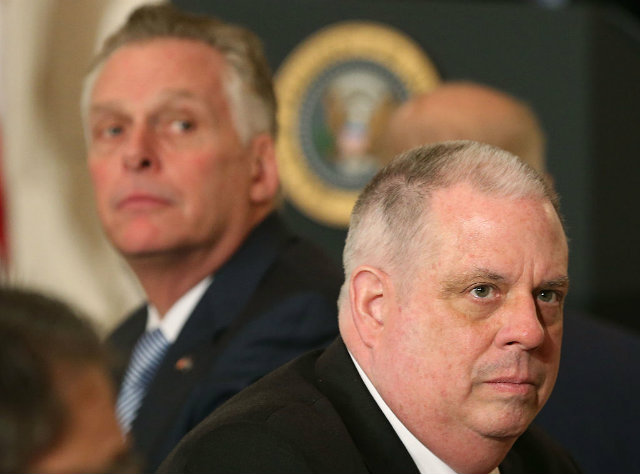
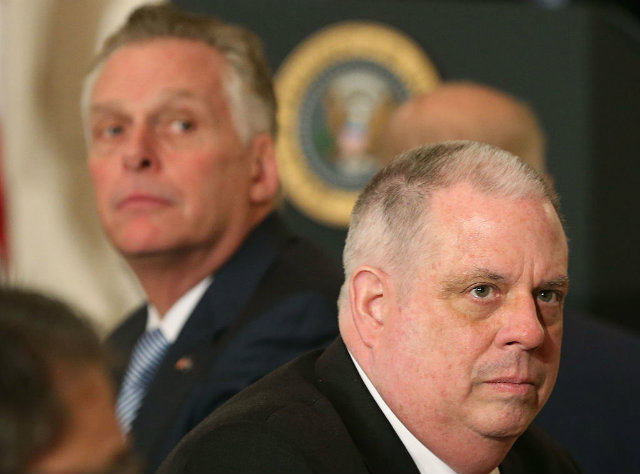 Gov. Larry Hogan attends a meeting of the National Governors Association at the White House in February. (Photo by Mark Wilson/Getty Images)
As D.C. moves toward enacting one of the only paid family and medical leave laws in the country, some Maryland legislators have been struggling for three years to get a paid sick leave law on the books.
The effort just got a major boost from the state’s Republican governor, who announced today that he plans to introduce legislation in the upcoming session of the Maryland General Assembly.
Saying it would provide “common sense, balanced” benefits, Hogan’s proposal would require businesses that employ 50 or more people provide at least 40 hours of paid sick leave a year. Smaller businesses that choose to offer paid sick leave would be eligible for tax incentives. Exemptions are carved out for seasonal workers and pre-existing collective bargaining agreements with unions.
“For the last few years, there has been a great deal of discussion and debate around the issue of paid sick leave in Maryland,” Hogan said. “It is clear that, in order to move forward, we must strike a balance between the needs of Maryland’s employees while not hurting our small businesses and continuing to foster a more business-friendly climate in our state.”
Depending how many people they employ, D.C. businesses are required to offer between three and seven days of paid sick leave a year. Enacted in 2008, D.C. was only the second jurisdiction in the country to mandate paid sick leave (following San Francisco).
Since then, more than a dozen other cities, five states, and a number of counties have followed suit. That includes Montgomery County, which enacted a law last year that officials believed would extend sick leave benefits to more than 89,000 works who didn’t have it previously.
Data shows that enacting sick leave laws typically reduce influenza-like illnesses by between 5 and 6 percent.
Meanwhile, under legislation that passed on first reading at the D.C. Council yesterday, District employees would also be entitled to eight weeks of parental leave, six weeks of medical leave to care for an ailing family member, and two weeks in the event of a personal illness. It is likely to pass a second vote, but Mayor Muriel Bowser has yet to take a position on the bill.