Rachel Kurzius
 (Photo by David Gaines)
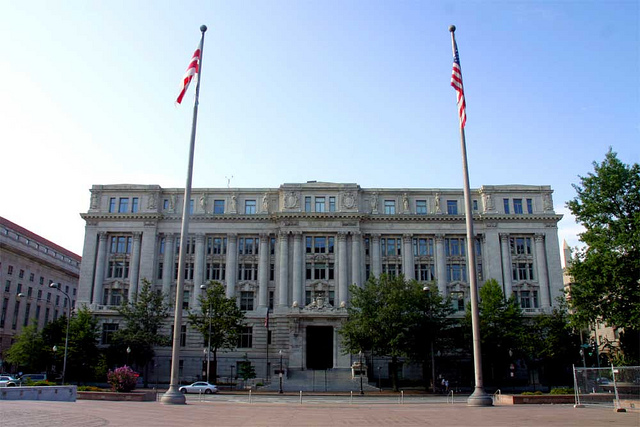
The D.C. Council unanimously passed two bills on Tuesday that seek to level the playing field for people applying for jobs and housing whose history—whether credit or criminal—might otherwise preclude them.
One of these bills, the Fair Criminal Record Screening for Housing Act of 2016, prohibits landlords from asking about prior convictions before extending a conditional housing offer.
It extends the same logic of “ban the box” legislation passed by the council in June 2014—a measure made law in more than 150 jurisdictions that removes the question of criminal history from a job application. The D.C. Office of Human Rights docketed 365 cases in its first year of enforcing the bill.
Under the ‘ban the box’ for housing bill, which Judiciary Committee Chair Kenyan McDuffie and At-large Councilmember Anita Bonds introduced in April of this year, landlords can take revoke the conditional offer if they learn about certain convictions from the past seven years, like murder, manslaughter, assault, arson, sex abuse, robbery, kidnapping, and fraud.
“This legislation will assist in the successful reintegration of returning citizens by removing barriers to securing adequate housing,” McDuffie said in a statement.
If the property owner withdraws the offer, the applicant can request written notification of the reason without charge. Fines for failing to comply range from $1,000-$5,000, depending on how many rental units the landlord owns.
When the Fair Credit in Employment Amendment Act was first introduced in June 2015, it too mirrored the “ban the box” legislation. However, the Judiciary Committee determined that, unlike criminal convictions, credit history was never relevant to the hiring process.
“Some people falsely believe that [credit history] determines someone’s character or likelihood that they’ll commit a crime,” McDuffie told DCist after the bill passed the committee in November. “What we’ve seen in the research is that poor credit stems from negative life events—job loss, medical debt, consequences of historic wealth inequality.” Additionally, credit reports have high rates of inaccuracy.
So instead, the Fair Credit in Employment Amendment Act amends the Human Rights Act of 1977 to include “credit information” as a protected trait. Other protected traits are race, color, religion, national origin, sex, age, marital status, personal appearance, sexual orientation, gender identity or expression, family responsibilities, genetic information, disability, matriculation, and political affiliation.
If OHR determines a violation has occurred, employers would face a $1,000 fine the first time, $2,500 the second, and $5,000 for each following violation. The bill also requires the agency to create a public information campaign about the update.
“The HRA is always an evolving document,” Stephanie Franklin, policy director and spokesperson at OHR, said in November. “As we go through different changes in society, and as protections are added and considered, we are always ready to educate people about the changes and enforce them.”
McDuffie successfully introduced an amendment on Tuesday to increase the bill’s exemptions, which he said he did at the request of the executive of the chief financial officer.
Now, in addition to federal jobs, the bill does not apply to people applying to for a job with D.C. Police, special police, campus police, the office of the chief financial officer of D.C., or financial institutions where the job involves access to personal financial information.
There are also exemptions for disclosures made by D.C. government employees to the Board of Ethics or Office of the Inspector General and when an employer asks for credit information as it relates to a court order, subpoena, or law enforcement investigation.
Both bills passed on their second reading on Tuesday, and go next to the mayor’s desk.
“The Mayor has not had an opportunity to review these bills specifically, but both represent values she shares,” says Susana Castillo, the mayor’s deputy press secretary. “In the coming weeks Mayor Bowser will review the bills and make a final determination on whether or not she supports them.”
If the unanimous votes hold, though, both bills are veto-proof.
Updated with comment from the mayor’s office.