Rachel Kurzius
 People start lining up in the early afternoon for a chance to have dinner at the ballyhooed restaurant Bad Saint, but there are singles who have been waiting for years to join “The League”—a highly selective dating app with a list of standbys in the five-digits.
It launched in D.C. shortly after the election, though the company hadn’t planned to arrive here until around Valentine’s Day in 2017. “We felt the polarization and intensity of it all, and we felt like it would be a good time to bring a new hope in the dating life to D.C.,” says The League Founder and CEO Amanda Bradford.
That hope is limited, though, to those who can get past the company’s screening process. Unlike most dating apps, like Tinder or Hinge, where all a single person needs to do is sign up to join the dating pool, you need to apply to get into The League.
That is because The League is for front row kids looking for other high achievers, a stereotype long affiliated with federal Washington.
Of the 11,221 people who applied, 1,800 were accepted to the D.C. League’s “founding class,” per data the company provided to DCist.
The top three employers for members were the U.S. House of Representatives (7 percent), Deloitte (6 percent), and the U.S. Department of State (4 percent). The genders are not entirely even—44 percent male and 56 percent female— and 6 percent identified as LGBT.
The waitlist has grown by about 200 people a day since the app’s launch in the city.
Pushing back against charges of elitism, Bradford says that it is aimed at “people who put the most effort in.”
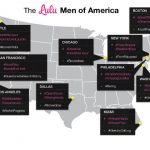
To Bradford, the app is for the Horatio Algers of the world who spend 90 hours a week thinking about work and are willing to dedicate some of their limited free time to sculpting their League profile, rather than a matchmaking service for privileged scions. The League is already in San Francisco, New York City, and Los Angeles, with beta versions in Chicago and Boston.
If anything, Bradford sees The League helping to make a more egalitarian world. The app is all about the “values of equal partners, and building a new type of relationship,” Bradford says. “The woman and the man can both make money. It doesn’t have to fall into traditional husband/wife relationship.”
As if to prove her point, Bradford spoke to me on the phone from Miami, where she was getting her eggs frozen. “Total alpha move, right?” she says.
So how does The League figure out if you’ve got the goods to be one-half of a power couple?
Part of the application process includes linking to one’s Facebook (which is normal) and LinkedIn (which is … less so) accounts. The app fills in your education, interests, and jobs from the information on your other profiles. After that, you do the rest: pick six pictures of yourself, write up a little “About Me,” and select what you’re looking for in your matches. Then you bide your time.
This waiting is by design. It’s “friction,” as Bradford calls it. “We’re hoping it screens out the one night stands or people coming to D.C. for the night to party,” she says.
And, of course, there’s nothing like the allure of exclusivity, that special feeling when the velvet rope lifts for you as throngs of people remain outside cooling their heels.
“People say they really like the exclusivity, but we never use that word to describe ourselves,” says Meredith Davis, the head of The League’s D.C. community. “It’s really like a members-only club with a killer singles scene.”
Like most clubs, there are bouncers.
First, there’s an algorithm, which considers “social influence, education, profession, industry, friends in The League, number of referrals you’ve made to your network, as well as supplemental data like what groups you belong to, events you’ve attended, interests you list, and preferences,” as the app explains via email when you apply.
The idea is that those parts of your biography work as a kind of shorthand. “Someone who works at McKinsey gets bonus points for working at a selective company—we do value that and give credit to the McKinsey screening process,” says Bradford. Essentially, if you’re good enough for McKinsey, you’re probably good enough for The League.
“But we do value diversity,” Bradford adds. “We don’t want the D.C. League to be all McKinsey.”
That’s where the “Human Review Board” comes into play.
It sounds like a dystopian death panel, but both Bradford and Davis assure me that it’s better to imagine the Human Review Board as a kind of college admissions board. They’re looking at the pool of D.C. daters to figure out what kind of people are missing and to keep the ratios balanced.
Davis says that “people can reach out and make the case for themselves.” In fact, that extra effort is exactly what The League is looking for. “Someone who is on the waitlist and emails saying, ‘How do I get in? What do I do?’ and, if they do them, it’s like, ‘Wow, this person is going to be a good asset—a smart person who knows what they want and how to get it.”
But it’s clear that, despite the language of meritocracy, social hierarchy plays some role in getting accepted. “Let’s say you’re a nanny but you went to a good school and you’re a nanny for a really high up family in D.C.—we take that into consideration,” says Davis.
Plus, if people score a referral from a member, they’ll get green-lighted more quickly.
While the Human Review Board is examining your photos, they swear that it’s not about your chiseled chin or impressive abs.
“Photos are less about attractiveness overall and more about photo quality,” says Bradford. “A photo that is professional and high-resolution, it gives you a boost.” Blurry photos, pictures of a person doing a keg stand, sunglasses—all no nos.
If the Human Review Board otherwise likes what you’re bringing to the table, it might offer you some helpful tips. I should know. I signed up when I started working on this story, and, after interviewing Davis, she got me off the waitlist and into The League (who says journalism doesn’t have perks?).
But my profile was evidently nowhere near ready for primetime.
Davis sent me an email that said, “FYI- you would have gotten in on your own:) but I probably would have sent you an email to revise your photos. We suggest users have 6 clear photos of their face and body!”
Once you’re in, every day, around 5:30 p.m., the app sends a push notification with words of wisdom like “May your hard times last only as long as a Kardashian marriage,” “It doesn’t matter how high the bar is set as long as you can reach your drink,” and, my favorite, “If Britney can get through 2007 you can get through the day.”
Then Happy Hour begins. You get anywhere between one and four people who fit your preferences (you can pay to either see more profiles or be seen by more users), and you indicate whether you “like” them or not. If you both “like” each other, you match and get the chance to chat. Then, you have 21 days to strike up a conversation before their message box disappears.
On an app like Tinder, you can just keep swiping. It’s a hypnotizing activity that creates the illusion of never ending singles. But The League wants to you see your potential partners as part of a limited pool.
This has its pros. It’s not as much of a time suck, for one.
“I’ve probably gone through the list of dating apps,” says Jackie, a scheduler on the Hill. “I’ve done Tinder, Hinge, Bumble, and now, The League. It does take time to go through every single male under the age of 35 in D.C.”
She says that, with The League, “it’s nice to not have to continually swipe left.” Jackie is now off the market, though she did not meet her boyfriend on an app.
One guy told me that, in his experience, women were less likely to agree to meet in person than on other apps. He guessed it had to do with high expectations people had for their League matches.
It seems these front row kids forgot the key wisdom of Groucho Marx—remaining skeptical of any club that would have you as a member.