Rachel Kurzius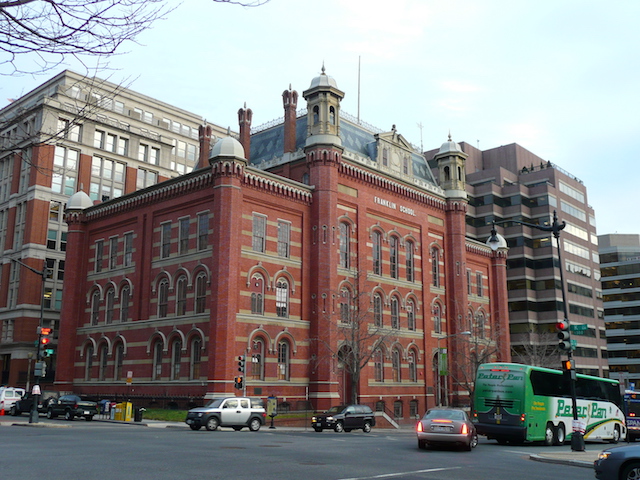
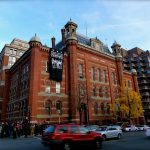
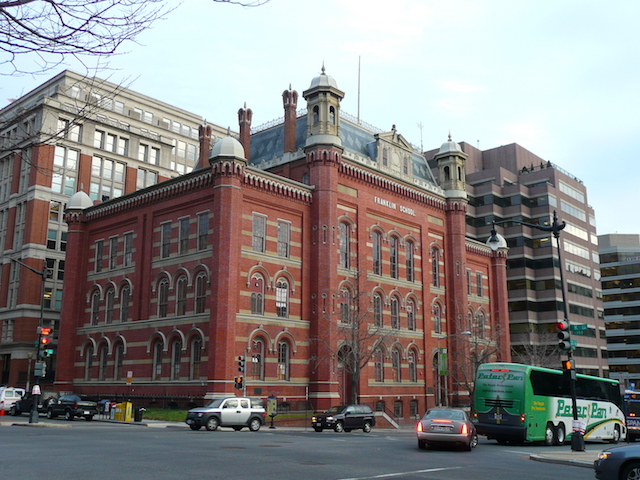 Photo by army.arch *Adam*
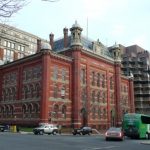
Over the course of history, Franklin School has alternately been a place for Alexander Graham Bell to tinker, a homeless shelter, an adult education center, administrative headquarters, occupied by protesters, the backdrop for a burning limousine, and, of course, the city’s first high school.
And now, pending D.C. Council approval next fall, the historic building will become an interactive linguistics museum called Planet Word.
The museum’s mission is to “inspire and renew a love of words and language through unique, immersive learning experiences,” according to its website. It is slated to open in the winter of 2019 with free admission.
The plan, announced today by the Office of the Deputy Mayor for Planning and Economic Development, will be helmed by philanthropist Ann Friedman.
DMPED expects the buildout to cost between $20-30 million, according to spokesperson Joaquin McPeek, which will be paid by Friedman, who is married to New York Times columnist Thomas Friedman. “It is all privately funded,” McPeek says, with “no burden on the taxpayer.”
According to the Washington Post, the agreement between the mayor’s office and Friedman already has a structure: a free, 99-year lease for Friedman so long as she commits to a restoration of the building. Then, Friedman would pay additionally to bring the museum to life, which she estimates would cost an additional $30 million.
She is also responsible for the historic preservation of the building. Franklin School, built in 1869, is on the National Register of Historic Places. Unlike many other historic buildings, much of its interior, including frescos and terra cotta flooring, is protected.
Friedman’s development partner, according to the Post, is Buwa Binitie, a top fundraiser for Mayor Muriel Bowser.
This isn’t the first time there’s been plans to house a museum in Franklin School. Planning was underway in 2014 for the building to become a contemporary art museum, but Bowser nixed it when she came into office, questioning its financial viability (the developer of the project vehemently disagreed and said they were well on track to raise the necessary funding).
Shortly after canning that project, the mayor’s office put out a request for proposal to figure out what to do with the vacant building—the third time in a decade. “This is a financially viable project that we think will be a good fit in that corridor,” says McPeek. “We believe it’s found its rightful owner and home and vision.”
According to DMPED, the museum will have nearly 15,000 square feet of exhibit space, a 2,000 square foot auditorium, a 3,500 square foot restaurant, and 1,900 square feet in classroom space. They project that the museum will generate 35 new full-time jobs and could see almost 100,000 annual visitors.