 Rachel Sadon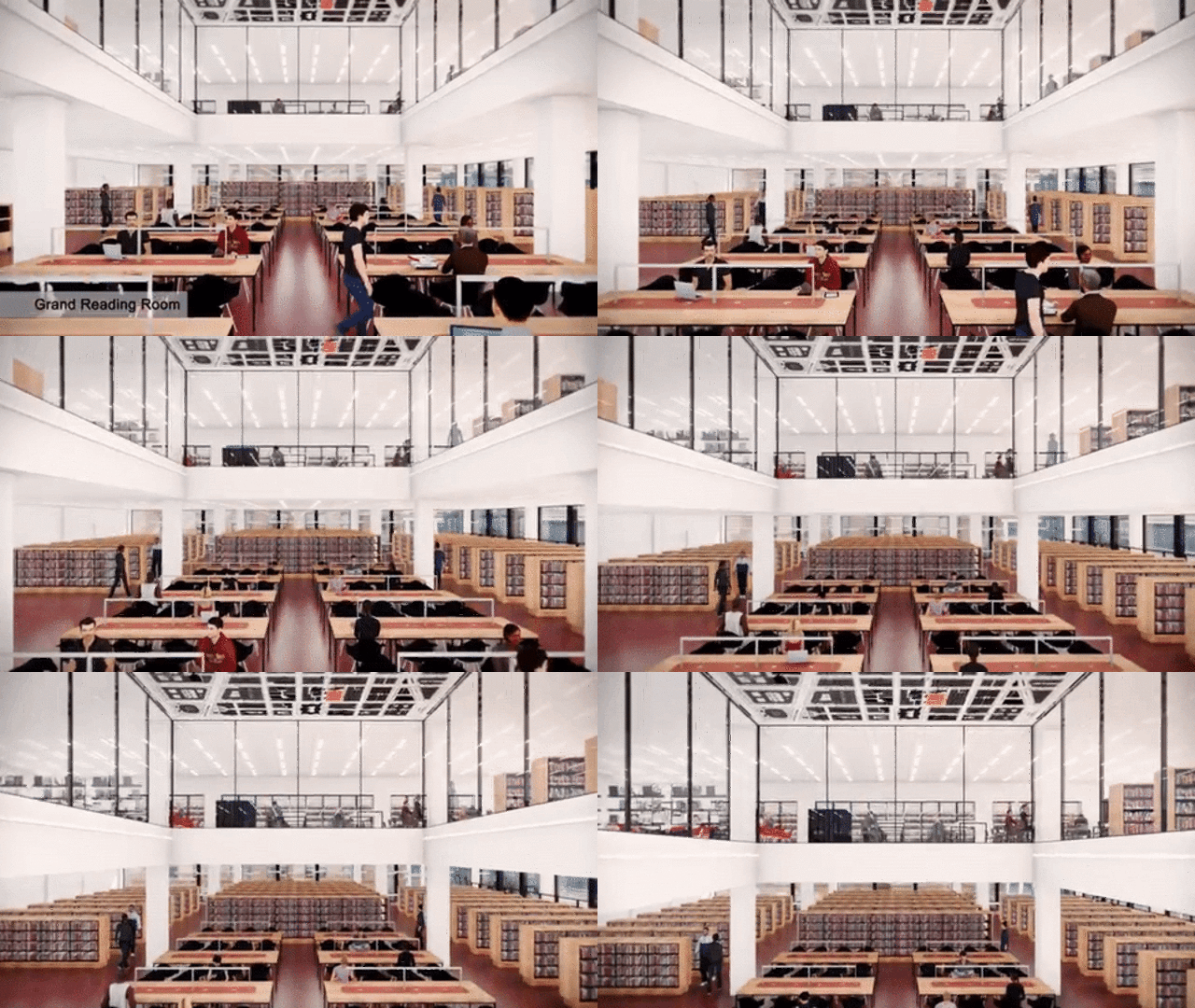
A decade after D.C. Public Library began a modernization effort that has resulted in 16 renovated (or in the process of being renovated) branches, the system is finally tackling its biggest project: an overhaul of the flagship Martin Luther King Jr. Memorial Library.
The 45-year-old building will close its doors on March 4, library officials announced today. It is slated to reopen sometime in 2020.
“We would argue this is the most important civic building in Washington, D.C. except for city hall, and indeed the most important civic construction project since the John A. Wilson Building was renovated in 2001,” says Gregory McCarthy, the library board’s president. “We don’t have a lot of institutions or spaces in this city that bring us all together and this building—the new Martin Luther King Jr. library downtown—is going to do that.”
The most visible changes will be to the interior of the building, which was designated a historic landmark in 2007, along with the addition of 100,000 square feet of public space. The transformations include new fabrication spaces, expanded areas for special collections, an interactive children’s area (complete with slide), a cafe, auditorium, and a green rooftop.
“We really are intent on future-proofing this building so it’s not just a sanctuary for people who want to read or take out books, but a third space for people who want to participate in everything that DCPL has to offer,” says executive director Richard Reyes-Gavilan.
Other updates will be less visible, though no less important, library officials say. That includes a complete overhaul of pretty much every heating, lighting, and electrical system in the building (currently, the aging structure is so inefficient that Reyes-Gavilan described it as a “sieve”). They will also work to shore up the structure and replace the glass in each window, while honoring its architectural signature.
It is the only Ludwig Mies van der Rohe-designed building in the District of Columbia, and his only completed library in the world.
“Mies’ work is so strong,” says architect Tim Johnson. “He built the box. He set the stage not only for what we’re doing, but what might happen a generation or two in the future.”
But while the boxy exterior will remain familiar to Washingtonians, the renovations will replace some of the coolness of the original interior through updates that are “warm and sensuous,” Johnson says, a reflection of the both library’s mission and to honor Dr. King’s legacy of inclusion.
Though in many ways it is a very different project from the much smaller branch updates—for one, MLK is home to DCPL’s administrative offices—Reyes Gavilan says that they’ve taken some lessons from the neighborhood library renovations. “Whenever you pay attention to some of the very basic human needs—natural light, delight, joy natural—we see the use of our buildings double in some cases and that is something we’re paying close attention to.”
After MLK’s doors close to patrons on March 4, it briefly re-open for two events: the annual Story Time Gala reception on March 16 and a concert by the Morehouse college Glee Club on March 24.
Officials estimate that moving the books, special collections, and staff out of the building will take around two months, which means that construction work will start in the summer.
To compensate for the flagship library’s closure, the neighborhood branches will open on Thursday mornings and DCPL is opening an interim “express library” at 1990 K Street NW. The Department of Human Services is also working to supplement social services for the homeless population that frequents MLK.
The most popular special collections will be available at partner organizations (the Historical Society of Washington, Library of Congress, and the Georgetown Library Peabody Room). DCPL is also using the three-year closure to digitize a huge backlog of items, and patrons will start seeing the results on the DigDC website within months.
The total cost for the project is $208 million, with about $160 million going toward construction and the remainder for storage, the interim library, and other expenses.
At the end of the project, officials say it will greatly expand MLK’s ability to serve its patrons.
“Regardless of your income, regardless what ward you come from, regardless of your educational attainment, this building belongs to you,” Johnson says. “It’s going to be the education and entertainment hub the city has lacked.”