Black History Month is over, but District residents will soon be able to tour the home of its founding father throughout the year.
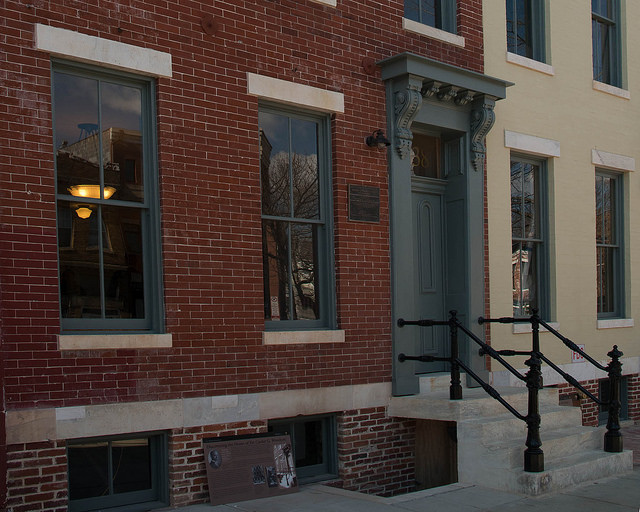
In April, the National Park Service will open the Carter G. Woodson home to the public. The African American writer, publisher, and historian established Negro History Week in 1926, the predecessor to the month we now celebrate. He purchased the three-story brick building in Shaw for $8,000 in 1922, and lived and worked there until his death in 1950.
“I’m surprised these floors look so great,” said 97-year-old Robert Vest, commenting on the home’s renovations during a special preview on Sunday. As a high-schooler, Vest packaged books in the home and took them to a nearby post office.
“Dr. Woodson and his legacy is critically important for United States history, which is why it became a historic landmark in 1976,” said NPS project manager Kate Birmingham. “His contributions to the study of African Americans has just been incredible and incomparable. He really devoted his entire life to the publication of African American history—stories which were largely untold up until the time he told them, and this is the place where we did it.”
NPS bought Woodson’s home and two adjacent buildings in 2005. It had been vacant since the 1980s and “in pretty poor repair—it needed a lot of work,” Birmingham said. Among other things, there were broken windows, moisture damage, and rotted wood in the home, which was built in 1872, Birmingham said.
So NPS did some stabilization work in 2006 and 2014, and a full restoration of the home began in 2015. It’s the first of three maintenance phases.
When people visit the home this year, they’ll see original mantelpieces that are painted to look like marble, which was often done in the 1920s, Birmingham said. They’ll be able to walk up the home’s rehabilitated staircase, which was was climbed by black poets and scholars such as Langston Hughes, Charles Wesley, and Myra Colson Callis. And they will see paint colors similar to the hues that coated the walls during Woodson’s day.
Some things like light fixtures were replaced during the restoration, but they don’t “take away from being so new or incompatible that they mess with the feeling you get when you’re in the building,” Birmingham said.
In 1915, Woodson founded the Association for the Study of Negro Life and History, which is now called the Study of African American Life and History. He also founded the Associated Publishers—the oldest African-American publishing company in the county, which he housed in his Shaw home.
As Vest walked through the building on Sunday, he pointed out a back room on the first floor where he gathered the publishing company’s books. At 17 years old, Vest said he seldomly spoke to Woodson. “He was all business, and I was too young to be in business,” Vest said. “But he was a very interesting person.”
NPS also invited Kimberly Seaman and her mother Jeanette Singletary to attend the tour on Sunday. Singletary’s late mother was Woodson’s niece, and she lived in the home with him until she married and moved to Virginia.
“She didn’t really go into details, but she said he was really strict,” Singletary said, adding that her mother attended the National Training School for Women and Girls, which was founded by civil rights activist and Woodson’s friend Nannie Helen Burroughs.
NPS plans to restore the adjacent buildings in its second and third phases of the renovation project. Birmingham said these spaces will allow for exhibits and “interpretive spaces that really capture all of the educational things that Woodson propagated himself.”
Seaman said she’d “love for people to know about the man himself and all of his accomplishments” including attending school in Paris, teaching in the Philippines, and receiving his PhD at Harvard University—“all the different things he did in the name of education—and that’s all before and leading up to Negro History Week [in 1926], which became Black History Month [in 1976].”
The Carter G. Woodson home is located at 1538 9th Street NW. It will be open again from April 21 to April 23 during National Park Week, and each weekend from Memorial Day to Labor Day. Reservation information will soon be available on the National Park Service’s website.