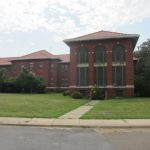
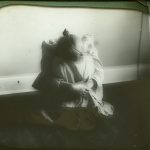
We are all affected by our surroundings. But can pleasant surroundings be therapeutic? Can well-designed facilities help cure the mentally ill? Architecture of an Asylum, a new exhibit at the National Building Museum, demonstrates the thinking that went into the construction of St. Elizabeths in the 19th century.
Designer Thomas Story Kirkbride, whose concepts were put into practice in a number of state hospitals constructed in the late 19th and early 20th centuries, insisted that institutions for the mentally ill “should not look like a prison.” The architectural details on display bear that out. Among the first things you see when you enter the exhibit are ventilation grilles salvaged from the historic campus. These are not just functional objects but beautiful decorative works.
Curator Sarah Leavitt has assembled materials from various institutional collections, including photographs and architectural plans as well as objects. While artifacts like a storage box for brain tissue speak to the common image of mental institutions, Leavitt leads the show with objects that are aesthetically pleasing in any context.
The exhibit shifts from purely architectural concerns to the site’s history, as sprawling as its more than 300-acre grounds.
St. Elizabeths sits on land that once belonged to Piscataway Indians. In 1666, the British granted the land to John Charman, and in the 1840s, the farmland was acquired by a name that will be familiar to Washingtonians: Thomas Blagden.
Then as now, the land provides a stunning view of the city, which in the modern real estate market makes the site attractive both for government use—it’s a useful vantage point for the Department of Homeland Security, coming to the West campus—and for residential use—condos are coming to the East campus, in addition to thousands of square feet of office and retails space and a practice facility for the Washington Wizards.
In the 19th century, mental illness was considered a sign of moral failing, a preconception amplified by the sad fact that many patients were in the late stages of syphilis. After witnessing the poor conditions of the mentally ill kept in prisons and almshouses, social reformer Dorothea Dix lobbied for Congress to set aside public land for their care, and in 1852, The Government Hospital for the Insane was established—what we know as St. Elizabeths.
St. Elizabeths was founded upon principles of Moral Treatment, which proposed that institutionalized patients would fare better if they were treated “like a child rather than an animal.” In the 20th century, humane treatment included art and dance therapy, the latter of which was led for years by Marion Chace (read more about her in the slideshow). Yet the hospital also conducted now controversial treatments like electroshock and hydrotherapy, which involved wrapping patients in wet blankets.
Exhibit displays include a sidebar on notable residents. John Hinckley may be its most recent famous patient, but he is not the only would-be presidential assassin to have roamed these halls. Charles Guiteau, who killed President Garfield, and Richard Lawrence, who attempted to kill President Jackson, were also residents, as was poet Ezra Pound.
While the history and development of the mental asylum is a crucial part of the exhibit, some of its most fascinating displays revolve around daily life at the institution. In addition to food services and religious practice, patient art and entertainment was a vital element. The exhibit displays examples of patient art, and photos of entertainers like the St. Elizabeths Band, a paid orchestra at the turn of the 19th century. The facility’s main entertainment venue was the 1200-seat Hitchcock Hall, named after a former Secretary of the Interior. The venue hosted concerts and plays performed by hospital staff, and its basement served as a space for psychodrama, or role-playing therapy.
Other recreational activities included bingo and film screenings. Among the records found in the Center Building excavation were 45 rpm singles by British blues rockers Bloodwyn Pig; the 1959 New York doo-wop single “Gotta Find My Baby” by Billy Dawn Smith; and the 1951 Big Band hit “It’s No Sin” by Eddy Howard.
Such multi-faceted patient services on the state level may seem like a thing of the past, and not just in terms of music format, and the so-called “Age of the Asylum,” when such institutions thrived, came to an end. The exhibit wraps up with Deinstitutionalization, a movement that began in the 1960s when President Kennedy shut down large state institutions in favor of a network of smaller community solutions that unfortunately never materialized.
Diminishing infrastructure for the mentally ill, which hit a peak during the Reagan administration, may in some ways be considered progressive, as patients rights groups advocated for more autonomy for patients. Still, Leavitt regrets that while, “The U.S. once led the world in such infrastructure, it has since all but destroyed it.”
The declining hospital population led to the Department of Health and Human Services’ declaration in 2001 that St. Elizabeth’s West campus was “excess to its needs,” and hospital functions have since been relegated to the East campus, where the hospital still provides patient services. As the entire site has been declared a National Historic Landmark, these well-preserved buildings once developed to benefit the mentally ill are now prime real estate.
The DC Preservation League still conducts tours of the St. Elizabeths’ West campus. But the National Building Museum’s exhibit provides an in-depth overview of the institution’s architectural history, a fascinating window into Washington history and changing attitudes toward the mentally ill.
Architecture of an Asylum: St. Elizabeths 1852-2017 is on display through January 15, 2018. at the National Building Museum. $10. The museum is open Monday-Saturday from 10 a.m.-5 p.m. and Sunday from 11 a.m.-5 p.m.