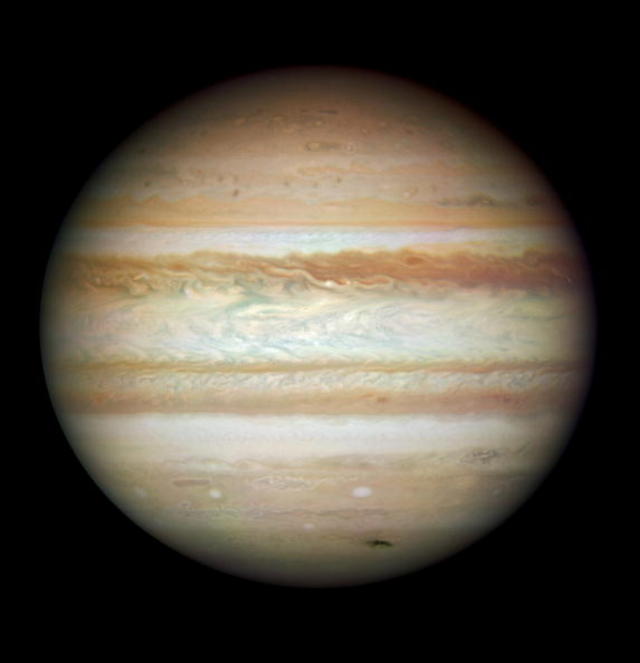
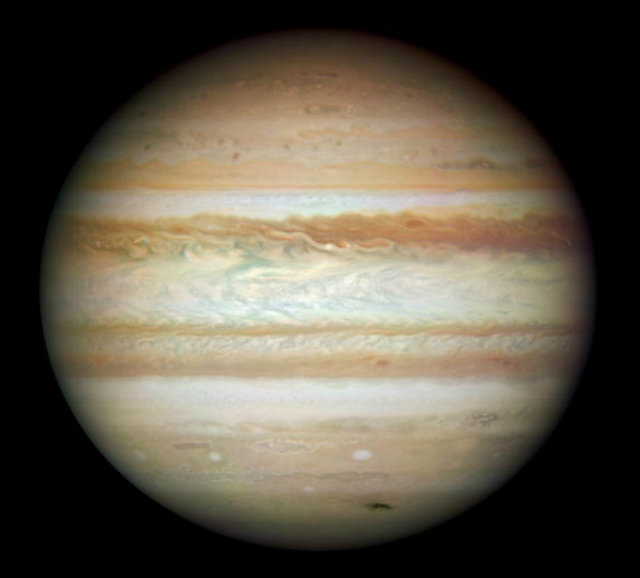
 Jupiter captured in July 2009. (Photo by NASA, ESA, and the Hubble SM4 ERO Team via Getty Images)
If you look in the sky this evening, you can check out a brightly lit Jupiter.
The planet will be positioned directly opposite the sun, while reaching its closest point to Earth. It will appear to be its biggest and brightest compared to any other day this year.
Our solar system’s largest planet is expected to rise in the east as the sun sets tonight to make its annual “opposition.”
As with most astronomy events, online broadcast service Slooh will live-stream views of Jupiter through its remote telescopes and host a “lively discussion of the science and mythology of this immense gas giant planet.”
But stargazers can also just go outside and look to the southeast as the planet can be seen with the naked eye. The best time to observe it—when it’s highest in the sky—is close to midnight, according to AccuWeather meteorologist Dave Samuhel.
“With a simple pair of binoculars, you can spot three or four of Jupiter’s largest moons,“ Samuhel adds. The planet will set in the west as the sun rises on Saturday morning.
Astronomers in space and on the ground will take this opportunity to capture more details of Jupiter’s atmosphere using binoculars and telescopes, according to NASA.