Rachel Kurzius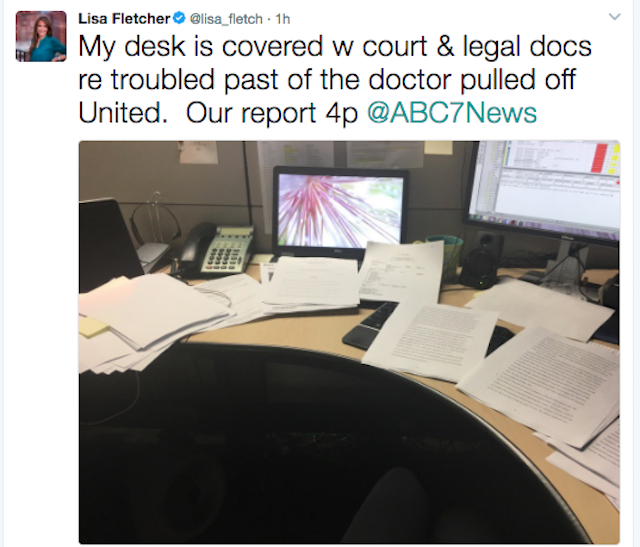
Amid fierce backlash online and over the phone, local news affiliate WJLA opted not to air its promised story on Tuesday about the “troubled past” of the passenger dragged off a United flight on Sunday evening.
“After the story was written, we looked at it, we still had questions, and it didn’t pass the litmus test,” says WJLA News Director Mitch Jacobs. “There was no pressure because of what you wrote or because of phone calls. It really doesn’t play a part.”
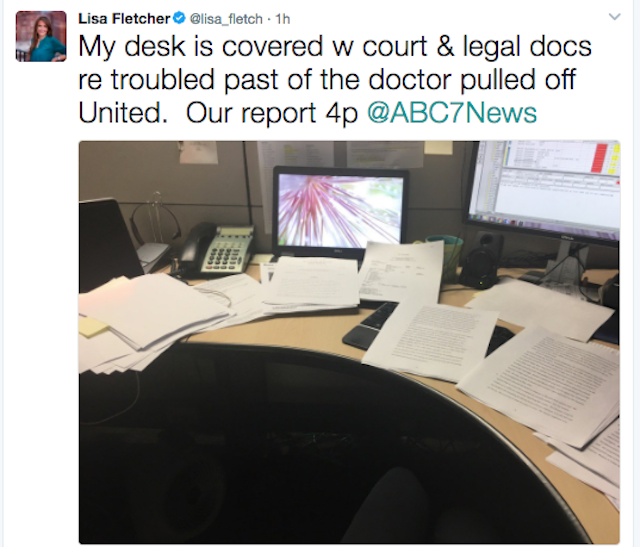
On Tuesday afternoon, WJLA investigative reporter Lisa Fletcher said in a since-deleted tweet that she had pulled court documents about the “troubled past” of passenger Daniel Dao, who was forcibly removed from a United plane in Chicago and bloodied in the process.
Fletcher’s wouldn’t have been the first story to delve into Dao’s checkered past, but condemnation of the supposed victim-blaming angle of the story was immediate and fierce, with tweets and phone calls pouring into the station, though Jacobs says “a lot of the calls we received were not local calls.”
Why, exactly, was a local news station covering a story without a D.C.-area focus? “When stories happen, we cover them no matter if they’re local, regional, national, or world,” says Jacobs. “This story had such public interest in it.”
However, he says that a few things went into the calculus to opt not to air the story, a decision first reported by Washingtonian. “The biggest question is we didn’t know what happened in the moments leading up to the incident on the plane,” he says. “If those minutes had been him being belligerent and all that stuff, it would have been a bigger part of the story.”
The United CEO’s apology to the passenger also contributed to the decision, he says. He still points out that other outlets, including affiliates and newspapers in Kentucky, TMZ, and the LA Times all ran stories with a similar angle.
He says that Fletcher, who said over Twitter she received threats for pursuing the story, is doing fine. “Lisa’s a professional,” he says. “She was doing her job,” though he says the station takes all threats seriously.
Why does he think people reacted so strongly? “I think that we probably took more phone calls because of the story, just because of the emotional attachment people had to it,” Jacobs says. “Everyone has had flights canceled or delayed, such that everyone is so emotionally charged with anger towards an airline.”