 Rachel Sadon
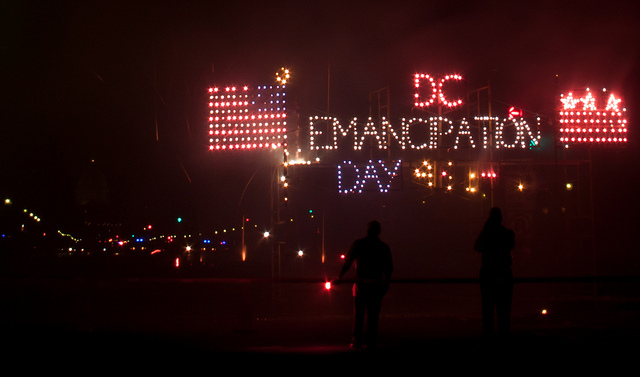 (Photo by Victoria Pickering)
On April 16, 1862, President Abraham Lincoln freed more than 3,000 slaves in the District with the stroke of a pen. And 142 years later, D.C. enshrined that date as a legal, local holiday.
The District typically commemorates the occasion with a concert and a parade, which were held unusually early, last weekend, so as not to conflict with Easter.
Emancipation Day is only recognized locally—and even then, many employers don’t observe it (city agencies do, though: the DMV will be closed on Saturday and Monday, and the Department of Public Works will suspend parking enforcement and trash services on Monday).
But for tax purposes, D.C. holidays affect the nation. “By law, filing and payment deadlines that fall on a Saturday, Sunday or legal holiday are timely satisfied if met on the next business day. Under a federal statute enacted decades ago, holidays observed in the District of Columbia have an impact nationwide, not just in D.C.,” according to the IRS.
This year, the 15th falls on a Saturday, which would otherwise mean that taxpayers would have a filing deadline on Monday, the 17th. But in years when Emancipation Day falls on a Sunday, it is officially celebrated on Monday (when the holiday falls on a Saturday, it is officially celebrated on Friday). And that’s how the tax deadline got pushed back to Tuesday, the 18th.
A similar thing happened last year. Emancipation Day fell on a Saturday, but D.C. officially celebrated it on Friday, April 15, so the deadline was pushed back by three days to Monday, April 18.
The confluence of Tax Day and Emancipation Day also pushed back filing deadlines in years past to April 17, 2007 and April 18, 2011.
Now if the rest of the country could thank us by getting us some congressional representation, that would be great.