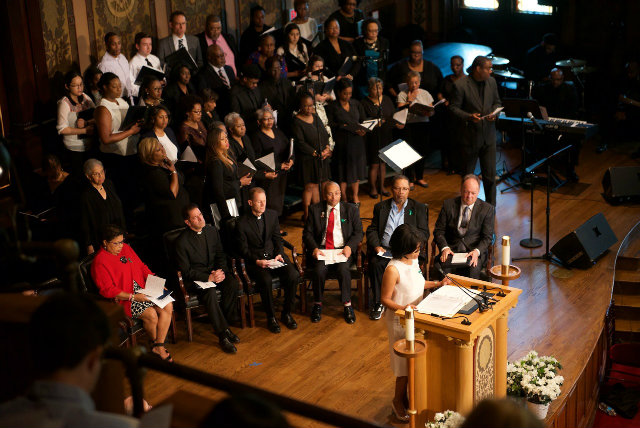
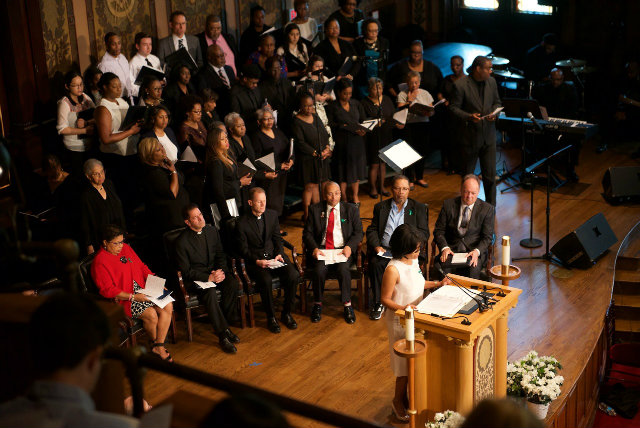
 A service for “remembrance, contrition, and hope” held by Georgetown University today. (Photo courtesy of Georgetown University.)
To further address its ties to slavery, Georgetown University hosted two events today to honor 272 slaves who the university sold in 1838 and offer apologies to their descendants.
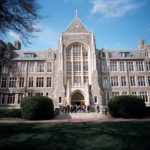
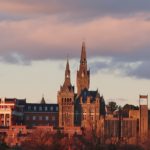
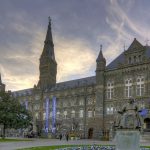
The university held a service for “remembrance, contrition, and hope” this morning along with the Archdiocese of Washington and the Society of Jesus in the United States. The school also officially dedicated two campus buildings that were previously named after university presidents who supported the sale of the slaves to pay off university debt.
Reverend Timothy Kesicki, president of the Jesuit Conference of Canada and the United States, addressed more than 100 descendants at the first ceremony this morning.
“The Society of Jesus, who helped to establish Georgetown University and whose leaders enslaved and mercilessly sold your ancestors, stands before you to say that we have greatly sinned—in our thoughts and in our words, in what we have done and in what we have failed to do… we are profoundly sorry.”
Nearly 200 years later, the university is facing its tragic history, Kesicki said. “With pain that will never leave us, we resist moving on but embrace moving forward with hope.”
Today’s events come after a series of discussions, protests, and meetings that have taken place since August 2015 when the university announced the reopening of the residential building Mulledy Hall.
A group of black student leaders told DCist that they met with a representative from President John DeGioia’s office concerning the building bearing the name of Thomas Mulledy, who sold the slaves.
President DeGioia then set up a steering committee to discuss the process to change the name and make recommendations on how best to acknowledge and recognize the university’s history with slavery.
Three months later, students held a protest about the name change and other concerns. And the following day, DeGioia announced that the Mulledy Hall would temporarily be called Freedom Hall, and another building, McSherry Hall, would be called Remembrance Hall, as suggested by the working group.
And in September 2016, the group released other recommendations that include engaging with the slaves’ descendants, giving them the same consideration in the admissions process as the children of Georgetown alumni, and establishing the Institute for the Study of Slavery and Its Legacies.
The group also gave the permanent names to the two buildings that were dedicated this afternoon.
Mulledy Hall is now Isaac Hall, in honor of Isaac Hawkins, whose name is the first mentioned in the documents of the 1838 sale. And McSherry Hall is now Anne Marie Becraft Hall, in honor of Anne Marie Becraft, a free black woman who founded a school for black girls in Georgetown in 1827.
“These buildings we dedicate today are surely appropriate symbols of memorialized history, but beyond that, I hope that they stand as constant challenges to future Hoyas—as a challenge to confront difficult history and as a challenge to stand up to lingering injustices that remain in our world today,” said a student and member of the working group who greeted the crowd.
Descendants of the enslaved also spoke at both ceremonies. The full dedication service is below.