Colleen Grablick
Virginia Gov. Ralph Northam signed a bill Wednesday aimed at holding universities in the commonwealth economically accountable for profiting off of slavery.
The Enslaved Ancestors College Access Scholarship and Memorial Program requires Longwood University, the University of Virginia, Virginia Commonwealth University, the Virginia Military University, and the College of William & Mary — all institutions that benefitted from and exploited enslaved labor — to provide scholarships and economic development programs to descendants of enslaved people.
Originally introduced by Del. David Reid (D), who represents parts of Fairfax and Arlington counties, the legislation bars the colleges from using state funds or tuition dollars to cover the cost of the new programs, and requires the schools to identify and memorialize the enslaved people who worked at each institution. Schools will be required to finalize their scholarship programs by July 1, 2022.
The legislation comes as universities across the U.S. reckon with their histories of racism, and as institutions look to atone for enabling and profiting off of slavery by offering financial reparations.
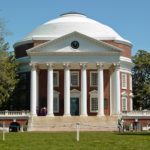
In 2013, UVA created the President’s Commission on Slavery and the University, a multi-year research project aimed at understanding slavery’s role in the creation and success of the university. The commission’s first report, published in 2018, concluded that all of the men involved in the institutions’ creation owned slaves, and that the “vast majority” of early UVA students hailed from slave-owning families.
“Their wealth, a product of human bondage, was vital to the birth of the University of Virginia. Slavery, in every way imaginable, was central to the project of designing, funding, building, and maintaining the school,” reads the report.
The College of William & Mary created its own initiative attempting to rectify its past, the Lemon Project, more than a decade ago after students and faculty called for an investigation into the school’s history. The school publicly acknowledged that it had “owned and exploited slave labor from its founding to the Civil War; and that it had failed to take a stand against segregation during the Jim Crow Era.”
Virginia Military Institute, Northam’s alma mater, is currently under investigation at Northam’s directive after current and former Black cadets recounted the racist abuse and harassment while enrolled at the nation’s oldest state-funding military school.
All five universities included in the legislation are also a part of the Universities Studying Slavery consortium, a program created by UVA to address and research the legacies of slavery at higher education institutions. D.C.’s Georgetown University is also a participant in the consortium, and has announced its own plan to raise $400,000 a year for the descendants of the 272 people who were sold into slavery to pay off the university’s debts.
Northam’s signature on Wednesday marks the latest in a series of bills aimed at addressing Virginia’s racist legacies in the past year — and another step by the governor to address his own legacy, two years after a blackface scandal nearly forced him from office.
The commonwealth recently became the first southern state to abolish the death penalty, and Northam successfully fast-tracked legislation legalizing possession of marijuana — two criminal justice reforms that Northam has discussed in the frame of racial justice.