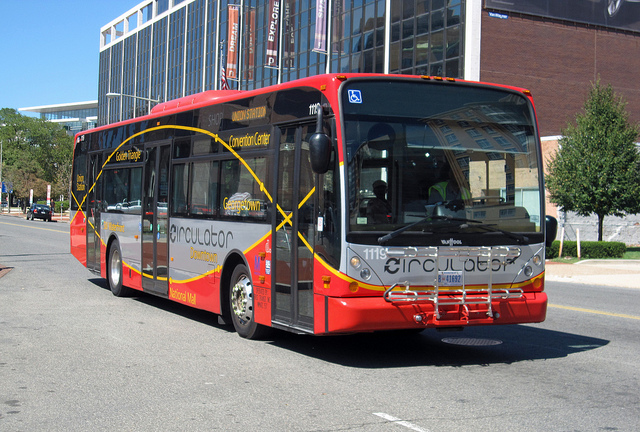
 A DC Circulator Bus photographed in 2010. (Photo by StreetsofWashington)
A new wave of DC Circulator buses will hit the roads on Tuesday after the system has struggled for years to maintain its 10-minute headway.
The New Flyer Xcelsior buses are eco-friendly and are expected to improve reliability for D.C. riders and enhance sustainability for the system, according to a release from Mayor Muriel Bowser’s office.
The roll-out comes as the DC Circulator experiences its lowest level of on-time performance since 2012, according to The Washington Post. In April, 52 percent of passengers were picked up on time. By June, the rate had improved to 67 percent, but the circulator’s minimum goal is 80 percent.
There have been recent delays for problems like broken air conditioning, which is attributed to years of poor maintenance. An August 2015 audit by Transit Resource Center revealed safety-related issues on 95 percent of the system, which operates six lines across the city.
Another study conducted by the Amalgamated Transit Union that was completed in March 2016 found that, out of 29 buses studied, 47 percent of the fleet had brake defects, 22 percent had engine problems, and 20 percent had accessibility issues.
“We are alarmed by the findings … and it runs counter to every management principle we respect in terms of placing the safety of our passengers and operators first,” DDOT director Leif Dormsjo, who is leaving the agency next month, said in April 2016.
He added that the agency had seen “substantial process” since the center’s audit was completed eight months earlier.
But DDOT released another scathing report in January 2017. The circulator’s unionized bus drivers told WAMU at the time that one to two dozen buses were out of service on a typical day because they needed repairs.
While DDOT owns the DC Circulator vehicles, WMATA oversees and contracts its 67 buses out to a private company called First Transit. DDOT official Sam Zimbabwe, recently told The Washington Post that the agency is looking to take over the circulator’s management from Metro and possibly replace First Transit when its contract ends next summer.
The 26 new DC Circulator buses, which have passenger amenities such as USB charging ports and digital screens that display information, will replace older fleets. More new buses are coming later this fall, and those 14 vehicles will operate on 100 percent battery-electric propulsion.
Trips on the Circulator still cost $1, compared to $2 to ride MetroBus.