Colleen Grablick
 Amanda Michelle Gomez
Update: ATU Local 689, the union representing Circulator drivers, on Thursday approved the collective bargaining agreement with the company contracted by the city to run the bus system, formally ending a three-day-long strike.
The new contract with the company, RATP Dev, includes health care improvements, better retirement benefits, and substantial wage increases, according to a statement from the union. Starting pay will immediately increase by 25%, and the highest-paid drivers will receive an 18.5% increase in pay over the three-year contract.
“After months of negotiations, this contract recognizes our members for the heroes they truly are,” said union president Raymond Jackson in a statement Thursday evening, after the agreement was formally reached.
Original: The union representing D.C. Circulator workers and their employer say the two parties reached a tentative contract agreement Thursday, after contentious months-long negotiations and a three-day strike. Union members will review the tentative contract agreement Thursday afternoon, and if approved, end the strike, returning the circulator to normal service Friday morning.
“I think without the strike, the agreement would not have been possible,” says Brian Wivell, a spokesperson for ATU Local 689, the union representing D.C. Circulator drivers. “There’s absolutely no way that the company would have been willing to come to the table and actually bargain with us seriously over these issues, unless these workers had the bravery to really stand up for themselves.”
The union and their employer RATP Dev, a private company contracted by D.C.’s Department of Transportation to run the bus system, reached a tentative agreement early this morning, and workers are expected to review and vote on the proposed contract later this afternoon. Early Thursday morning, the drivers striking at the Circulator’s bus depot in Northeast hadn’t yet reviewed the tentative agreement, but were pleased with the speed at which the two parties were able to strike a deal.
“I’m glad it’s not long,” says Beverly Harmon, a 13-year Circulator driver. “I’m glad it only took about two days, and hopefully we can sign something today. You know, I felt that it wasn’t going to take that long because…we do move the city.”
The union’s previous contract expired April 30. Workers voted to authorize a strike earlier in the month because negotiations for a new contract had proved unsuccessful, according to Local 689. The union accused RATP Dev and their legal representation of bad faith and surface bargaining, and filed unfair labor practice charges with the National Labor Relations Board.
Through collective bargaining, the union hoped to address wage and benefit disparities between their workers and WMATA bus drivers, whose union negotiates with the tri-jurisdictional government agency. (The union has said Circulator bus drivers want to de-privatize their bus system and negotiate with DDOT.) Per a statement from Local 689, DC Circulator bus drivers earn as much as $5.38 per hour less than their WMATA counterparts. The union says RATP Dev’s proposals failed to address underpayment or inflation, offering only a top pay increase of 6% over a three year contract, but that amounts to a pay cut in the first year alone.
“It’s not just the wages,” says Tasha Guest, who has been a Circulator driver for a year and half. “We need retirement. We need compensation for our work. We do the same work as any other company. Why are we not getting the same respect as others?”
On Wednesday, an image of a Circulator bus driving near Union Station floated around social media, prompting allegations that RATP Dev was using scab labor — workers who crossed the picket line — to continue service during the strike. According to Wivell, to best of the union’s knowledge, only four buses — about 5% of the Circulator fleet — ran during the strike, operated by trainees and some safety supervisors. Only one person of the 176 total operators crossed the picket line, according to Wivell. RATP Dev didn’t respond to DCist/WAMU’s request for comment on the bus seen operating on Wednesday.
Ahead of the strike announced earlier this week, RATP Dev had made their “final offer” to the union, one that more seriously addressed wages as compared to previous bargaining sessions, but would substitute unionized workers with subcontractors and undermine their federal rights under the Family and Medical Leave Act, according to Local 689.
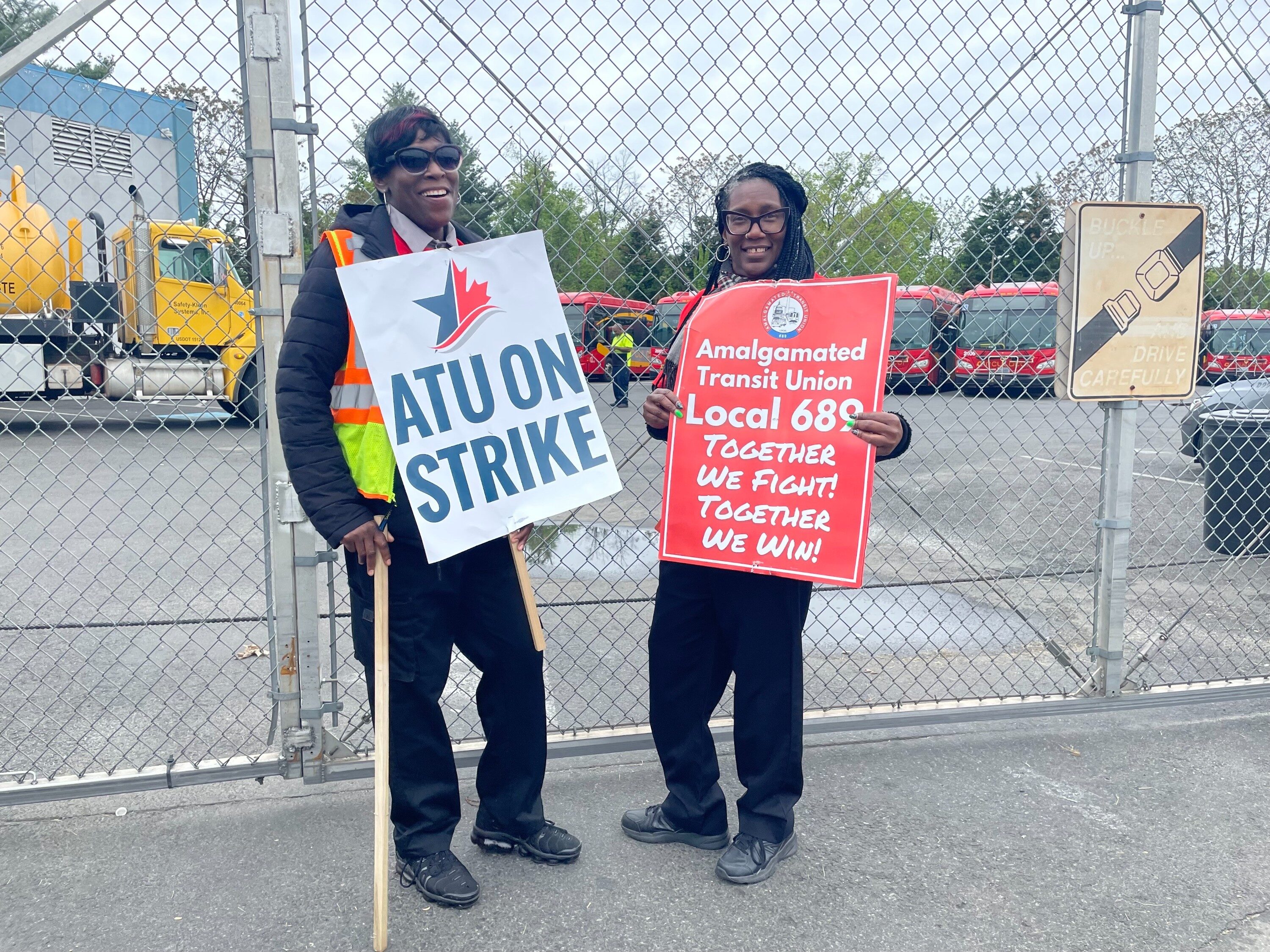
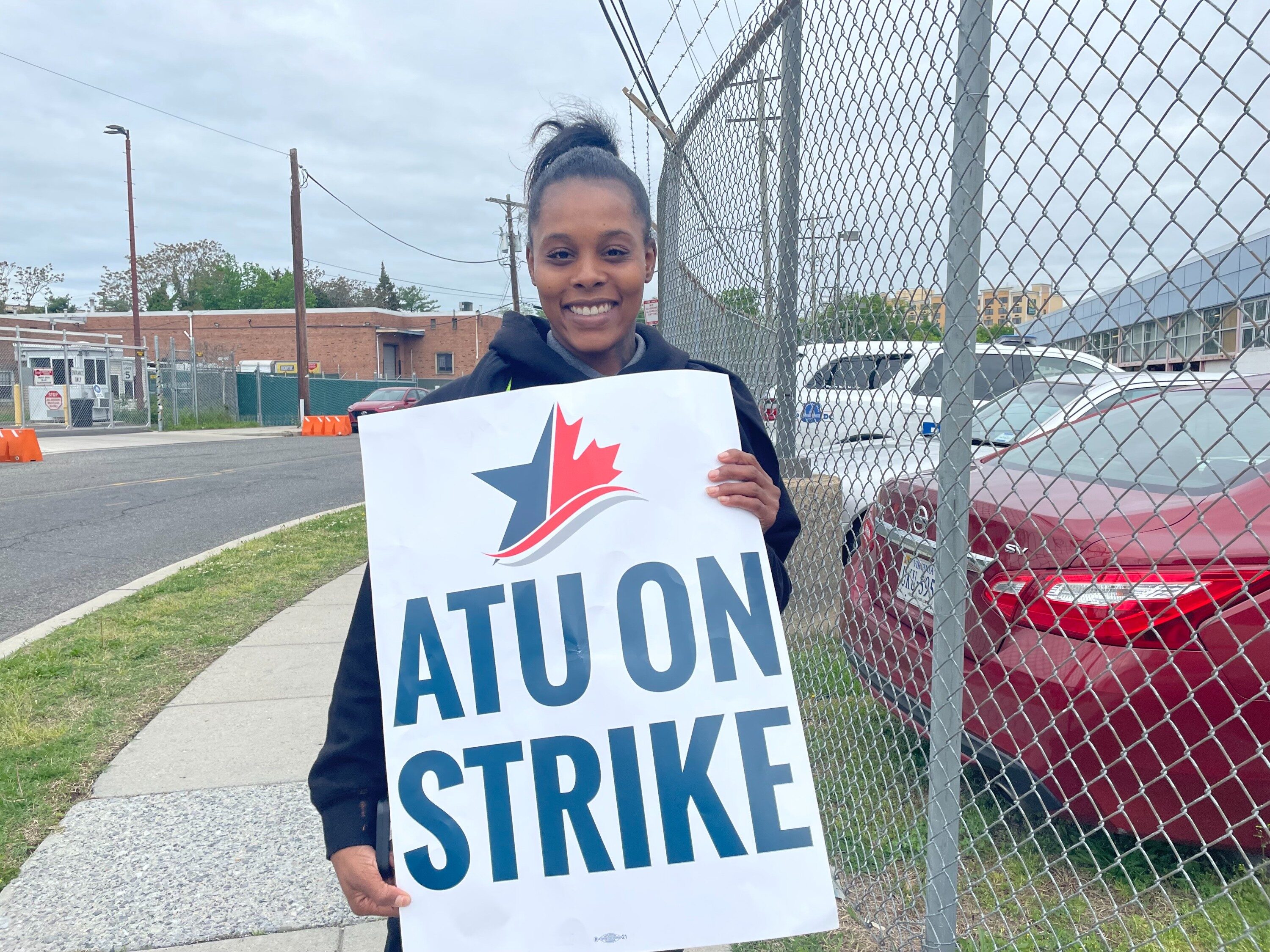
On Tuesday, workers began their strike, and picketed at the Circulator garage in Northeast. Various local lawmakers, including Councilmembers Janeese Lewis George (Ward 4) and Robert White (At-Large), joined them on the picket line in a show of solidarity.
James Tyree, who has been driving the Circulator for seven years, came out every morning of the strike. Typically, he works a roughly 11-hour shift, from 5 a.m. to 5 p.m. While the union’s demands — better wages, better benefits — motivated his action, he says it was important to stick together with his coworkers.
“It’s these people right here that work hard every day, to take care of their families, to take care of their responsibilities,” says Tyree. “That’s what motivates me every day.”
Jessica Wood, who has been driving out of the Hains Point garage for three years, says that going into the job (her first in transportation), she had been told she’d have good pay and good benefits — crucial, she says, as a single mom of two boys. But with inflation rising, she says what she was being paid wasn’t sustainable.
“Cost of living goes up, I have to pay bills, I have kids,” Wood says. “[Hearing about the tentative agreement] feels pretty good — it feels good that we have the say so, and not the company. Now we have the power to demand what we are deserved. That’s pretty cool.”
Local 689 says RAPT Dev’s negotiators are familiar because they bargained with the law firm in 2019 on behalf of bus drivers out of the Cinder Bed Road garage in Fairfax County. Bad-faith negotiations promoted a much longer strike, the union says, with bus drivers withholding their labor for 85 days.
The Circulator strike, impacting six routes along some of the city’s busiest neighborhoods, is only one of a few that have happened locally within the last year. Howard University staff threatened to strike in March but ultimately reached a deal with their employer before having to, while the university’s hospital workers went on strike for the first time since 1999 in early April.
This post has been updated to reflect that ATU Local 689 formally ratified the collective bargaining agreement.
Previously:
D.C. Circulator Drivers Are On Strike