 Julie Strupp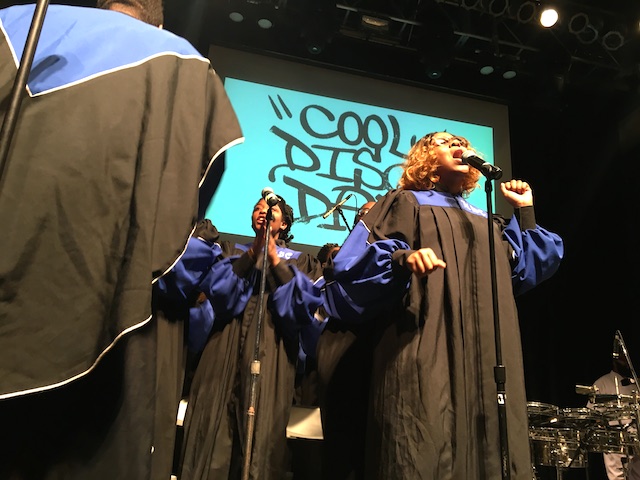
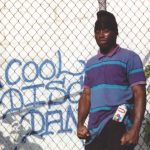
A diverse crowd of a few hundred crammed into the 9:30 Club early Saturday afternoon to pay their respects to a reclusive local legend who left his mark all over the city. Prolific graffiti icon Cool “Disco” Dan, whose real name is Danny Hogg, passed away suddenly on July 26 at the age of 47 from diabetes complications.
Cool “Disco” Dan “was a phenomenon, and is synonymous with every early memory I have of D.C. … the mystery of Dan never wore off,” said Joseph Pattisall, who directed the 2013 documentary The Legend of Cool “Disco” Dan along with Roger Gastman and Caleb Neelon.
In putting together the film over the course of a decade, Pattisall and Disco Dan became friends. “Once you can get past the layers with Dan, you saw he had a huge heart, the biggest smile you’ll ever see, and an extremely gentle soul. It took a long time to earn Dan’s trust, and I really wanted to do right by him then and now. I’m really proud to have called Dan my friend.”
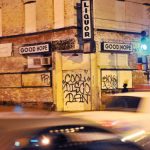
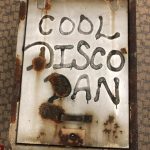
Dan began writing his go-go lettered signature at the age of 16 in the 80’s. His work was particularly visible to Red Line commuters into the 90’s when he was consensually “unmasked” in a 1991 Washington Post profile. He continued scrawling even as he struggled with homelessness and mental illness in his later years. Some of his signatures are still visible around the city, while others have been memorialized in the National Gallery of Art, the Corcoran, and the 2011 book The History of American Graffiti.
In a publicly unannounced move, D.C. Mayor Muriel Bowser took to the stage to officially proclaim August 19, 2017 as Cool “Disco” Dan Day, saying it was important to put the artist on the record as an important part of the city’s history.
“I grew up in Washington, D.C. in North Michigan Park and I took the Red Line every day, so needless to say, I got to know who Disco Dan was,” Bowser said. “We have learned from graffiti artists that we have to celebrate art in every form, and we have to find artists where they are and invest in their art so that many generations of people can share it. And that indeed is a legacy of a local legend—a D.C. legend—Danny Hogg.”
Disco Dan’s sister La Tonya Watson and mother Denise Womack went onstage to receive the plaque. They did not give a speech, but left a note in the memorial bulletin thanking his supporters and friends.
Local artists young and old spoke up about how much he meant to them, both personally and professionally.
He “was well known in the underground, but then he became known in the mainstream. No matter how well he became known, or how many exhibits he had, he just stayed humble throughout his life,” says Luis Del Valle, a local artist who attended with his young children. “That’s one of the things I admire about him. He was always willing to help and guide people trying to get into graffiti.”
The crowd was a jovial, mixed one and dominated by street artists, as well as go-go and punk musicians and fans. One woman wore a “Go-Go & Mumbo Sauce & Hot Smokes” shirt. When Master of Ceremonies and go-go artist Big Brother CJ Jones asked who hailed from D.C., the majority of the audience’s hands shot up. Admirers milled around outside, some of them leaving their own graffiti tags along with well-wishes in his memorial book.
“When I was doing my graffiti, I used to see his name and I was like, ‘Damn, my name’s gotta go somewhere; how did he get up there, how did he do that?’ He was like Spider Man, nobody ever knew who he was,” says Northeast native Lisa Henry, one of the first female graffiti writers in D.C. “I had to come out to support my graffiti brother.”
The Howard University Choir sang a tribute that pulsed with feeling before relinquishing the stage to legendary go-go band Rare Essence. Mourners waved their glowing phones or shook their canes, depending on the generation they hailed from, grooving away the sadness and celebrating the life of a man who, despite all the odds, had made a name for himself and the city they all loved. Now, the city has named a day for him.
“Nothing but respect, [Disco Dan] was a nice guy. They say he had a deep voice, but it was also soft.” laughs Lewis Pittman, a prominent ex-“wall writer” (which is what graffiti artists used to be known as in the 60’s and 70’s) from Philadelphia. Pittman and several other graffiti artists drove over to pay their respects. “He was a real humble guy, and I liked that. He was a real guy. Rest in peace, rest in paint.”