Rachel Kurzius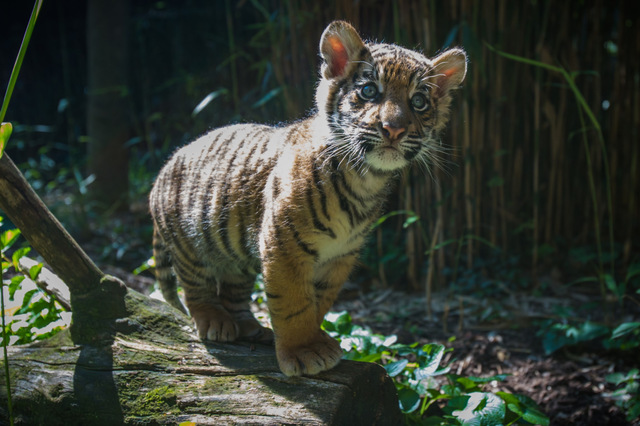
After his mother spurned him, a Sumatran tiger cub born this summer at the Smithsonian National Zoo is off to the San Diego Zoo Safari Park, where he will live with another cub.
The 9-week old male cub departed the D.C. metro area on Monday on a non-stop flight to San Diego in a special carrier.
Born on July 11 to 8-year-old Damai and 13-year-old Sparky, things first appeared to be going quite well for the unnamed cub.
However, by early August, Damai started displaying aggressive behaviors toward the cub whenever he tried to nurse, the zoo says. Damai “would vocalize aggressively and push him away with her hind feet. This started out as intermittent behavior, but in the following days it became more frequent and more intense,” said Craig Saffoe, the zoo’s great cats curator.
Noticing that the 19-day old was losing rather than gaining weight, keepers began feeding him “a combination of kitten and exotic animal-milk replacers” mixed with a bit of ground beef. It takes keepers about an hour to mix all of the ingredients to a consistency that passes through a nipple, according to the zoo.
While keepers continued to feed the cub, they tried to reintroduce him and Damai. It seemed to be working for much of August—she groomed and socialized him. But by August 23, her behavior took another turn for the bellicose, even as the cub continued to show interest in spending time with his mom.
From late August until their last meeting on September 4, she would growl, bark, and bite at the cub through a mesh door that separated the two but offered them visual access. Each passing day lessened the likelihood of a reunion.
Damai gave birth to twins in 2013, one of whom is still at the National Zoo.
“My team has mixed emotions right now,” said Saffoe in a release. “As his caretakers, we’ve done everything in our power to help him survive, thrive and socialize with his mother so that he can grow up to be a ‘healthy’ tiger. Now that Damai is no longer displaying the maternal behaviors we once saw, our best option is to pair him with the cub at San Diego Zoo.”
The cub in San Diego was found by U.S. Customs and Border Protection during a vehicle inspection at the U.S./Mexico border, and legal restrictions require it remain in California.
“Having another tiger that is about his age to interact with will be tremendously beneficial to the both of them,” said Saffoe. “They’ll be able to play, wrestle and learn how to be tigers together, which is instrumental to his long-term social development.”