Rachel Kurzius
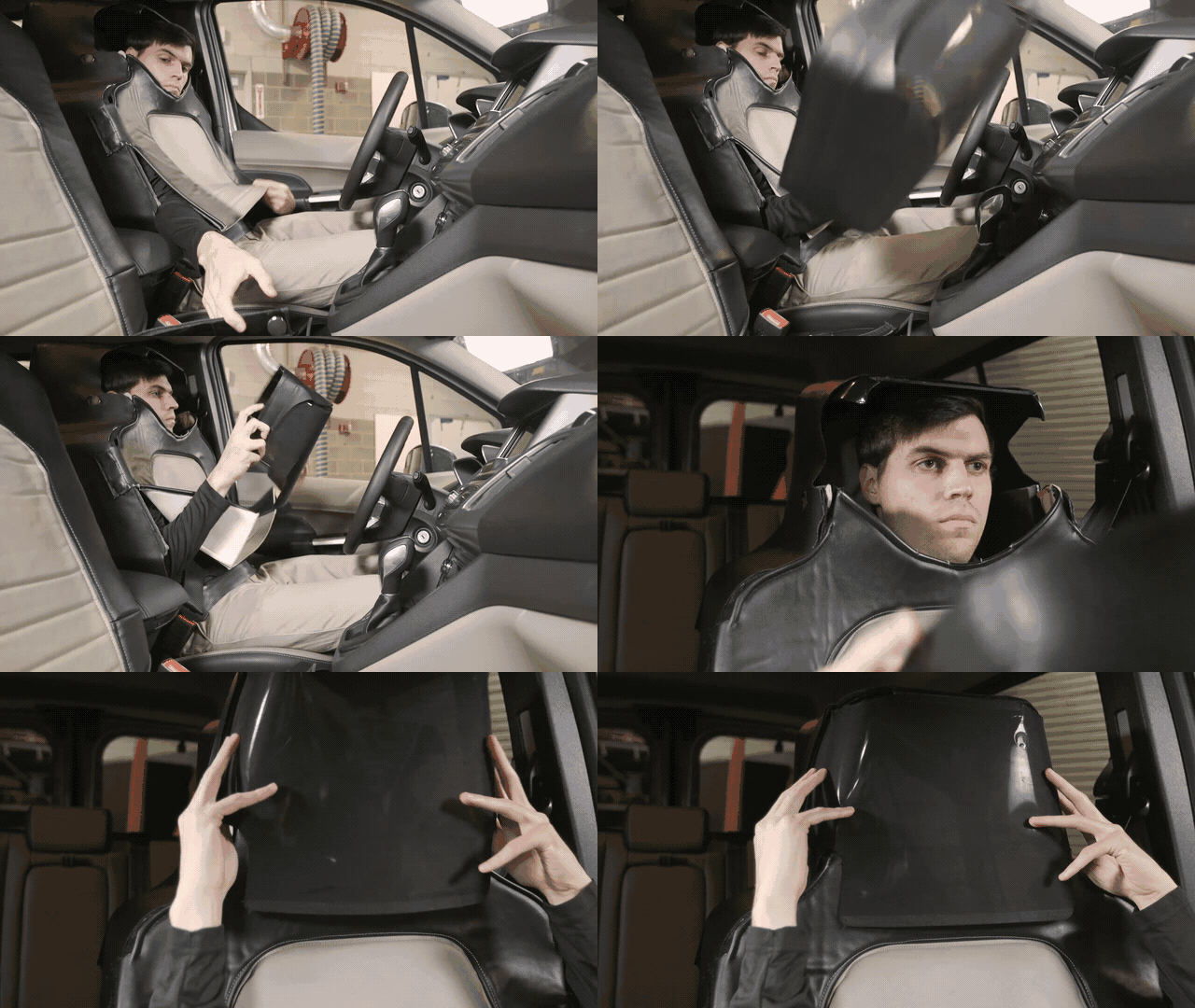 Man puts on his “seat suit.” (Image courtesy of Ford)
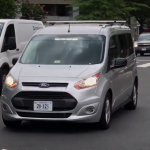
It was a classic case of truth being far stranger than fiction: ARLnow found what appeared to be a self-driving car cruising through the streets of Clarendon. But when NBC 4 transportation reporter Adam Tuss caught up with the silver van, he instead discovered a man behind the wheel who was dressed as a car seat.
It’s not some dude’s quirky pastime, though. No, it turns out this odd occurrence was all in the name of science.
Now, Ford and Virginia Tech Transportation Institute have explained what information they’re trying to glean from the experiment: figuring out how autonomous vehicles can communicate with the pedestrians, bikers, and other drivers with whom they’re sharing the road.
Right now, anything from a nod to a wave to eye contact can communicate intentions. But self-driving cars don’t have those capabilities.
“We need to solve for the challenges presented by not having a human driver, so designing a way to replace the head nod or hand wave is fundamental to ensuring safe and efficient operation of self-driving vehicles in our communities,” said John Shutko, Ford’s human factors technical specialist, in a release.
Brainstorming included using text, rejected because it required a shared language, and symbols, rebuffed ‘because symbols historically have low recognition among consumers,” per Ford.
So instead, the researchers decided to use lights, considering drivers already use them to tell others if they’re breaking or turning. They created three light signals, all of which come from a bar on top of the windshield:
- Yield: Two white lights that move side to side, indicating vehicle is about to yield to a full stop
- Active autonomous driving mode: Solid white light to indicate vehicle is driving autonomously
- Start to go: Rapidly blinking white light to indicate vehicle is beginning to accelerate from a stop
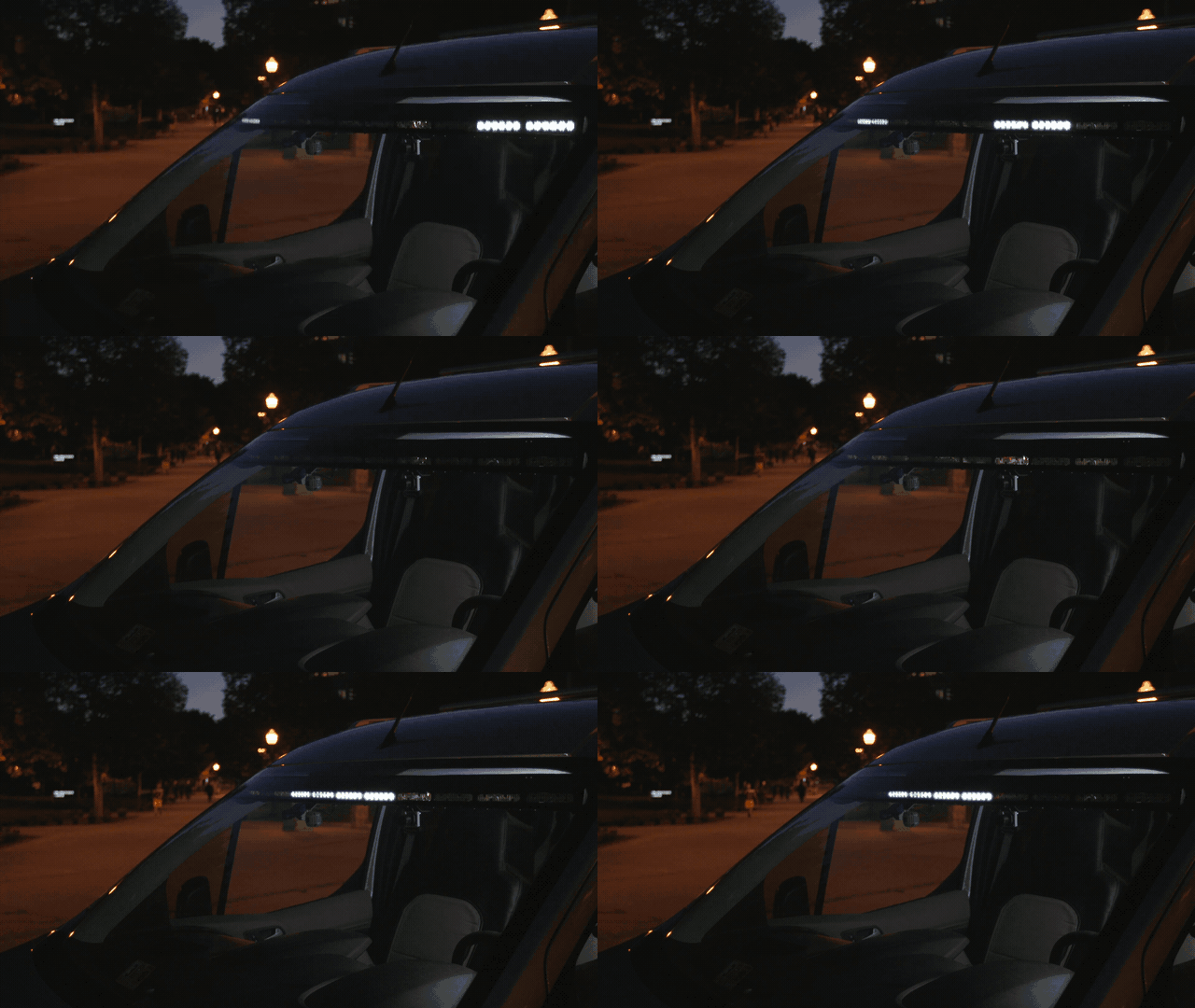 The light bar that communicates a car’s intentions. (Image courtesy of Ford)
This is where the “seat suit” comes into play. To test out the reactions of other people walking, cycling, or driving, researchers developed a a simulation of a self-driving car that still had the benefit of a person behind the wheel.
Throughout the month of August, that “simulated autonomous Transit Connect” drove about 1,800 miles in Northern Virginia, collecting more than 150 hours of video and logs of reactions during the deployment of those light signals more than 1,650 times in the Arlington area.
With that portion of the experiment completed, researchers are now off to interpret how and if people interpret those light signals.