Rachel Kurzius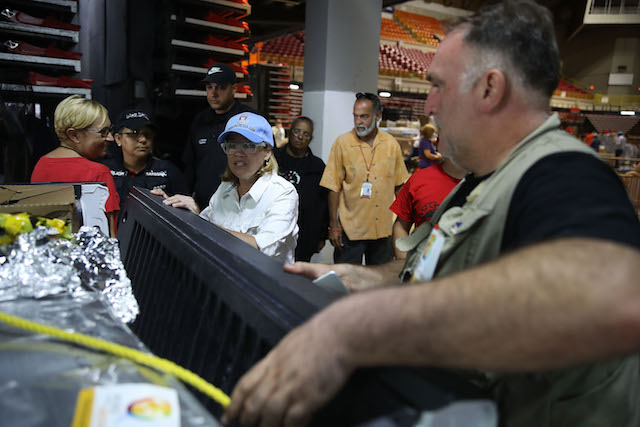
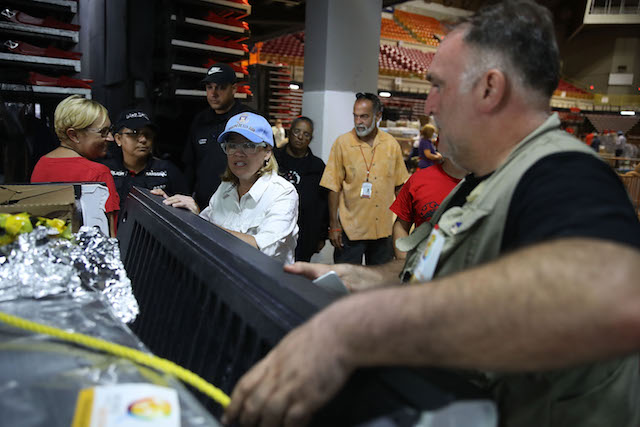 San Juan Mayor Carmen Yulin Cruz and Jose Andres (R) prepare a truck of relief supplies to be sent out from the Roberto Clemente stadium to those in need in the aftermath of Hurricane Maria on September 30, 2017 in San Juan, Puerto Rico.(Photo by Joe Raedle/Getty Images)
A New York Times story details how D.C. chef José Andrés managed to feed Puerto Ricans more warm meals than any nonprofit or government agency after Hurricane Maria left most of the island of 3.4 million people without power.
“The situation is that still some people don’t even have food,” Jesus R. Rivera, a Puerto Rican, told the Times. “He is all that is keeping them from starving.”
This isn’t Andrés’ first foray into emergency food relief. He formed the nonprofit World Central Kitchen after he went to Haiti following the devastating 2011 earthquake, and was in Houston in the aftermath Hurricane Harvey helping to organize volunteer efforts.
But his more than a month in Puerto Rico dwarfs those efforts. Per the Times, Andres’ network of kitchens, supply chains, and delivery services has provided more than 2.2 million warm meals and sandwiches to disparate parts of the beleaguered island. The operation cost about $400,000 at its zenith.
Every day our food trucks do the work. They take homemade hot Food to the people of Puerto Rico who need it!! #ChefsForPuertoRico @wckitchen pic.twitter.com/MeRg6O5Q5p
— José Andrés (@chefjoseandres) October 29, 2017
The idea is that chefs are uniquely skilled to help in the aftermath of a disaster because of the supply chains they’ve already built and their ability to work in stressful situations to prepare large amounts of food with a mish-mash of ingredients. The Times notes that Andrés “admonished volunteers to add more mayonnaise to sandwiches, keep the temperature up on the pans of rice or serve bigger portions.”
He found himself flummoxed when other organizations he assumed had things under control were asking him for help. “In my life I never expected the Salvation Army to be asking me for food,” Andrés told The Times. “If one of the biggest NGOs comes to us for food, who is actually going to be feeding Puerto Rico? We are. We are it.”
That doesn’t mean that Andrés didn’t ever butt heads with other organizations like the Federal Emergency Management Agency. “I am doing it without red tape and 100 meetings,” he told The Times.
Back in D.C. since Thursday, Andrés left behind a core crew that will continue to dole out hot meals on a smaller scale. He said that, with the majority of grocery stores reopening, “An NGO has no right taking money away from business.”
Nearly six weeks after the hurricane, about 70 percent of Puerto Rico still doesn’t have power.