By DCist contributor Lorie Shaull
What’s a lady to do if she finds herself born into a wealthy family in the late 1800s, is equipped with all the skills that come along with being raised a society woman of the 1900s, misses out on a college education, has a lifelong curiosity for Sherlock Holmes sleuthing, and ends up with a pile of money when she reaches her 50s? One could do worse than becoming the pioneering vision behind the field of forensic science.
Frances Glessner Lee, who has been called “the mother of forensic science,” is best known as the creator of the Nutshell Studies of Unexplained Death, a set of 18 intricately designed dioramas depicting miniaturized death scenes that are now display through at the Smithsonian American Art Museum’s Renwick Gallery.
It’s a gem of a story that was, until recently, tucked away on the fourth floor of the Maryland Medical Examiner’s office, much of it told to me by Bruce Goldfarb, the executive assistant to the Chief Medical Examiner in Maryland and overseer of the dioramas.
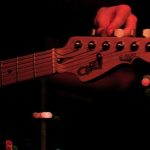
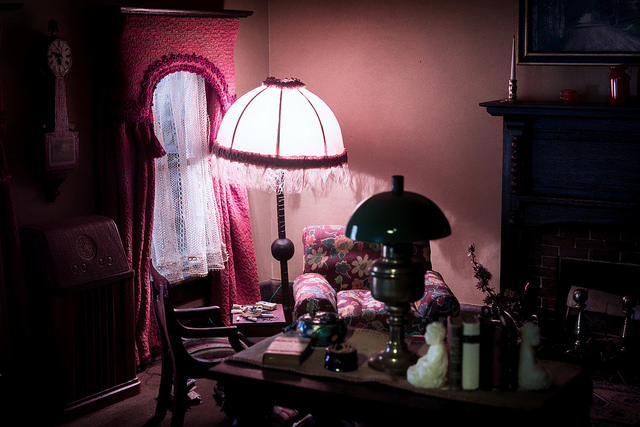
The dioramas may seem macabre twists on your typical dollhouse scene. In fact, they were meticulously designed by Lee as training tools for studying clues in crime scenes and they’re still in use today (the photos above were taken at the Maryland Medical Examiner’s Office before they made it to the Renwick). And the Nutshell Studies, named after a saying in forensic pathology that an investigation’s purpose is to “convict the guilty, clear the innocent, and find the truth in a nutshell,” are just a part of Lee’s contributions to the field.
Born in Chicago in 1878 to the wealthy Glessner family, Lee would have liked to go to college to study medicine, but her family was of the belief that a woman shouldn’t attend college. Instead she married at 20, an unhappy union that ended eight years later.
Meanwhile, Lee had developed a friendship with George Magrath, a classmate of her brother’s at Harvard who would eventually become a medical examiner, that inspired her interest in forensic science.
As she grew more familiar with the subjects, she became aware of the need for better training in the area of crime solving. She also came to learn that police officers and homicide detectives were inadvertently bungling crime scenes by misguided actions like walking through blood stain patterns, handling weapons, putting their fingers through bullet holes, all sorts of things “they weren’t trained not to do,” Goldfarb says.
So she brought a quintessentially feminine pastime to the field: miniature-making. Lee spent thousands of dollars and many hours to craft the dioramas, which recreated real crime scenes in intricate detail.
In 1945, Lee helped establish the Harvard Associates in Police Science weeklong seminar series to train police officers in legal medicine, which used the dioramas as part of the training.
At the seminar’s end, participants were treated to a fancy dinner at the Ritz Carlton with Lee as the vision and money behind all of this planning. “She spent a ridiculous amount of time to make sure the centerpieces were just right and the menu, just everything. For a lot of these guys I’m sure it was the finest meal they ever had in their lives,” Goldfarb says.
Beyond establishing training, Lee had the foresight to understand the importance of the public’s awareness around death investigation.
“People need to know how it should be done and the best way to do that is through popular culture,” says Goldfarb. And what’s the best way to affect popular culture? Lee reached out to Hollywood agents and helped shape the movie, Mystery Street starring Ricardo Monteblan (of Fantasy Island fame to readers of a certain generation) as a medical examiner from Harvard who investigates homicide cases. Enter the first procedural crime movie with modern scientific investigation, the precursor to basically the whole genre of crime solving shows like CSI and Bones.
When you learn of all the components of Lee’s contributions to crime investigation and forensic science, it’s seems a remarkable amount of foresight and vision. And when I ask Goldfarb about that and Lee’s motivations he tells me, “I think that she saw a need and she filled it. She saw something nobody was doing. That thing needs to be done. I have the resources to do it. How do we do that?”
It’s a remarkable contribution from one person and the dioramas—each of which comes with a description of the events leading up to the aftermath depicted—are still used for training in the annual seminar. They have solutions but, in order to maintain their usefulness, the answers are kept secret. Over 70 years after their creation, the miniaturized lives frozen in time have maintained their usefulness.
And for the first time, the public can see all of them (including a “missing” Nutshell that was found in the attic of the family’s summer home) in one place. In the gallery next door is a concurrent exhibition inspire
Murder Is Her Hobby: Frances Glessner Lee and The Nutshell Studies of Unexplained Death is on display through January 28 at the Renwick.