Natalie Delgadillo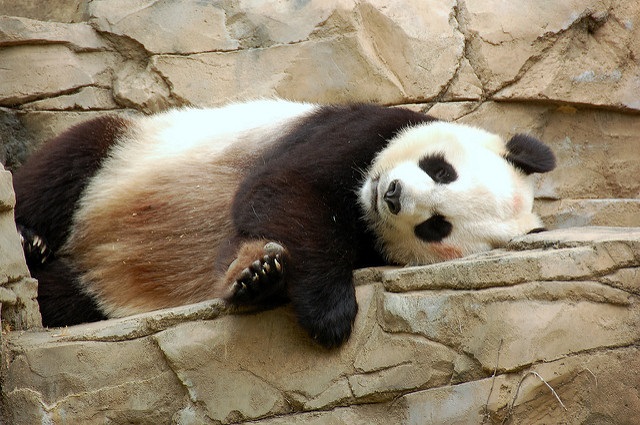
 (
(
Looks like there’s no new baby panda coming to the National Zoo any time soon. Giant panda Mei Xiang’s observed behavioral changes have turned out to be nothing more than a pseudopregnancy, which is common in pandas.
Mei Xiang was artificially inseminated with Tiang Tiang’s semen back in March, on the day she reached “peak estrus” (female giant pandas are only fertile for up to 72 hours a year, often less). Tiang Tiang is the father of her three other children, and the panda with whom she has had a long, fumbling romance.
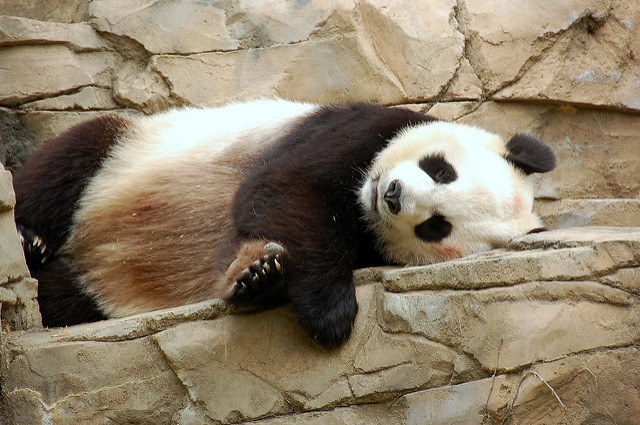
Mei Xiang started exhibiting behavioral changes in the following months indicating she was either pregnant or experiencing a pseudopregnancy. She took to staying inside her enclosure for most of the day, coming out only to eat her bamboo breakfast, according to the National Zoo. She was also sleeping much more than usual and began building a soft nest on the floor of her enclosure.
Pandas often experience pseudopregnancies after they ovulate and fail to conceive. These fake-outs can last anywhere between 90 and 180 days, the same length of time as a real panda pregnancy. Their hormones and behaviors mimic the real thing so exactly that scientists can’t tell for sure whether a panda is pregnant except by ultrasound. But even that is complicated—pandas experience something called “delayed implantation,” which means that the embryo “floats” in the uterus until a few weeks before birth, when it finally implants into the uterine wall.
Mei Xiang’s progesterone levels began to rise on May 2, just like a pregnant panda’s would. Zoo staff trained her to submit to twice-weekly ultrasounds (though she could always opt out), but they were never able to see a growing cub.
In the face of her possible pregnancy, the zoo closed the panda house to give her some peace. But it was all for naught—the elevated progesterone she had been exhibiting dropped back to normal on July 1. And on Thursday, the zoo performed a final ultrasound to confirm that Mei Xiang isn’t pregnant.
The panda house will open to visitors again today from 9 a.m. to 6 p.m. “Mei Xiang’s denning behaviors will decrease and staff expect her to return to her normal routine within a couple of weeks,” according to the zoo.
Mei Xiang turns 20 this month, which means she’s nearing the end of her reproductive life.