Natalie Delgadillo
 (Photo courtesy of the Homeless Children’s Playtime Project)
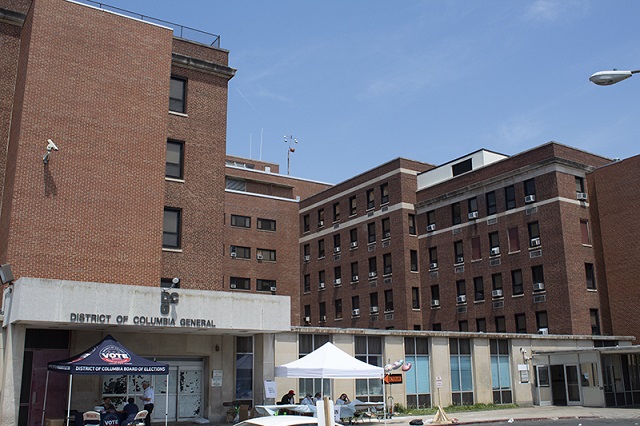
Eight members of the D.C. Council are calling on the city to halt all demolition at the D.C. General campus, following the discovery of high levels of lead.
The D.C. Department of General Services reported elevated levels of lead outside a building set to be demolished on the D.C. General homeless shelter campus in Southeast over the weekend, and has stopped exterior deconstruction work until the area is decontaminated.
Homeless advocacy groups have been pressuring city officials to delay the demolition until families are moved out—dozens of organizations and more than a thousand people have signed a petition, and activists protested outside Mayor Muriel Bowser’s home at the end of July.
Following a letter to DGS Director Charles Gillis from Ward 1 Councilmember Brianne Nadeau earlier this week, seven councilmembers joined the chorus of voices on Thursday, demanding in a letter to Bowser that all demolition on the site stop until residents have been moved out of the building.
“The potential danger to the families living at the D.C. General shelter is simply too great to allow the demolition to proceed, given that Administration officials have stated there is no deadline for completing demolition,” the letter reads.
The seven councilmembers who signed the more recent letter are Ward 3’s Mary Cheh, Ward 6’s Charles Allen, Ward 7’s Vincent Gray, and Ward 8’s Trayon White, and At-large councilmembers Robert White, Elissa Silverman, and David Grosso.
This is the latest in an ongoing saga of Bowser’s plan to close the D.C. General Homeless shelter by this fall—and to begin tearing down surrounding structures even as families are still living there.
Advocates have long been in favor of the dilapidated shelter’s closure—it’s run down, infested by rats, and has been the site of tragedies, including the 2014 disappearance of 8-year-old shelter resident Relisha Rudd. Bowser campaigned on the shelter’s closure four years ago, and released an official plan to replace it in February 2016 (this plan eventually underwent significant revision by at the D.C. Council).
But progress has been slow, and residents of the shelter and advocates for the homeless were surprised in January when the mayor announced definitively that the shelter would be closing this fall. The smaller shelters around the city meant to replace the giant family shelter aren’t ready yet, meaning that some families will be placed in motels. What’s more, the D.C. government has already started deconstruction on the large D.C. General campus, which has sparked opposition from residents and advocates who are worried about health risks to residents from asbestos or lead contamination resulting from the demolition.
“It’s very disrespectful that they’re doing this [construction work] before everyone has moved out,” Ikea Hunter, a resident at D.C. general, told DCist in June.
The latest discovery of lead outside of Building 9, the building set to be deconstructed as residents live in the shelter about 200 feet away, appears to have confirmed their fears.
“Our opposition was founded,” wrote Bread for the City advocacy director Aja Taylor in a blog post.
The lead was found on July 20, when DGS contractor Hillis-Carnes Capitol Services took seven surface soil samples about six inches from the building wall. Five of the seven samples were above 400 parts per million, which is D.C.’s lead cap for areas where children may be present, like schools and daycares. Four of those five samples were also above 1200 ppm, the limit for demolition sites. The contractor told DGS in a July 31 report that the source of the lead was likely some wood window frames on the building, and that the frames had been “90 percent remediated” to date.
One other sample taken on July 27 was also found to be above 400 ppm. Residents were not informed about the elevated lead levels until August 3. On Monday, Gillis told the Washington Post that the department wanted to understand the scope of the problem before making it public.
DGS has confirmed to DCist that, upon learning about the lead, it stopped all exterior deconstruction work on the building, but has continued work on the interior. DGS maintains that it’s safe to perform interior deconstruction even with lead in the soil outside.
The councilmembers’ letter to Bowser says demolition poses both physical and emotional dangers to shelter residents, particularly children.
“In addition to many stressors that are associated with homelessness, many children from homeless families have experienced traumatic incidences. For these families, particularly children, a stable environment is essential,” the letter reads. “We simply do not understand the urgency to demolish these buildings and certainly cannot imagine a reason that outweighs the danger to the families living on the D.C. General campus.”
In her letter to Gillis, Nadeau also asked for information from the agency, including the results from any additional soil tests and why the agency has not collected samples to test for lead in the soil nearer to the shelter building. A spokesperson for DGS told DCist that the agency is currently in the process of answering all of Nadeau’s questions.
The spokesperson says the lead was originally found as a part of standard tests DGS always performs before they begin any kind of deconstruction work. Lead abatement outside of Building 9 is slated to begin on Friday, and should take about a week—when it’s finished, exterior deconstruction of the building can begin.
The D.C. Council considered legislation, proposed by Councilmember Trayon White in July, that would halt demolition until families are moved out, but ultimately passed a watered down version of the bill that requires stricter oversight of the demolition process at the site.
“These reporting requirements aren’t effective. They’re being reported to the council when the council is not even in session,” Kathy Zeisel, of the Children’s Law Center, told DCist at the time. “There’s nothing that triggers enforcement or any next step. It doesn’t even say what happens if they find [elevated levels of] lead and asbestos.”
In writing to DGS, Nadeau said: “I have deep concerns about the level of transparency that has been afforded D.C. Council, the current residents of D.C. General, and the community members and advocates concerned about the well-being of workers, staff, and residents on site.”
This story has been updated to include information about a new letter from seven councilmembers to Mayor Muriel Bowser.
Previously:
Activists Stage Mock Demolition Of D.C. General Outside Mayor Bowser’s House
D.C. Council Won’t Delay Closure Of D.C. General
Despite Delays For New Homeless Shelters, Officials Aren’t Pushing Back D.C. General’s Closure
Gleaming Posters For New Development, Construction, Dust: What It’s Like To Live At D.C. General Right Now