 (C
(C
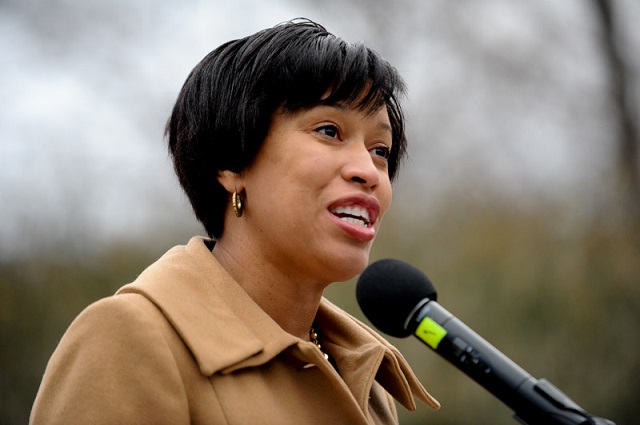
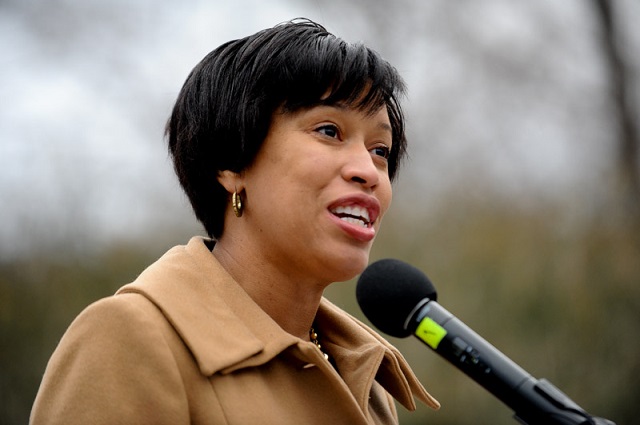
Members of the D.C. Council are challenging Mayor Muriel Bowser’s control of schools.
Council Member David Grosso (I-At Large) is introducing a bill that would make the Office of State Superintendent of Education (OSSE) an independent agency outside of the mayor’s office. OSSE currently oversees federal funding, enrollment, and education standards for D.C. Public Schools.
The bill would also extend the term of the superintendent from four years to six and it would only allow the superintendent to be fired with just cause. Currently, the mayor can hire and fire the superintendent at will. The legislation further gives OSSE the authority to hire all of its personnel, rather than allow the mayor’s office to fill certain positions.
“What we are trying to do is remove politics from education policy as much as we can while still supporting the mayoral control of [D.C. public school’s] work,” Grosso says. “We are trying to give another objective agency the power it needs when it comes to oversight of all these critical and important areas.”
Representatives from the mayor’s office say they don’t support the legislation. “The students of the District of Columbia can ill afford misguided education legislation that moves our city backwards more than a decade and undermines the hard work of our teachers, administrators and staff,” says Interim Deputy Mayor for Education Ahnna Smith in a statement. “We need to be working collaboratively in the best interest of our students, and ensuring that the Office of the State Superintendent of Education and our schools have the resources they need to make every day count.”
This comes eight months after the previous chancellor and former deputy mayor of education resigned following investigations into graduation rates and reports the chancellor had circumvented the school lottery system to transfer his daughter between schools.
Grosso’s bill reflects a lack of trust many Council members have for the mayor’s office when it comes to education. And it’s not the only legislation to take on the mayor’s role in the city’s classrooms.
Creating an education data auditor
Council Member Mary Cheh (D-Ward 3) has introduced a bill to establish the “Education Research Collaborative,” a new agency that would collect data from schools and analyze how they’re performing. This agency would be housed in the D.C. Auditor’s office, not the mayor’s. It would have subpoena power and, Cheh says, greater independence, which she hopes will lead to more trustworthy assessments of schools.
“[The Mayor’s Office is] the source of the information that is misleading.That has lead us to think, ‘oh we are making improvements,’ but then it turns out we’re not,” Cheh says. “We found out that the graduation rate is false. We found out that suspensions are supposed to be down. They are just kicking some kids out of school but they are not calling them suspensions. There are all sorts of things.”
Officials in the mayor’s office agree that schools and the city could benefit from data analysis, but they disagree over who should do this analysis. They say having the auditor oversee research would create more of a watchdog than a partner, and they’ve been in talks with the nonprofit Urban Institute about forming their own research collaboration.
“The proposed legislation does not model the establishment of several successful research collaboratives that have been developed in other jurisdictions,” says Smith. “And instead could result in added layers of bureaucracy politicized education research and hinder our ability to ensure that our primary focus remains on using data to support students.”
Are there risks to limiting the mayor’s role in education?
Education experts are split on the most effective management system for schools. Mayoral control gives the public someone to hold accountable when things go wrong and encourages mayors to invest in public schools, but it can also lead to trust issues.
“If the mayor is responsible for the production of data that is going to be used to assess the quality of education and educational progress he or she has kind of an incentive to gild the lily and interpret things in a certain way,” says Joseph P. Viteritti, a professor of public policy at Hunter College.
Kenneth Wong, a professor of education policy at Brown University who has advised several large urban school systems on accountability, disagrees. He says the mayor’s office should hold themselves to a higher accountability and legislators can do more to enforce proper governance in schools without changing the system.
“For example [the legislature] could hold budgetary hearing they could ask for auditing and all kinds of accountability reports. They can do it more frequently than their scheduled meetings right now,” Wong says. “There are already checks-and-balance mechanisms in place to kind of legislatively hold the executive branch accountable instead of reducing the authority or coherence of the executive branch.”
What are the chances of the these bills passing?
Cheh’s bill isn’t yet scheduled for a full vote. But the council has designated $500,000 to the auditor’s office to start a pilot data collaboration project by Oct. 1. Grosso’s bill still needs to pass committee before going to full council.
If both bills pass, they will go to the mayor’s office for a signature. Bowser has only vetoed one bill in the past, but it was related to education — a measure to graduate students caught in the inflated graduation numbers scandal.
This story was updated to include a statement from the mayor’s office. It originally published on WAMU.