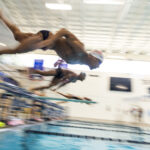
Getting a late start off the block often means having to play catch up with your opponents once your body meets the water. Most of the time, in swimming, a late start is not good. But for Howard University swimmer, Latroya Pina, it was all the motivation she needed.
At the age of eight, she didn’t have an inkling that her mandatory swim lessons would turn into a career, and now, an opportunity to win an Olympic medal, representing Cape Verde alongside two of her siblings.
Gymnastics was her first love. But one of the swim instructors at the Boys & Girls Club didn’t see it that way.
“The instructor said, ‘We’re just going to put you on the swim team,’” Pina says. “At the time, I was a gymnast, and my mom told him that he couldn’t put me on the swim team, but the next day, I was at swim practice for the swim team.”
A few short years later, swimming had all her attention. She left gymnastics at age 10 because it was too expensive. The Rhode Island native began swimming competitively at the age of 14, shortly after moving to Massachusetts with her family. “For competitive swimming, it would definitely be a late start,” Pina says.
Pina’s mother raised her and her siblings, first generation Americans, as if they were in Cape Verde. “I grew up in that culture,” says Pina. “My mom speaks [Creole] to us. We eat the foods.”
She set her sights on Howard University as a potential option to further her swimming career, though that wasn’t the only reason she eyed the historically black school.
“I grew up in a mostly white town,” she explains. “I just wanted to get the experience of being around black people and other cultures. Honestly, Howard isn’t just for black people … It’s a big mix of everything, and that’s what I liked about it.”
The desire to experience other cultures while training to be a top-level swimmer was something that was discussed early on in the recruiting process, according to Nicholas Askew, the head coach of the Howard University swimming and diving program.
As a fellow Bison and former swimmer in the program, he knew what Pina needed to succeed as a part of the nation’s only Division I HBCU program.
Askew says his recruiting discussions with Pina revolved what she would have to do in both the classroom and pool. “I could tell through those conversations that she was very eager to step up to the challenge,” he says.
Her favorite stroke is the breastroke. “I’m normally the breaststroker in the medley,” she says, but she’s flexible. “Honestly, wherever coach puts me is where I go, where I swim.”
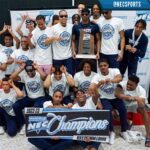
Pina was part of Askew’s first recruiting class as a coach, and he says her growth as a swimmer is evident in her becoming the next Olympic swimmer to come out of Howard University.
She will not only be competing in the 2020 games, but will be a part of Cape Verde’s first ever national swim team. It’s an honor she takes very seriously, but, at first, didn’t think was real.
The initial contact with the team came from a Facebook message, which left Pina and her family a little skeptical. “Honestly, at first we thought it was a joke,” she says.
It didn’t take long for them to verify that the offer was legitimate, thanks to family members who still lived in the archipelago nation off the northwest coast of Africa where her mother was born.
“It’s honestly an honor to represent my country,” says Pina. “ I’ve never been there personally, but I feel like I have been there.” Her grandmother lives in Brockton, Mass., an area with many Cape Verdeans and “you feel like you’re in Cape Verde even though you’re not actually in Cape Verde.”
Her goal is to show the people of that country that they can swim too, and accomplish all that she has, despite lack of resources.
“It’s not really a sport in Cape Verde,” she explains. “They swim in just the ocean. They’re constructing a pool now. The kids there don’t really know much about swimming, but it would be nice to show them that this is a sport and you can do it too.”
Like Simone Manuel and fellow Bison, Ngozi Monu, she continues to defy the racial stereotype that “black people don’t swim.”
“I feel great about breaking it,” she says. “We do know how to swim, and we can learn how to swim. It’s just that people need to instill in their kids, ‘Hey, we should learn how to swim.’”
The Pina family certainly has. Pina will be swimming alongside and competing with her two younger siblings, Troy, 19, who is also a swimmer at St. Peter’s University, and Jayla, 14. The three of them make up 75 percent of Cape Verde’s team. As a family, they’re excited to compete with each other and for their mother’s country.
“My family and I are very close, so we pump each other up,” says Pina.” That’s the best part—having them by my side to not only be there if I don’t do as well as I want, but to be there to support me and cheer me on.”
The last swimmer from Howard to compete in the Olympics was Ngozi Monu, a teammate of Askew, who competed in 2008 representing her country of Nigeria.
“To have Pina be the next swimmer from Howard University to make an Olympic team is fantastic,” says Askew. “To now see it in a different capacity as the coach of this program, it’s come full circle. I couldn’t be happier. I’m so excited for her, and even more potentials to be in the 2020 Olympics and the 2024 Olympics.”
With the success stories of swimmers like Pina and Ngozi, Askew hopes that Howard serves as an inspiration for other HBCUs to either restart the programs they once had, or create a new swimming and diving program.
“When we look at the drowning rates of minorities, it’s something we can make a difference in as HBCUs because we are drawing mostly minorities to our campuses,” says Askew. “There’s a need to make an impact. We have that platform.”
Pina sees her competing in the 2020 Olympics as continued validation of Howard’s swimming and diving program is and what its swimmers can offer the sport.
Askew agrees. “It means to us that Howard University and our swimming and diving program is extremely relevant to swimmers of high and elite levels,” he says. “It shows that our swimmers can compete at what is considered the biggest opportunity for any swimmer, which is competing at the Olympics and representing their country.”
But before 2020, Pina has a competitive season ahead of her. She’s anticipating her graduation in May, and hoping to keep up her 3.0 GPA as a student-athlete and biology major. She plans to take a few gap years to focus on training for the Olympics before going to medical school.
“My biggest accomplishment is going out with the best that I can be,” Pina says. “Finishing with a bang.”