Natalie Delgadillo
After running a yearlong pilot program with dockless bike and scooter companies, the D.C. Department of Transportation is making it official: on Monday, the agency released permit applications for dockless vehicle companies hoping to operate in the District in 2019.
There are several changes to the requirements in place under the pilot program, which agency director Jeff Marootian says “reflect the promise DDOT sees in this program to increase active transportation in the District, as well as the many valid concerns we heard from a wide range of stakeholders involving safety and equity,” according to a press release announcing the applications.
Some of these changes increase flexibility for operators: the agency will now allow each company to operate 600 vehicles under each permit, up from the 400 previously allowed under the pilot program. Companies will be allowed to offer both bikes and scooters simultaneously, and each vehicle type will have its own permit, meaning that a single company could operate up to 600 of each. (Previously, companies could provide both bikes and scooters, but the total of both was capped at 400.) Every quarter, companies can apply to increase their fleet even more, by up to 25 percent each time.
This increase gives dockless vehicle companies some more wiggle room but, if new dockless providers don’t flood into the District, it’s far less than what advocates wanted. The Washington Area Bicyclist Association, along with other groups like the D.C. Sierra Club, wrote a letter to the mayor months ago requesting 20,000 bikes and scooters in the District.
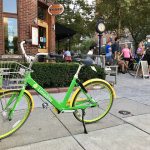
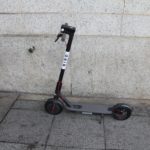
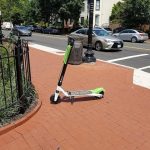
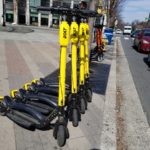
Some of the new regulations will place more constraints on the companies. In line with earlier rules DDOT announced, all the dockless bikes will have to be equipped with a locking mechanism so they can be attached to poles or bike racks. Currently, Jump is the only dockless company offering bikes (several more pulled out of the market over the summer, citing the 400-bike cap). Skip, Bird, Lime, and Lyft all offer scooters only. Spin, another company that used to offer dockless bikes, left the market to transition to scooters.
In a move sure to disgruntle the speed-demon scooter enthusiasts of the District, the new regulations also place a speed cap of 10 miles per hour on motorized scooters, while motorized bikes can go up to 20 miles per hour. Currently Bird and Lime scooters can go up to about 15 miles per hour.
In response to concerns about equitable access to the bikes and scooters, DDOT is also requiring that all of the companies offer a way to rent out a bike or scooter without a smartphone (currently, you need to download an app on your phone to unlock the vehicles). The agency is also requiring a cash payment option and low-income pricing plans that waive initial deposits. Companies also have to offer unlimited trips under 30 minutes to customers at an income level below 200 percent of the federal poverty line.
DDOT is also encouraging, but not requiring, companies to offer adaptive vehicles for people with disabilities. Those vehicles wouldn’t be counted toward the maximum number under the company’s permit.
Additionally, each company with a permit must be sure that vehicles are available in all eight wards every day before 6 a.m., according to DDOT. Companies have only a few weeks to submit their applications; the deadline is November 19.