Rachel Kurzius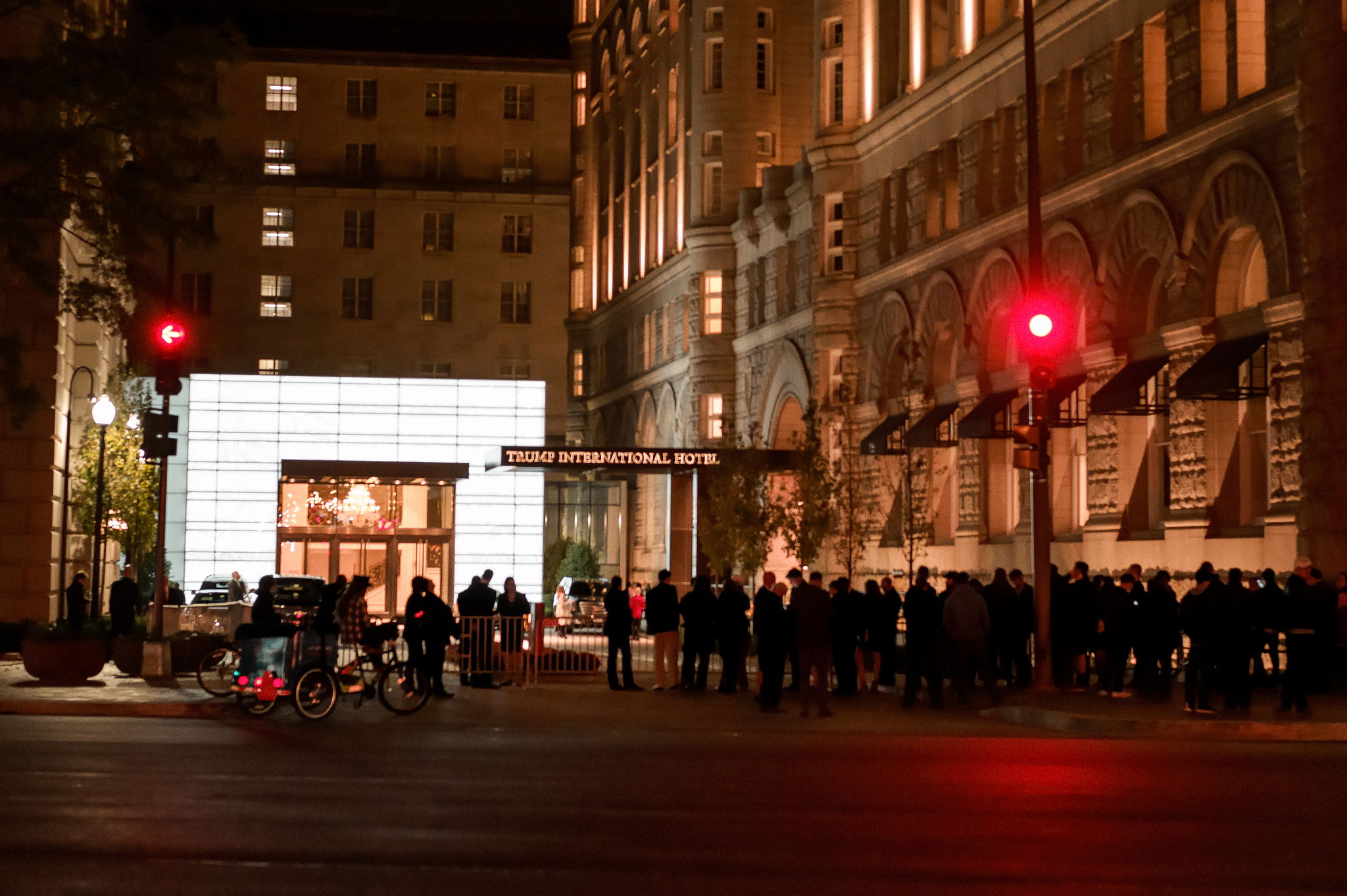
A U.S. District Court judge has dismissed a lawsuit filed by the owners of a D.C. restaurant and event space against President Donald Trump over unfair competition.
Khalid Pitts and Diane Gross, the owners of Cork Wine Bar, alleged in a suit filed in March 2017 that the Trump International Hotel has an unjust advantage over other local businesses because potential customers—lobbyists, foreign dignitaries, business advocates, and more—want access to the commander in chief and have “substantially increased their use of the Hotel and its various facilities to the detriment of Cork.”
Lawyers for Trump called to dismiss the suit, and U.S. District Judge Richard Leon agreed with them on Monday. He wrote in his dismissal that neither Trump (whose eldest son technically has control over the hotel, though the president has not renounced his ownership stake) nor the hotel has technically interfered with the wine bar’s business. Even if the Trump International Hotel has acted “to realize and maximize the competitive advantage and financial benefits available to them as a result of President Trump’s heightened notoriety since taking office … [that] is not to a legally redressable wrong.”
Scott Rome, one of Cork’s lawyers, disagrees with Leon’s decision. “We don’t think it’s legitimate competition when the president of the United States is enriching himself by running a business,” he says. He notes that, while the lawsuit is suing Trump in his capacity as a businessman, the case hinges on the fact that he is a public elected official whose hotel has a lease with the federal government.
Leon wrote that “there are constitutional questions of profound weight and import lurking within the contours of this case,” but the lawsuit “can be resolved without opening that Pandora’s box of novel issues.”
Those novel issues may instead come to the fore in another lawsuit centering on Trump and his business interests, with a particular focus on his Pennsylvania Avenue hotel. D.C. Attorney General Karl Racine and Maryland Attorney General Brian Frosh are suing Trump for violating the Constitution anti-corruption clause, and that lawsuit has made it into the discovery phase. Racine told DCist in July that he will seek to make Trump’s business records public.
Racine said that “the reason why we brought this case is because literally blocks away from the office of the A.G., the president is actively soliciting business from foreign sovereigns and domestic sovereigns.”
Rome says that he and his clients are considering whether to appeal Leon’s decision.