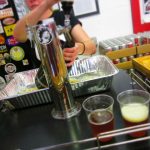
It’s 4 p.m. on Thanksgiving Eve when DC Brau opens up its taproom. Customers trickle in, grabbing six-packs out of the fridge in the corner or getting growlers of beer filled to take home for the holiday.
Chris Olson of Brookland stops in to replenish a pair of 64-oz. growlers. He visits once or twice a month, he says. He’s fond of the brewery’s reliable lineup of “go-to” beers and the “laid back” feel of its small taproom.
“I think they take a lot of pride” in being a D.C.-based beer maker, he says, “but they don’t really commercialize it … It’s honest, and it’s who they are. It’s easy to be here.”
About a mile and a half down Bladensburg Road, Braxton Diggs sips a pint at Atlas Brew Works. He’s a fan of the ever-changing rotation of beers there. “I live right around the corner, and I come here once a month or every other month,” he says. “They always have something new or different to try.”
DC Brau opened in 2009 as the first business to brew, package, and distribute its beer in D.C. proper in more than five decades. Additional breweries (including Atlas) followed, and with them came distilleries, cideries, and other craft alcohol producers. These businesses have sprung up along Rhode Island Avenue and just across the train tracks on Bladensburg Road and New York Avenue, many of them in old warehouses and industrial spaces.
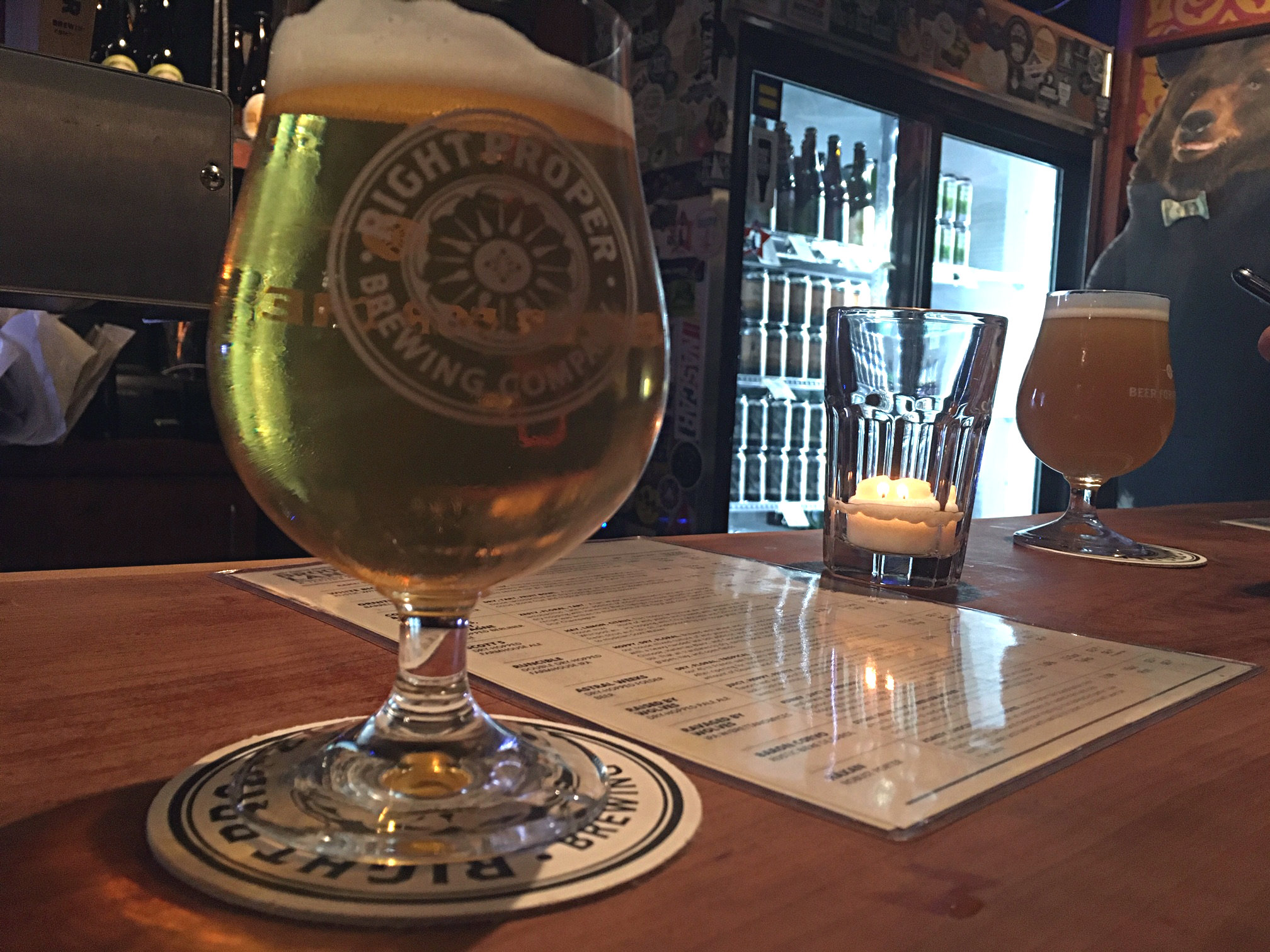
There are also five distilleries about a ten minute drive south in Ivy City—Jos. A Magnus and Co., New Columbia Distillers, One Eight Distilling, Don Ciccio & Figli, Cotton & Reed, and Republic Restoratives. They’re joined by City Winery and, down the street in the Arboretum neighborhood, Supreme Core Cider. To the south is Right Proper Brewing, which originally opened in Shaw and now has a second outpost in Brookland; and the city’s smallest brewpub, The Public Option, in Langdon. And still others are planning to move in nearby.
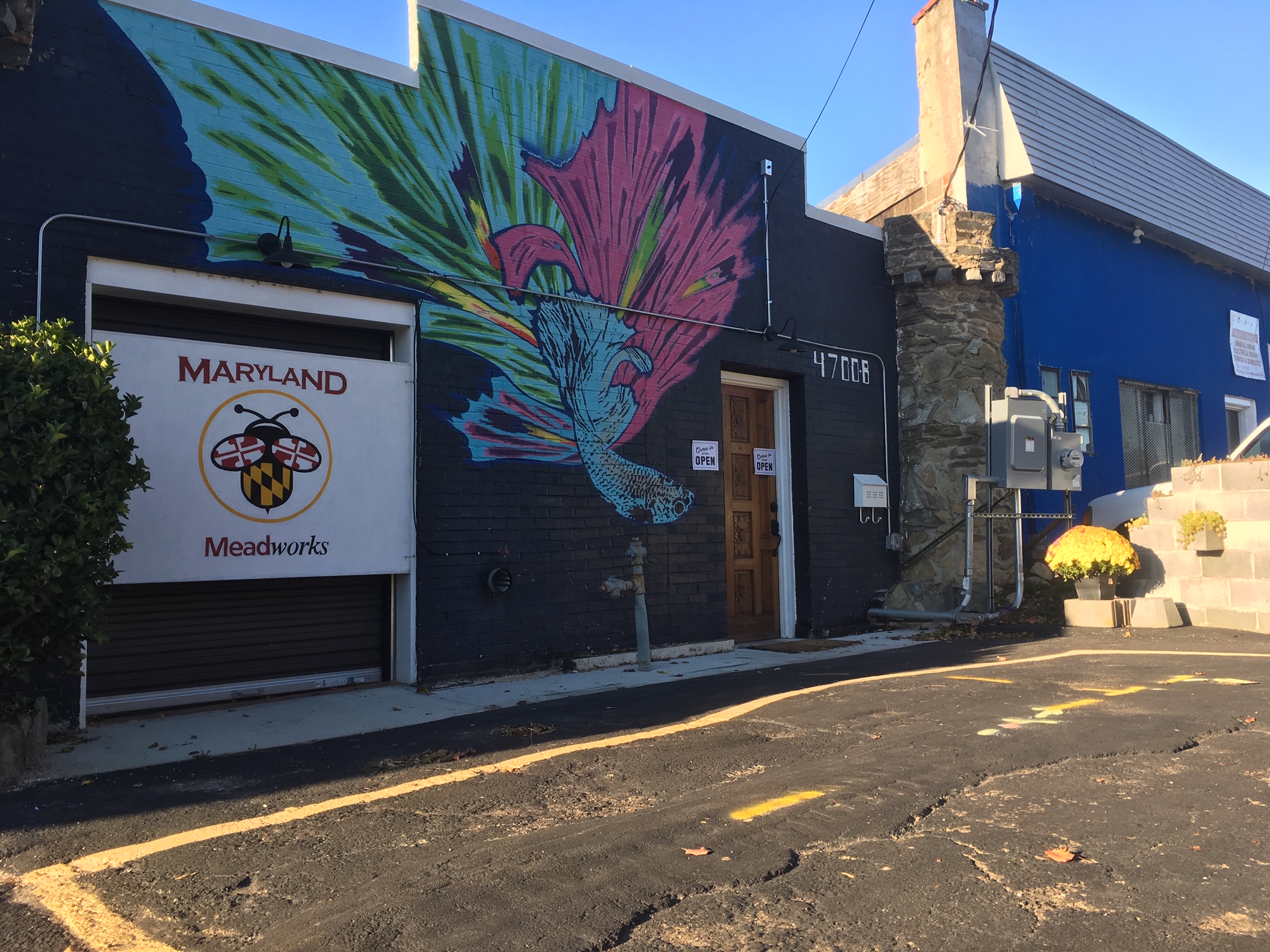
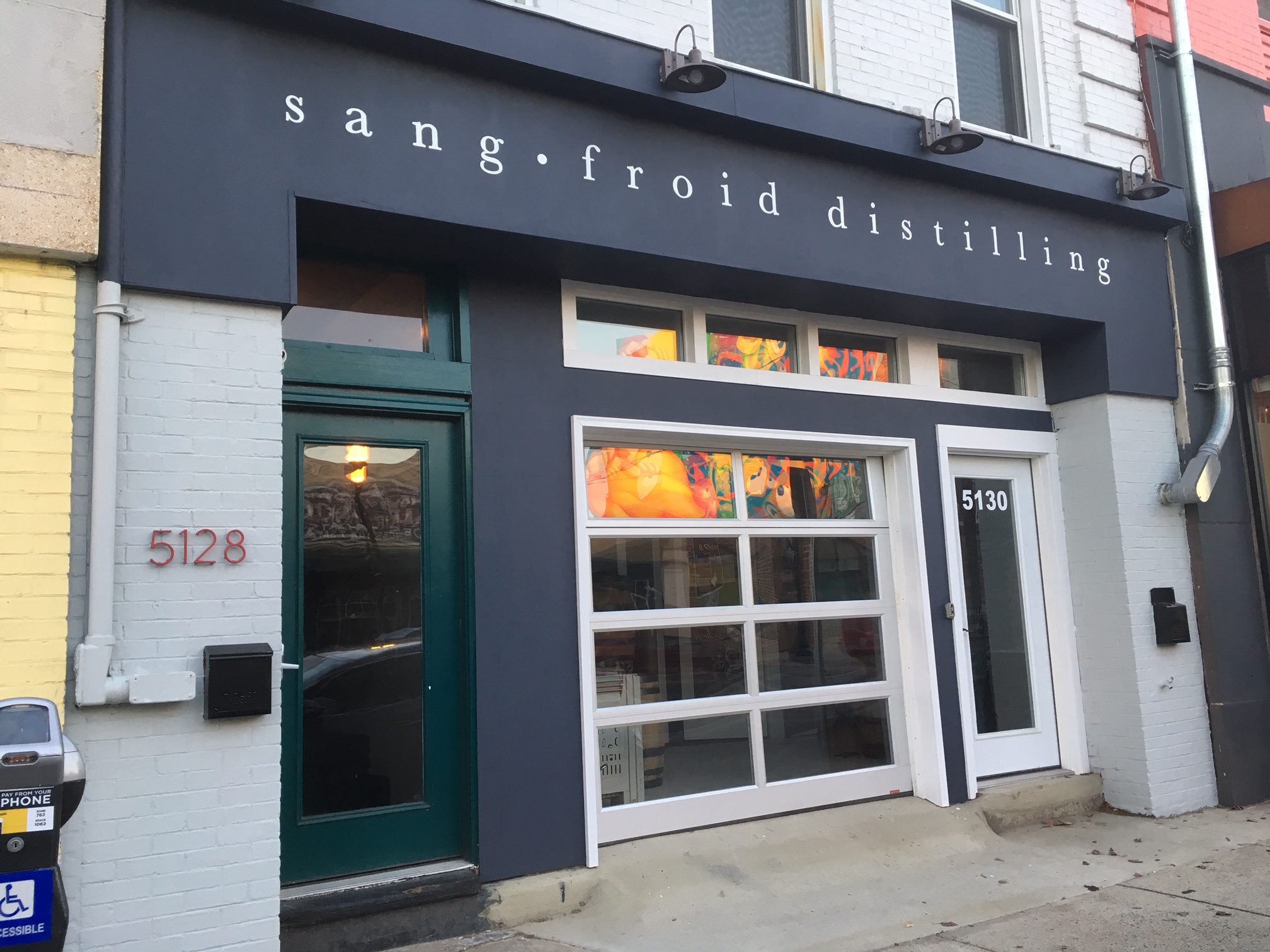
The boom has extended up along Route 1, which in D.C. is Rhode Island Avenue, and across the D.C.-Maryland border in Hyattsville, with the newly-opened Maryland Meadworks and Streetcar 82 Brewing, stalwart brewpub Franklin’s and, soon, Sangfroid Distilling on the main strip of downtown Hyattsville and Denizens Brewing’s forthcoming production facility in Riverdale Park. Bookending what Streetcar 82 customer Pepe Cervantes in August coined “the next beer beltway” is Laurel’s Jailbreak Brewing, which has operated in a business park off of Route 1 since 2014.
Beyond a bit of healthy competition, the concentration of booze makers has also fostered a sense of unity, according to the roughly half a dozen brewers and distillers who spoke with DCist. It’s manifested in ways ranging from consulting with one another for ideas or planning joint events to sharing supplies.
“We’re becoming like a dumping ground for D.C.’s barrels,” quips Jeff Harner of Sangfroid Distilling, which has gotten hand-me-down containers from Republic Restoratives and One Eight Distilling.
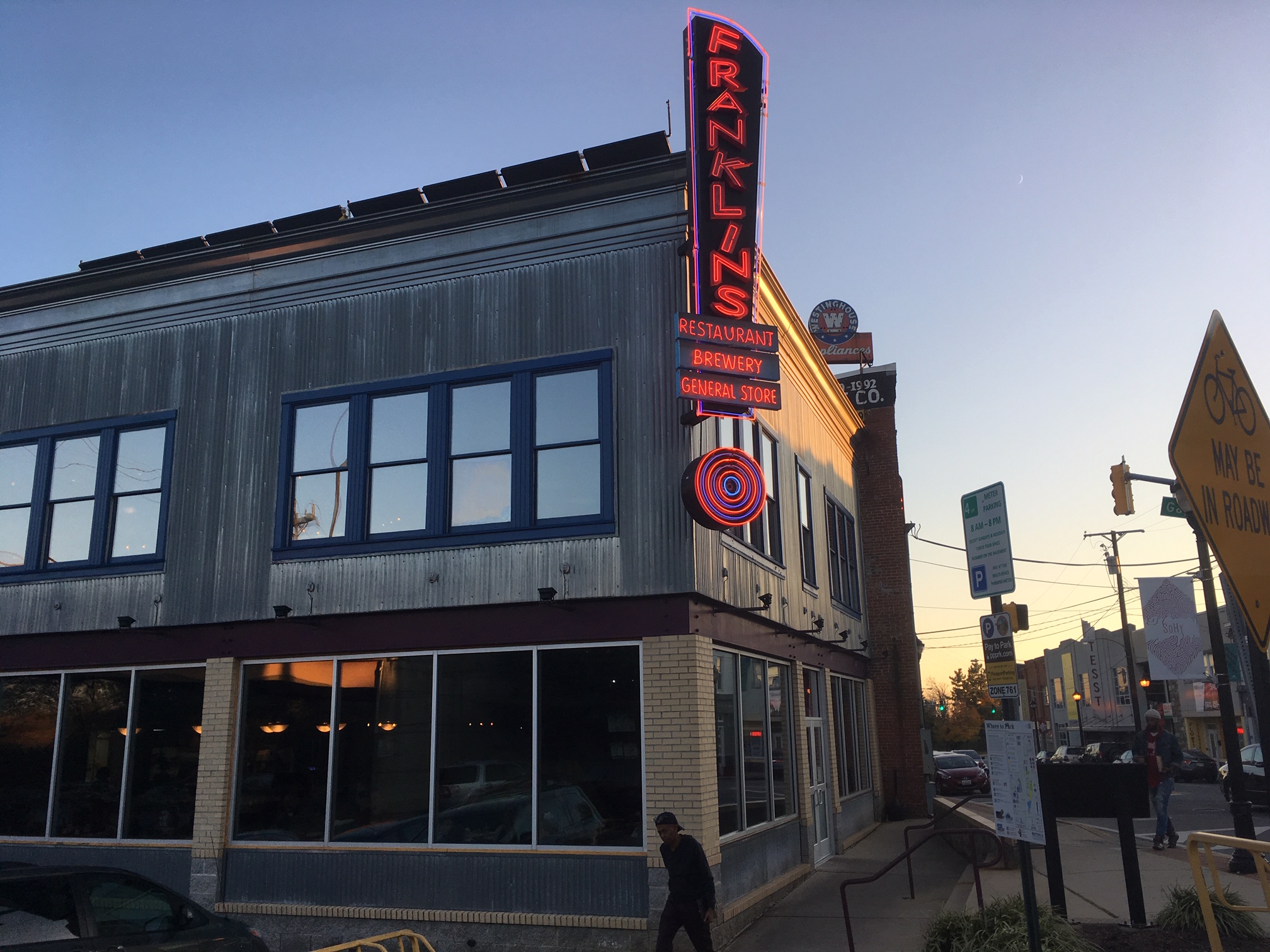
Up in Hyattsville, Franklin’s laid the groundwork for the downtown area’s craft alcohol scene more than a decade ago. Owner Mike Franklin opened a general store there in 1992, and was ahead of his time in selling a variety of craft beer for off-site enjoyment.
But he had bigger plans. Franklin says Maryland Sen. Paul Pinsky, (D-Prince George’s), sponsored state legislation to allow for a liquor license in a specific area of Hyattsville, located in his district, that would allow retail businesses to also sell beer made on-site. Franklin says got his new license in 2001, and in 2002 he doubled the size of his operation, opening a 200-seat brewpub.
Ken Carter, owner of Maryland Meadworks and a longtime Franklin’s patron, recalls testifying at Franklin’s license hearing 17 years ago, back when Carter was still brewing his own stuff at home. “He was a pioneer for a lot of people,” he says of Franklin.
It took years for other homegrown makers companies to follow in Franklin’s footsteps. The brewpub owner says the development of Hyattsville’s arts and entertainment district eventually helped to draw other producers, including Vigilante Coffee Co.
The alcohol boom finally materialized there this year. Streetcar 82 Brewing Co., a deaf-owned operation, began serving this summer and held its grand opening in September. Carter followed suit weeks later, officially opening Maryland Meadworks in October. Franklin’s head brewer Mike Roy helped design his meadery, which is housed in an old video production facility-slash-ex-motorcycle clubhouse-slash-convenience store on Route 1. And the owners of Streetcar 82 lent him a tank of carbon dioxide when he ran out.
Meanwhile Sangfroid Distilling is set to open before the holidays, according to Harner and his co-founder and business partner, Nate Groenendyk. They’ve set up shop inside an old nonprofit recovery center, now outfitted with distilling equipment, where they’re prepping Dutch-style, “grain-forward” gin and apple and pear brandies. They’ve already talked with their craft alcohol neighbors about collaborating, including by offering their used barrels for the breweries and meadery to age their products inside, or having their neighbors prep “one-off mashes for us that we would distill.”
“I think that we all realized we can work collaboratively together to bring people to Hyattsville, rather than working or competing against each other,” says Groenendyk.
“No one’s stepping on anyone’s toes,” adds Harner. “Everyone’s very mutually supportive of everyone else. For being such a small area, it’s kind of a cool feeling, a cool culture that we’re developing there.”
In the District, the explosion of alcohol makers has taken place along one of the city’s few industrially-zoned areas. Once vacant for decades as manufacturing faded and D.C. grew more and more white-collar, the warehouses along Rhode Island Avenue and nearby thoroughfares have lent themselves well as homes for a burgeoning craft alcohol sector, notes Supreme Core cider co-founder William Sullivan. “And when the time came around where the craft beverage wave was finally hitting D.C., all these entrepreneurs started snatching them up.”
“We sort of have created these production hubs that are like, for example, Ivy City and along Rhode Island Avenue, in areas where you do happen to have some commercial-manufacturing zoning,” adds DC Brau co-founder Brandon Skall.
But a new niche industry for the city has relied on more than just the right spaces and zoning for growth. It’s required changing city laws and liquor regulations to let companies serve patrons at the source, stay open later or find new ways to showcase their goods, such as selling at farmers markets or doing collaborative releases.
It was a “conundrum” when DC Brau opened in 2009, Skall recalls. “We were able to sell beer to-go to people, but couldn’t sell them beer for here, and we couldn’t even let them taste beer from here,” he says.
So they lobbied Ward 5 Councilmember Harry Thomas Jr., who introduced the Brewery Manufacturer’s Tasting Permit Amendment Act of 2011, which would enable production breweries to serve small samples on-site. Three years later, the council expanded that freedom to allow breweries to sell and pour pints. (Brewpubs like Capital City Brewing, located downtown since 1992, were already allowed to do this, because they weren’t packaging their products for off-site drinking.)
Thomas’ successor Kenyan McDuffie has carried the torch in his ward, which includes most of the city’s alcohol makers. He’s sponsored legislation expanding on-site serving freedoms to distilleries and wineries, extending permitted operating hours and days to midnight, seven days a week, and allowing distilleries to serve not just free samples, but cocktails on-site. Other regulatory changes took effect this year, including new rules for collabs between booze makers, serving hours and more.
McDuffie says D.C. and Prince George’s County lawmakers have worked in concert to help the fledgling industry along their shared corridor.
“I’m aware and have visited what’s going on in Hyattsville around the arts district, and really appreciate the focus that my friends in Prince George’s County have had along the Route 1 corridor,” he says. “And similarly, we’ve done the same thing here in the District of Columbia with, again, a lot of community support, a lot of support from the business community.”
Skall of DC Brau and John Uselton, co-founder of Green Hat Gin maker New Columbia Distillers, both say the arrival of peers in the industry has made it easier to lobby successfully to change the rules for what they can do. When New Columbia first opened in 2012, it was the first spirits maker to open in the District post-Prohibition.
It was tougher to get lawmakers’ ears as the city’s lone distiller, Uselton says. “Once we got a couple of distilleries, we were really able to get our voice heard by Council,” he says.
There’s now more than half a dozen in the District, and that’s brought some sense of camaraderie among most of them, Uselton says.
“We talk to each other and help each other out when we can,” Uselton says.
D.C.’s local liquor surge also also means there’s less market share for each maker, however. Asked if he thinks the local distillery market is becoming saturated, Uselton hesitates.
“I felt like we had gotten to that point with breweries at one point, and they keep opening and they’re successful,” he says. “I think we’re getting there. People can only go through so much. You’ll buy a six-pack of beer and you could drink it in an afternoon. Not very many people are buying a bottle of gin and drinking it within two weeks.”
Back at Atlas’ taproom in Ivy City, Diggs considers the concentration of booze businesses in context of gentrification. The entrepreneurs there have arrived amid a wave of development driving up property values and bringing new residential and retail investments to a historically black, low-income neighborhood. Diggs and Supreme Core Cider’s Sullivan both nodded to the 2015 opening of the Hecht Warehouse apartments, where a studio goes for $2,100 a month.
“It’s good and it’s kind of bad at the same time,” says Diggs of the craft alcohol boom in the neighborhood, where he’s lived for the last three or four years. “It’s good to have new business kind of sprawling in a once-not-so-active area. But at the same time, when that happens you kind of lose a little bit of the community that was there, and some of the older population, especially in this area.”
Hyattsville, too, has changed, growing “younger and hipper, and the real estate prices in D.C. have a lot to do with that, driving people out into our area,” says Franklin. “When they see what’s happening out here, it kind of feeds into that. So it’s a pretty good dynamic right now.”
For a customer interested in trying it all, it’s a boon to have so many options. Diggs says he’s visited—and enjoyed—a number of the breweries opening along Route 1 and nearby, including Franklin’s, The Public Option and DC Brau. He’s hoping to get up to Streetcar 82 soon.
“There’s a bunch that are right there coming from Hyattsville down to D.C.” he says. “It’s pretty cool. They all offer something a little unique.”