
NoMa is preparing to break ground on the new Tanner Park in January, potentially bringing the first large green space to the near northeast neighborhood by next fall.
The NoMa Business Improvement District and its contractor Forrester Construction have nearly all the necessary permits in hand to begin work on the 2.5-acre space next to the Metropolitan Branch Trail north of New York Avenue, representatives said at an Eckington Civic Association meeting Monday. Construction is expected to take 10-12 months.
This is the first timeline NoMa has provided for Tanner, which BID president Robin-Eve Jasper describes as the “crown jewel” in the neighborhood’s $50 million parks program. At the last NoMa Parks Foundation meeting in August, officials declined to say when construction would begin, citing the ongoing permitting process.
Launched in 2012, the NoMa parks program opened its first spaces this fall with the “Rain” installation in the M Street NE underpass in October and Swampoodle Park in November.
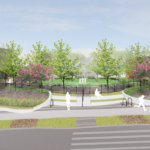
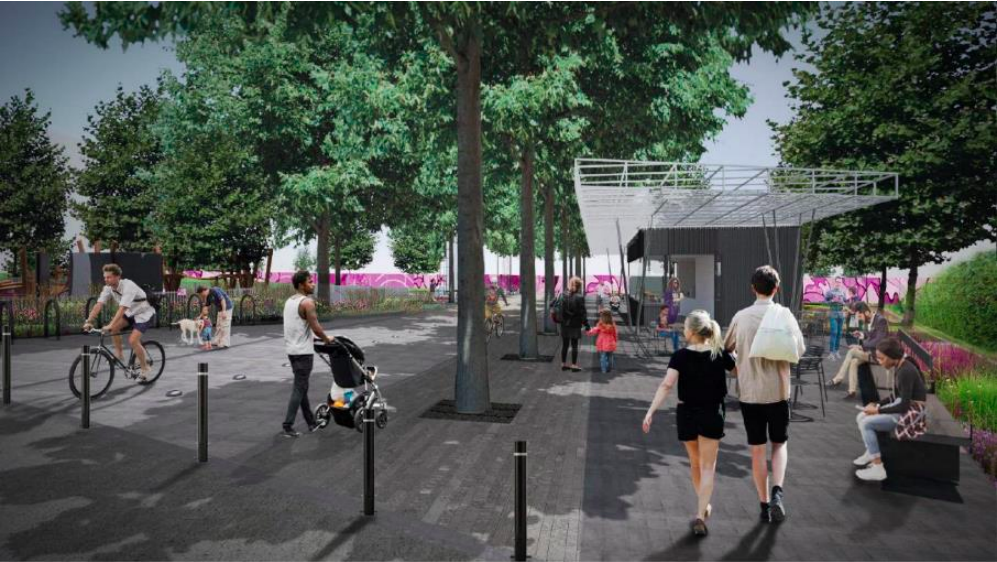
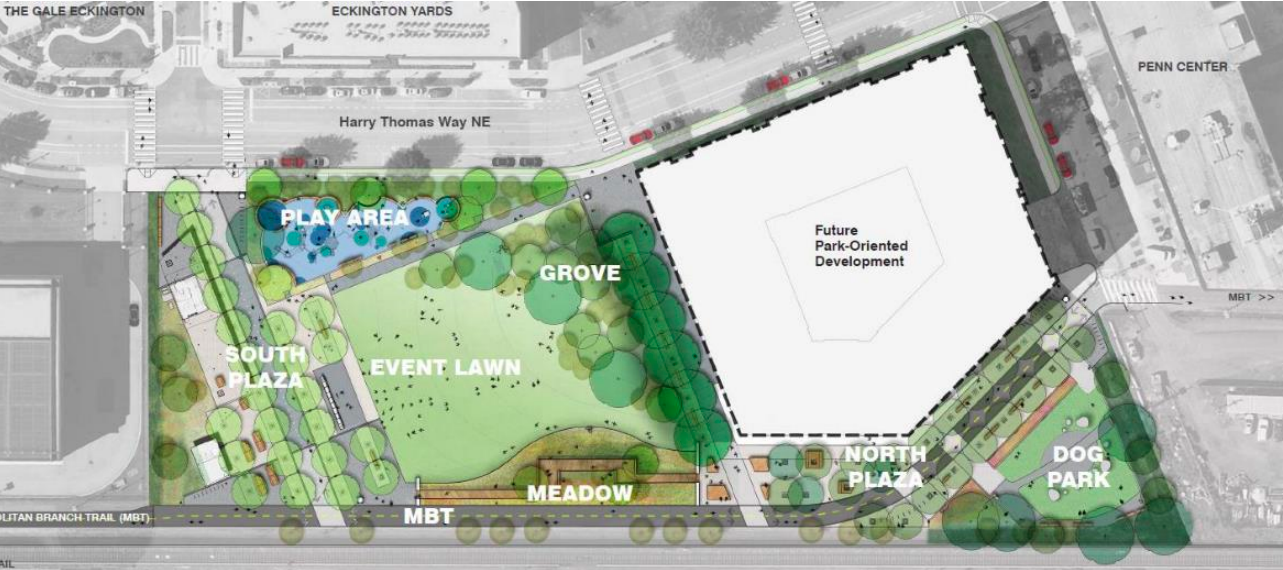
Tanner—named for formerly enslaved woman Alethia Tanner who helped open the District’s first school for African American children in 1807—will sport a number of distinct features, including a large lawn, a children’s playground, and a dog park. And, in news that will likely delight local cyclists, the project will soften the S-curve on the Metropolitan Branch Trail at R Street NE.
The park will rise on the southern half of the large, fenced off empty lot next to the trail in Eckington that NoMa bought from Pepco in 2016. Part of the work involves remediating the soil of the site, which was a former railroad siding.
NoMa has tested the soil and found coal, wood, and arsenic remnants in the soil, all of which are common along railroad corridors in the District, said Jasper at the meeting this week. Remediation work calls for removing the top two feet of soil, and replacing it with new dirt. She says she isn’t ruling out the possibility of further delays as workers tackle the area.
“We put [a lot] of holes into that site, borings, but even with as many as we put in we don’t know that, in the one spot where we didn’t put in a boring, we won’t find something,” Jasper said. “What we want is to deliver a quality park.”
NoMa is no stranger to delays. Both the “Rain” installation and Swampoodle’s new park opened late for a variety of reasons, from a steep learning curve on installing lights in an Amtrak-owned underpass for the former to phasing and quality control issues in the latter.
Even work on Tanner is beginning later than expected due to a lengthy permitting process, said Ben Heath, Forrester project manager for the park. Original expectations were to begin work as early as this summer, but the number of permits, which he puts at 10 to 12, drew out the process.
“I can’t guarantee it won’t be longer than 10-12 months but it seems a lot more favorable for construction here,” said Stacie West, director of parks projects at the NoMa Parks Foundation. Tanner is more favorable than the conditions at Swampoodle, she added, because the site is large enough for multiple construction activities to take place at once.
Work on Tanner will occur as two other large developments rise nearby. JBG Smith began demolition for its Eckington Yards project across Harry Thomas Way from the park in November, and Foulger Pratt is expected to begin work on its Eckington Park project on the northern half of the same lot as Tanner in 2019.
Forrester does not expect either construction projects to impact work on Tanner, said Heath.
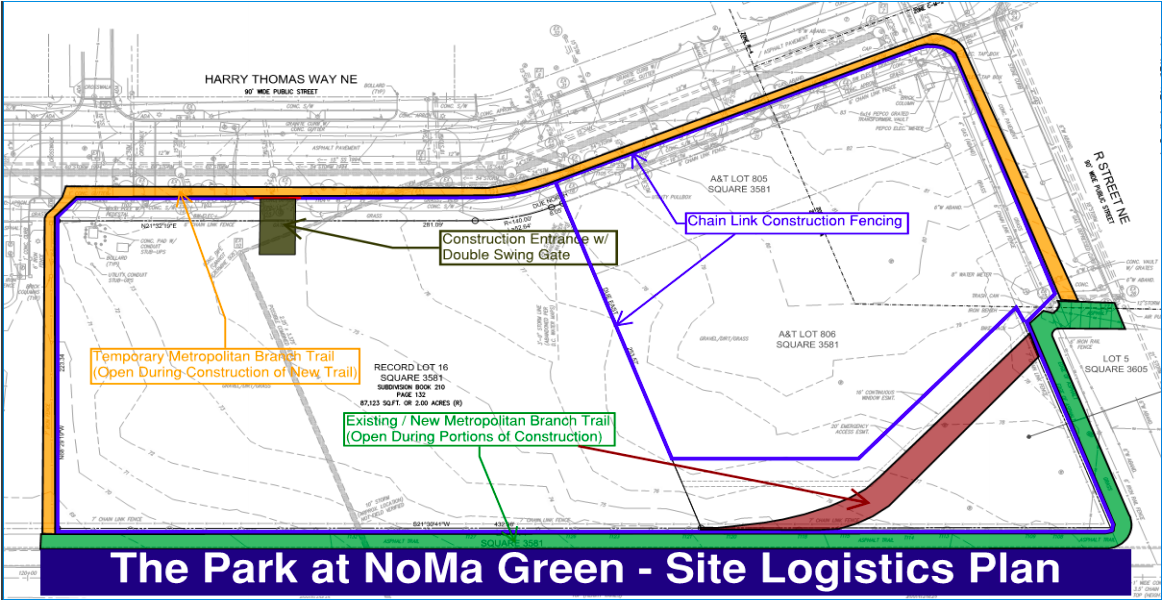
The Metropolitan Branch Trail will be temporarily rerouted around the site once work begins. This detour, which will include a protected two-way lane on R Street and Harry Thomas Way NE, is expected to last around five months.
Tanner will really begin to take shape by next fall when Forrester will begin installing grass, trees, and other plantings in the space, said Heath.
This post has been updated to use the new name that the NoMa Parks Foundation is using for Alethia Tanner.