Natalie Delgadillo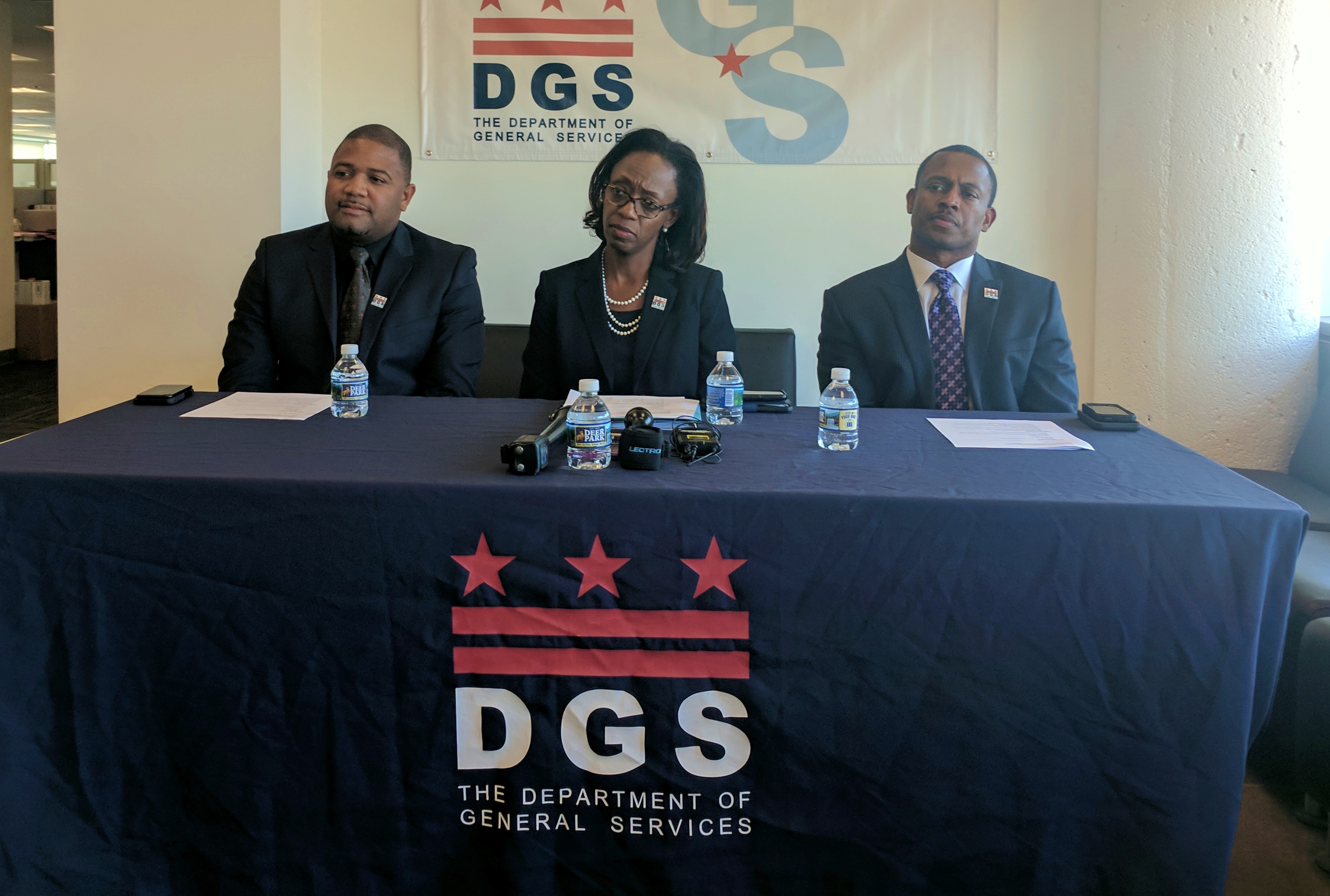
Mayoral appointments are not generally the subject of a major kerfuffle at the D.C. Council. The mayor picks someone to do a job and, most of the time, her nominee sails through to a final vote and approval.
But things haven’t been so straightforward for Greer Gillis, the former leader of the Department of General Services who was ousted from that role in Mayor Muriel Bowser’s post-election shuffle of agency heads. Bowser immediately nominated her for another position—one of the three seats on the Public Service Commission, which regulates D.C.’s large utilities, like Pepco and Washington Gas. It’s been a bumpy road.
Gillis, a transportation engineer and longtime government bureaucrat, has faced pointed questioning about her experience and qualifications, particularly from Ward 3 Councilmember Mary Cheh and environmental groups. They wonder if she has the environmental policy know-how to shepherd the agency through a crucial period: a recent U.N. report concluded that there are 12 years left to make substantive changes that help us stave off worst-case-scenario climate disaster, and activists are hoping to make D.C. a leader in implementing fast-paced, progressive local climate policies.
“The PSC is the state agency responsible for implementing all climate-related policies…we have to get a progressive commissioner in here,” says Nikhil Balakumar, the manager of the Coalition for a Resilient DC, which has been lobbying councilmembers to vote against Gillis’s nomination. The D.C. Council will take a vote on December 18.
Gillis stepped into her role at the Department of General Services after the sudden resignation of its former director (which resulted in a Council investigation and a lawsuit alleging that the mayor’s office had pressured the agency to award a lucrative contract to a political donor). She has managed large city agencies—in addition to overseeing D.C.’s real estate portfolio and new construction projects at DGS, Gillis was also a high ranking official at the Department of Transportation—but she has no experience in setting utility rates or environmental policy. Gillis has publicly said as much herself, and she also told lawmakers that she never applied for the position. The mayor’s office approached her with the offer after she was removed from DGS.
The Public Services Commission is supposed to represent the public interest in regulating utilities. Here is its stated mission: “ensuring that financially healthy electric, natural gas and telecommunications companies provide safe, reliable and quality utility services at reasonable rates for District of Columbia residential, business and government customers.” Commissioners are appointed by the mayor and serve for four-year terms. While not often in the public eye, the PSC was the subject of intense attention in 2016 as it ruled on the Pepco-Exelon merger (after some back and forth, it eventually approved the deal).
“The PSC is a very important, powerful agency because it regulates the way that we transport and consume electricity and natural gas. And those policies go a long way toward determining the production of clean energy,” says Tyson Slocum, the director of the energy program at Public Citizen. Public Citizen lobbied against the Pepco-Exelon merger in 2016, but Slocum says he has no knowledge about or involvement in Gillis’s nomination. “I can’t speak to whether concerns about this person’s independence are warranted or not. But in general it’s fair to ask about whether a regulator will serve the public interest or the utility’s interest, and that’s an important answer to get,” he adds.
A coalition of local environmental activists have been lobbying hard against her nomination. They want to modernize D.C.’s power grid to accommodate renewable energy sources, make it possible for residential consumers to contribute extra power from solar panels back to the grid, and steer Pepco away from traditional infrastructure investments like building substations in favor of solar and wind power.
“When you have a commissioner like Gillis [without experience in regulating utilities], she can’t question Pepco’s investments…The worry is she’ll be a rubber stamp for Pepco,” Balakumar says. At a November Council roundtable on her nomination, Gillis touted her experience managing large infrastructure projects. “That’s exactly what we’re trying to avoid,” he says.
On Tuesday—the same day it will vote on Gillis’s nomination—the Council will take its final vote on D.C.’s ambitious clean energy bill, which mandates that 100 percent of the energy sold in the District be renewable by the year 2032 (it passed unanimously on first reading last month). None of these goals are possible, Balakumar argues, without a PSC determined to push Pepco to make it happen. “We can pass the most progressive climate bills in the country, and without a PSC that’s willing to implement them, it doesn’t matter,” Balakumar says.
Gillis’s nomination passed a committee vote last week, but she’s faced some opposition from lawmakers. Ward 6 Councilmember Charles Allen voted against Gillis in committee, and at a roundtable on the nomination in November, Cheh said in her statement that “Director Gillis has none of [the] qualifications” the mayor specified in her notice for applications for the position.
The mayor’s office, for its part, says that Gillis is perfectly qualified for a role on the commission. “Ms. Gillis’s background and skill set are perfectly aligned with the role of a Commissioner on the Public Service Commission. Twenty-one of the 71 PSC commissioners have held an engineering background, and for the past twenty years, Ms. Gillis’s work in the public and private sectors has been focused on engineering and program management,” a spokesperson said in an emailed statement.
Before tapping Gillis for the role, the mayor’s office posted the job with a list of minimum qualifications that included: “five years of experience in the regulatory arena,” a “strong knowledge and understanding of the issues and cases appearing before the commission, including rate setting,” and “knowledge or experience and expertise in one or more of the utilities regulated by the commission.”
During the committee hearing where he voted against Gillis’s nomination, Councilmember Allen read from an email he says was sent to a rejected job applicant, who allegedly didn’t meet the minimum requirements and qualifications. Allen said he did not believe Gillis met those minimum qualifications, either. “These are the reasons other applicants were turned down from the position. I don’t believe [Gillis’s] experience and qualifications match up with this,” Allen said. “She’s being asked to take on a job that’s very different from leading an agency or a department.”
Allen tells DCist that it’s not easy for him to vote against Gillis because he knows and respects her work. “If this was a nomination to lead a department, to lead an agency, I’d be able to support her without any hesitancy. But that’s not what the job is,” Allen says. “Pepco is an energy distribution company. How do we work with Pepco, incentivize Pepco to work in renewable energy? [The PSC] can help compel and force Pepco to make these [shifts.]”
On Tuesday, the Council will also vote on the nomination of Willie L. Phillips as chairman of the Public Services Commission, which is expected to pass easily.
But after lobbying councilmembers for weeks, activists believe that they have the votes to sink Gillis’s nomination, though they wouldn’t go on record to specify which members will vote no. After that, Balakumar says he hopes the mayor will nominate a “progressive commissioner.”
“She’s going to have to. She’s not going to have a choice. Because it’s just going to get rejected again,” he says.