Martin Austermuhle
The D.C. Council on Tuesday afternoon approved a bill that will bring legalized sports betting to the nation’s capital, putting the city on the short list of states that already allow it and ahead of any other place in the Washington region.
“We’re venturing into new territory with sports gaming,” said Ward 2 Councilmember Jack Evans, who wrote the bill. “I’m very excited that the District will be out of the box with this. Let’s just hope a lot of people gamble and we get a lot of money.”
Here’s everything you need to know about the bill—and just what it might be like to cast bets on sports in D.C. in the future.
Why is D.C. considering sports betting now?
Simple—it’s now legal, and D.C. officials want to get a jump on what’s expected to be a rush of states looking to cash in on the lucrative industry.
It was in May that the U.S. Supreme Court tossed out a 35-year-old federal law that largely banned sports betting in all but one state—Nevada. Since then, seven states have legalized sports betting. Ward 2 Councilmember Jack Evans introduced a sports-betting bill in September, saying that timing was critical: unless the city jumps on the opportunity now, Maryland and Virginia could create their own programs first and draw bettors—and revenue—away.
“Why is it important to be first? An analogy that was told to me is a good one: Why do I have Uber on my phone instead of Lyft? Because Uber got to me first. And so, I use Uber, and I don’t use Lyft,” he told WAMU.
D.C. officials say they are most concerned about Maryland legalizing sports betting, since the state already has six casinos—the closest being in Prince George’s County, a hop and a skip away from the city.
Has D.C. ever considered legalizing gambling before?
If Mayor Muriel Bowser signs the bill—which is expected—this will be the first time a new form of legal gambling has come to the city since a lottery was approved by voters in 1980. That’s not for want of trying, though.
Over the last four decades there have been numerous attempts to legalize gambling in one form or another, from dog-racing and riverboat casinos to slots and even internet gaming. Proponents of those efforts claimed that gambling would provide D.C. with a much-needed source of revenue, but critics—including civic associations and faith-based groups—argued it would instead promote crime and pull money from low-income residents.
Most of the efforts were derailed by voters or failed to even make the ballot; in 2004, a campaign to have D.C. residents vote on whether to legalize slots failed after the city’s elections board ruled that thousands of signatures submitted to put the measure on the ballot were fraudulent. And in 2012, the Council had to vote to retract a first-in-the-nation vote legalizing internet gambling after complaints that the measure had been dropped into a spending bill with no public debate.
What will sports betting look like in D.C.?
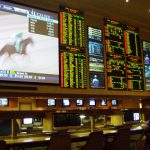
The bill will allow private businesses to apply for licenses to operate sports betting facilities throughout D.C.
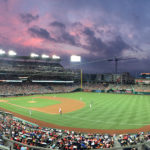
One class of licenses would be set aside for facilities located at four of the city’s stadiums and arenas: Nationals Park, Audi Field, Capital One Arena, and the new St. Elizabeths East Entertainment and Sports Arena. (RFK was included in the original list, but removed after one legislator pointed out that gambling on federal land—which the stadium is on—is of questionable legality.)
Another class of licenses would allow sports betting at other facilities, like bars and restaurants—but they would not be allowed within two blocks of the stadiums and arenas listed above.
The D.C. Lottery will be charged with regulating sports betting—and it will also be allowed to operate its own facilities. It is also being given a monopoly over the creation and operation of a mobile-based sports betting option across the city. While private operators will be able have their own apps within their facilities—say, Nationals Park—only the D.C. Lottery’s app would work from the comfort of a D.C. home.
The city would take in money via license fees and a 10 percent tax on whatever a betting facility earns minus what it pays out to winners. According to D.C. Chief Financial Officer Jeffrey DeWitt, that’s expected to be roughly $92 million over the next four years. The money taken in on a yearly basis would be split evenly to pay for violence prevention programs under the NEAR Act, and the other half to cover the cost of a new bill to expand affordable child care options in the city. An additional $200,000 a year would go to fund gambling addiction treatment.
What are some of the points of contention over sports betting?
One of the main issues that was debated ahead of the Council’s first vote earlier this month was whether the D.C. Lottery should have a monopoly on app-based betting options, or if the city should open licenses up to private operators like FanDuel and DraftKings.
D.C. Chief Financial Officer Jeffrey DeWitt sided with the monopoly model, saying it would offer the city the largest portion of revenue from sports betting—roughly 20 percent of every dollar bet, compared to 5 percent under private models. Most legislators agreed with him, though some worried that by shutting out private operators D.C. wouldn’t draw enough users away from the active illegal market and thus have a smaller program than it could have with private operators in the mix.
There was also debate over how to give local- and minority-based businesses a hand up in getting into what’s expected to be a lucrative sports betting market. At-large Councilmember Robert White introduced an amendment to set aside five licenses for mobile-based sports betting for businesses with local and minority participation, but it failed. Ward 5 Councilmember Kenyan McDuffie is working on his own amendment that would give businesses with local and minority ties—as well as joint ventures including them—additional points when it comes time to choosing who gets a sports betting license.
But otherwise, a super-majority of the Council voted in favor of the sports betting bill when it came up for its first vote, so the odds are good they will do so again. Only At-large Councilmember David Grosso and Ward 1 Councilmember Brianne Nadeau voted against.
“I don’t think government resources should be involved in gambling. I believe that a lot of the gambling programs that we have available tend to target lower income folks who don’t have the disposable income,” said Nadeau. “On a personal note, I’ve had family members who have gotten addicted to gambling online. That family history colors my decision making. I’ve seen the damage it can do.”
If it passes the Council, what’s next?
Provided the Council signs off, the sports betting bill would next go to Mayor Muriel Bowser, who has already said she supports it. The bill would then go to Congress for its usual 30-day review, but the Council is also looking to pass an emergency version of the bill, which would let city agencies start work on implementing sports betting right away. But it may still be months before any licenses are issued and sports betting facilities open up.
What about Maryland and Virginia?
Maryland legislators are expected to take up their own sports betting legislation at next year’s legislative session. A bill was introduced during this year’s session, but it didn’t make it through the whole process. In Virginia, a pair of Democratic senators from Fairfax County are drawing up their own sports betting measures. One of those bills would allow Virginia to issue five licenses for sports betting operations — likely online-only, though.
This story was originally published on WAMU, and has been updated with the results of the second D.C. Council vote.