Natalie Delgadillo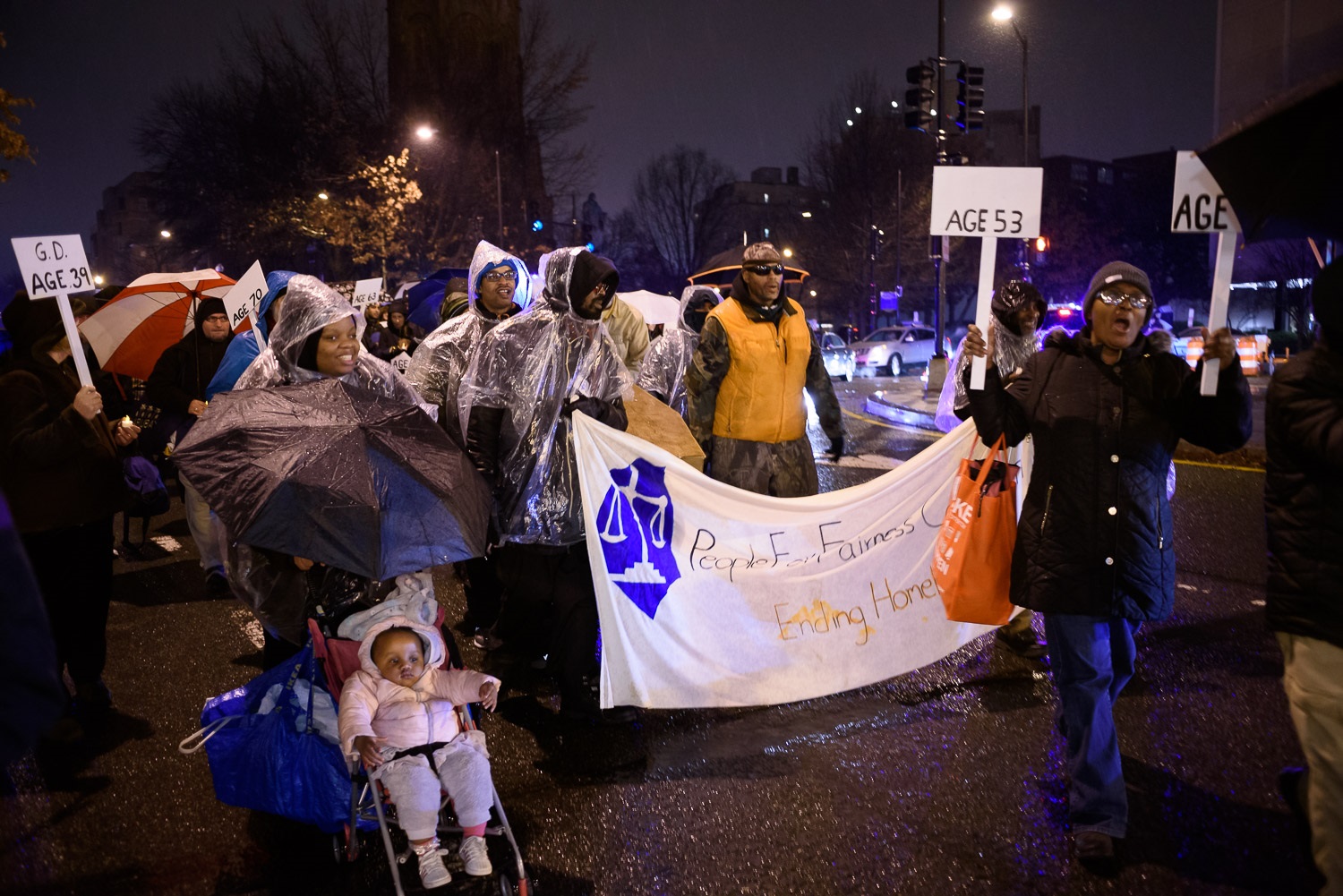
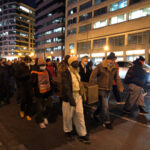
The mourners carried white signs bearing the names and ages of the dead. Some held round plastic lights meant to look like candles. They followed in procession behind a group of men carrying an empty casket, all the while being pelted by rain.
The sixth annual memorial vigil, organized by the People for Fairness Coalition, honored the lives of 54 people who died in 2018 without a home in D.C.
“This is about honoring their legacies, and really taking action to ensure that our elected officials meet their promises to end chronic homelessness,” says Jesse Rabinowitz, an advocacy and campaign manager at Miriam’s Kitchen, a homeless advocacy organization that supports the event. Rabinowitz says that many of the people who die without a home suffer preventable deaths, including from treatable diseases like diabetes or heart disease.
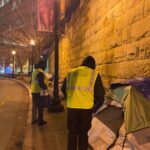
The vigil’s organizers, many of whom are experiencing homelessness themselves, held the event at Luther Place Memorial Church on Thursday night. Several speakers knew the deceased personally and could speak to the experience of being homeless. They marched from Luther Place to a tent near Freedom Plaza, where organizers served dinner. More than a dozen people would stay in the tent—still wet and cold from the constant rain outside—until daybreak.
Leading the procession is a group carrying a coffin. People are carrying candles and signs w/ ages & names of people who have passed pic.twitter.com/bvp2Tq8Zw7
— Natalie Delgadillo (@ndelgadillo07) December 21, 2018
Reginald Black, who has been intermittently homeless for the last 11 years and serves as the director of the People for Fairness Coalition, has learned all too well how harmful homelessness can be to one’s health. “The most dangerous thing is if you’re wet,” he says, gesturing to the rain falling outside the tent. “That will make you colder than any other thing, and that is a danger. Also not being able to access medical services, not having anywhere to store your medicine if you’re ill. All of that exacerbates your health.”
Black says the PFFC wants the city to commit more money to ending homelessness, asking for an additional $35.5 million in Mayor Muriel Bowser’s next budget dedicated to housing. The coalition is also asking for the D.C. Council to pass a law that would include people experiencing homelessness as a protected class under the Human Rights Act of 1977, which the Council failed to push through before the end of its legislative session this year.
“I really would like to see folks not facing discrimination just because they’ve got an extra bag or two,” Black says.
On Friday morning, organizers presented a list of policy priorities to the D.C. Council at the Wilson Building. They also presented a list of the names of people who passed away without housing this year, according to Rabinowitz.
The PFFC counts the number of people who died while experiencing homelessness via reports from service providers, people’s friends and family, obituaries, and government reports. It’s likely that the actual number of people who died without housing in D.C. this year is actually higher than the number they’ve been able to confirm, Rabinowitz says.
But this year’s number is higher than average since the group started trying to do the count six years ago, according to Robert Warren, the director of PFFC. Warren has previously experienced homelessness himself, as has all of PFFC’s leadership. “We’ve been averaging like 45 deaths every year,” Warren says, significantly less than this year’s 54.
This year, D.C. counted 6,904 homeless persons during its annual point-in-time count. That’s a 7.6 percent reduction from last year’s numbers, mainly driven by a decrease in homeless families.
The mayor dedicated $100 million from her 2019 budget to go to homeless services, an increase from previous years. The city is also in the middle of building a bevy of new apartment-style shelters meant to replace the beleaguered D.C. General shelter (which had a drawn-out and controversial shutdown this year). Meanwhile, the D.C. Council recently declined to spend additional revenue from its internet sales tax on homeless services, instead opting to use the money to lower commercial property taxes.
Black tells DCist he hopes the vigil sends a message to people, and to government officials, that people experiencing homelessness are deserving of resources and empathy.
“These people that have passed away, they are people. And whatever you are to somebody, that’s exactly what that person was to someone else…That was somebody’s brother, somebody’s grandpa and daddy and mama dying,” he says. “You have to look at your own immediate family, and equate that to the homeless person.”
Inside a tent now. Dinner will be served shortly. Folks are leaving their signs on the casket at the front pic.twitter.com/U4EPaRajnB
— Natalie Delgadillo (@ndelgadillo07) December 21, 2018