 Rachel Sadon
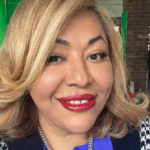
Ruby Corado looked around the joyous party in the living room of a split-level apartment in Langston Terrace, and her heart broke.
The director of Casa Ruby was at one of the country’s oldest federally funded government housing projects to celebrate. One of her daughters, a member of the large LGBTQ family that Corado has unofficially adopted, had just graduated from high school.
After the ceremony at Ballou High School, “the whole gay neighborhood came to the house,” Corado says. “I saw all these kids—some of them that I had never seen before in Casa Ruby. Gay kids that I have never seen, and I know a lot of people! When I started talking to them, they said ‘We don’t go nowhere.’ They get bullied. They get harassed.”
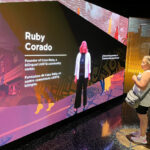
Corado is a legend in D.C. The city’s most prominent transgender activist opened a small bilingual drop-in center in 2012. Today, she oversees a 20,000 square foot, 24/7 center in Shepherd Park that provides a drop-in center, HIV testing, immigration services, support for victims of violence, and emergency housing services, along with a network of homes that serve homeless LGBTQ youth and adults (43 percent of homeless youth in D.C. identify as LGBTQ, according to a 2015 study). Casa Ruby now employs 68 people and serves about 100 clients a day. They prepare 4,000 meals a month.
“I honestly thought I was doing the work, and then I see this population being underserved and living in horrible conditions, and I thought I have to come here,” Corado says. “So many of them don’t even know about Casa Ruby. Or they can’t even get on the bus. If you’re going back and forth, that’s $5 for a young kid coming out and living in poverty … They come once or twice a week, or once a month. I want them every day. I want to support them every day. I realize they’re not coming every day because we are in Northwest. I want to remove that barrier. I want to go to them.”
She says she’s long wanted to open a space in Southeast, but the graduation party in June gave her a sense of urgency.
Within a few months, Corado had already secured the promise of a home in Congress Heights that is owned by a friend. But after a current funder offered to support the venture, Corado is thinking bigger.
She has a bank loan. She has partners. She has a self-imposed deadline of March. She even has the name picked out: the Southeast DC LGBTQ Community Wellness Center. Now, Corado is just looking for the right space—one that is at least 5,000 square feet—to serve around 200 people a month.
“The difference between now and March is how big the center is going to be,” she says. After making an announcement about her plans on Facebook, Corado says she has heard an outpouring of gratitude and excitement: “I know it’s not going to be small.”
Bela Muney needed to leave the area to get help. Born in D.C. General when it was still a hospital, she spent her early childhood in Southeast and returned in her early thirties, living in low-income housing near Barry Farm for four years. She transitioned during that period and struggled with a drug addiction.
“Southeast is nowhere for you to be trans. There’s no resources, there’s no help for you there,” says Muney, who now lives with Corado and works on Casa Ruby’s external affairs team. “That’s why it’s going to make a tremendous, tremendous impact.”
Corado says the project will be in partnership with the Empowerment Liberation Cathedral, which describes itself as a “radically inclusive, LGBTQIA celebrated congregation.” The church, helmed by Bishop Allyson Abrams, is bringing mental health services to Casa Ruby starting in February and to the space in Southeast once it opens. At the wellness center, Corado will focus on violence and HIV prevention.
“I don’t want these kids to grow up getting bullied. I intend to be in the neighborhood,” she says. Corado also has a city contract to do HIV testing and case management.
Of the more than 13,000 people living with HIV in the city—a level that exceeds the definition of an epidemic—people of color are disproportionately affected: 4.4 percent of African-American men, 2.1 percent of Hispanic men, and 1.9 percent of African-American women, according to the latest city statistics. The numbers are even more staggering for transgender women; a 2015 report estimated that 20 percent are living with HIV.
While the city has seen significant successes in recent years, there was an alarming increase in the number of young people diagnosed with HIV. Of new diagnoses in 2017, 41 percent were between the ages of 13 and 24—double the national rate.
“Hundreds of youth are going without services in Southeast,” Muney says. “They’re not going to doctors appointments, they don’t know their status, they don’t know that they can get tested and there’s a safe space and no judgement. They don’t know they can be themselves.”
And that, she believes, will be the center’s most important role: as a haven.
“There was nothing like this growing up for me or my friends. We didn’t have a place like Casa Ruby, where we could just sit in the drop-in center and feel free. We literally had to hide who we were,” Muney says. “That’s the biggest key factor. They don’t have to hide who they are in a space of their own, where people are like them every day.”