Natalie Delgadillo
The familiar faces of your neighborhood police officers might be changing: the Metropolitan Police Department has officially instituted its new district boundaries, which it first announced last year.
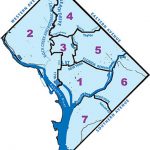
In case you’re not sure what that really means: the city is split into seven different police districts, which are themselves made up of several “police service areas.” Every five to seven years, the department assesses its workload across districts and takes a look at future population estimates to make any necessary changes to district boundaries and PSAs. The last two boundary changes happened in 2004 and 2012.
“After a nine month review of our current boundaries and taking into account current workload, anticipated population growth, economic development, and community needs, MPD is pleased to announce new district boundaries to all seven districts,” MPD announced in a press release on the changes Thursday. The department has been slowly transitioning to its new boundaries since November.
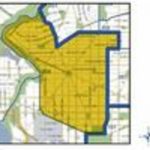
All seven districts will see some kind of change, but a few larger neighborhoods are bearing the brunt of the shifts. Mount Pleasant is going from the Fourth District to the Third (which actually puts it back where it was before the 2012 boundary changes); Park View is moving from the Third District to the Fourth; Fairlawn will move from the Seventh District to the Sixth; some parts of Capitol Hill and H Street will move from the First District to the Fifth District; Truxton Circle and Bloomingdale are moving from the Fifth District to the Third; and a chunk of downtown, including City Center, will move from the First District to the Second.

The changes are meant to create “optimal availability of police resources” across all districts, MPD says. The department is also taking into account population projections in drawing its new boundaries. The city recently hit 700,000 residents for the first time since 1975, and it’s projected to keep growing, reaching almost 850,000 by 2030.
You can see detailed drawings of the new district and PSA boundaries in this slideshow from MPD.
The new boundary lines haven’t caused major controversy, either in communities themselves or on the D.C. Council (in stark opposition to community and Council pushback to the 2012 redrawing).
MPD says on its website that the new boundaries will not change the police service residents are receiving, because the realignment is “structural in nature.” When the department last made changes seven years ago, it cited issues with response times in certain districts due to an inequitable workload. A spokesperson for MPD told DCist via email that “there may be some changes to the proportion of crimes handled within each new district, but the purpose of redistricting is to efficiently distribute services proportionally throughout the District.”