Rachel Kurzius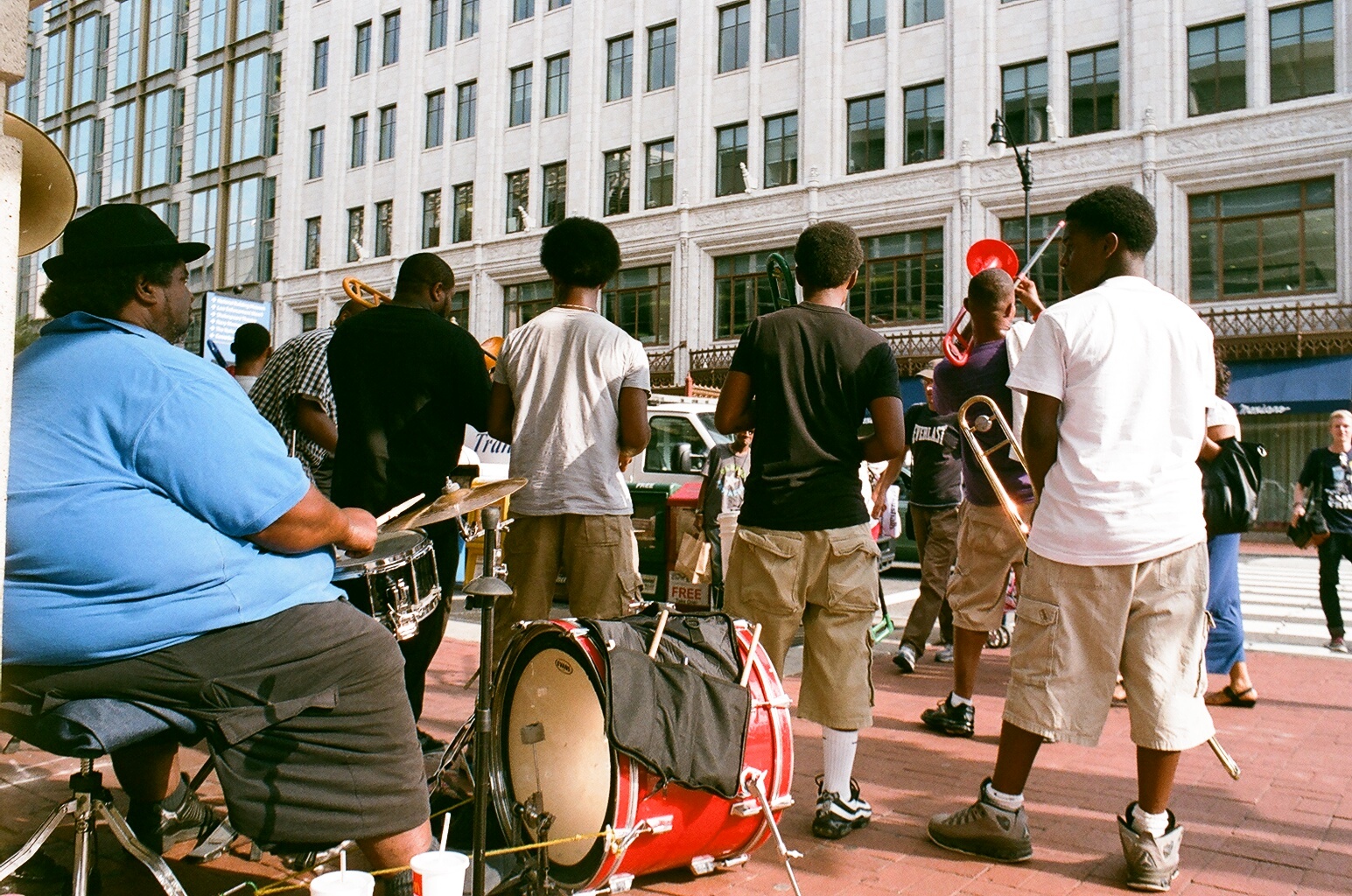
The D.C. Council will resume its quest to limit noise in the city, a mission that led to an uproar from local musicians over the summer.
Ward 2 Councilmember Jack Evans, Ward 3 Councilmember Mary Cheh, and At-large Councilmember Anita Bonds re-introduced the Amplified Noise Amendment Act last week. The text is identical to an emergency bill introduced in June that would have banned playing music through amplified devices audible from more than 100 feet away and prohibited gas generators in public spaces. It also empowers D.C. police officers and other law enforcement officers to issue a fine of $300 after a verbal warning. Chairman Phil Mendelson pulled the bill right before its scheduled vote in July.
The re-introduction of the same bill has musicians worried that lawmakers haven’t listened to their concerns, but Evans says it “is just a vehicle for Phil to come back with an amendment … Phil is handling all of this.”
Mendelson characterizes the current legislation as a “starting point.” It has been moved to the Committee of the Whole, which he chairs. “The buskers are understandably concerned, but I’m not interested in putting them out of business,” he says. “At the same time, there are residents and workers who legitimately complain about very, very loud noise.”
Musicians say that the current bill will criminalize busking and strip the city of its character. “This will push music out of the District,” says D.C. musician and community organizer Aaron Myers. “Music is a very important part of the community. People want to get off the Metro and hear music.”
The problem, according to Myers, starts with the name of the bill. “We requested time and time again that this be called the Sound Amplification Act, so musicians wouldn’t be lumped into the category of noise, just from a respect angle,” he says.
Mendelson says that “I happen to agree with them that their music is music, but this [bill] deals with all kinds of noise.” Still, “everything’s open to change,” he says, including the name of the bill.
The musicians and the chairman met over the summer to discuss the provisions. “We gave some very sound, not only advice but also talked about possible solutions and even compromises,” says Myers.
Those conversations will continue, according to Mendelson, both with musicians and with the people who live and work in the city’s busiest corridors. He has three major questions to tackle: the right decibel level for an upper limit; the best way to measure the sound; and how to make the measure enforceable. “The point here is there’s work to be done,” he says.
When asked whether people who move into the city’s most bustling neighborhoods should expect quiet, Mendelson rejected the premise of the question. “The suggestion that people are latecomers is just factually wrong,” he says. “There are plenty of complaints from office tenants who have been there for 20-30 years, plenty of residents who’ve lived in places such as Chinatown for 20-30 years. The decibel level has gone up. I don’t understand how some of the buskers can be in denial that some of the buskers can be extremely loud.” A public hearing over the summer featured residents saying that the high volume in their homes led to extreme headaches, anxiety, and other medical conditions.
Myers says that musicians “want to co-exist and cohabitate in some of these urban areas.” He also worries that fines are too high in the current version of the bill. “If you’re playing on the street, you can’t afford a $300 fine,” he says. He’d like to see a bill with a de-escalation process “that can empower the folks that play on the street and not criminalize them.”
While Myers and other members of the D.C. music community are preparing for a public hearing, which Myers says “is not going to be pretty,” the D.C. Council technically doesn’t have to hold one, because it already had two for the bill last term. Mendelson currently doesn’t have a hearing scheduled. “I’m not saying there won’t be, but I’m not planning on it,” he says.
Still, the chairman says that the process will not be hasty. “Anyone who’s concerned about it rushing, it will not rush,” he says. “I would like to address it over the next several months. There was a lot of misunderstanding last summer and there’s still some residual upset. Having some time to talk about it outside the drama that had arisen is a better way to approach it.”