 Jordan Pascale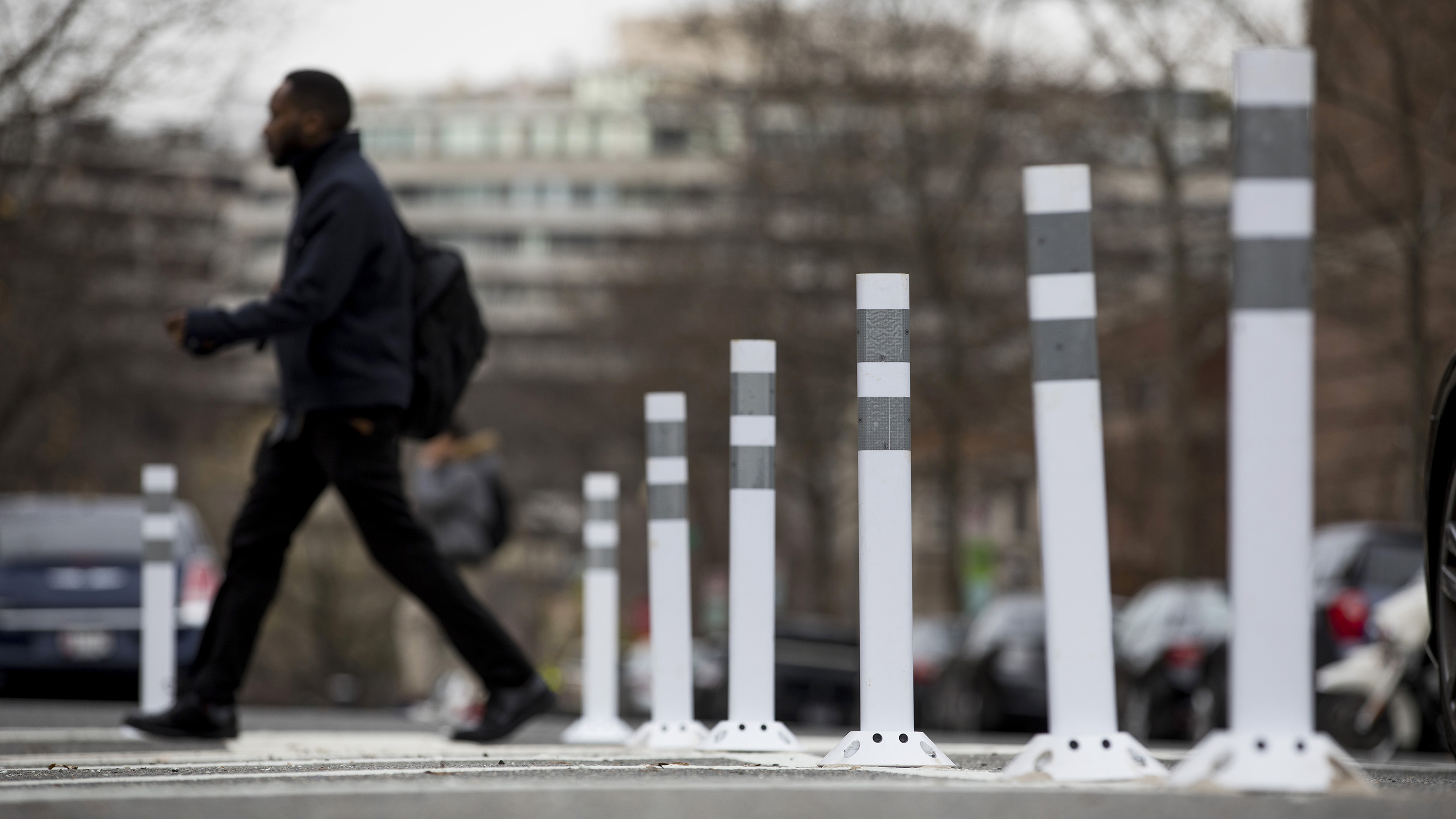
Picture this: You’re sitting at a busy District intersection with your turn signal on waiting to turn left. Traffic from the other direction is heavy. You’re poised to find your opening. Maybe your phone goes off. Or your kids are screaming in the back seat.
Then you see it. Your window has opened, and you’ve got to take it. As you accelerate you see something moving in your periphery. There’s a pedestrian right in the crosswalk, and it’s too late to stop.
That is the most common crash type in the District or any big city, according to George Branyan, the District Department of Transportation’s pedestrian safety program coordinator.
And these crashes can be the most deadly for vulnerable pedestrians. At least three people in the District were killed in the crosswalk last year in this type of situation. Carol Tomason was hit by a Chevy pickup truck driver in a crosswalk on H Street in October. Last month, mother and daughter Monica Carlson and Cora Adams were hit by a tour bus in a crosswalk near the National Archives.
Often, pedestrians have the walk signal, but cars still barrel through the crosswalk.
“These left turns… drivers have more time to pick up speed,” Branyan said. “That is why it’s so troublesome and why it’s the one that we’re continuing to work on.”
Soon, you’ll see more strips of hard plastic curb and yellow pylons pop up in the center line of District streets. It’s a technique called “left turn hardening” or “left turn calming.”
Branyan describes the purpose like this: Often drivers slices through a crosswalk instead of making a hard, 90-degree left turn. “The pylons create a barrier so that the car can’t begin it’s left turn until it goes farther into the intersection,” he said. “It forces the driver to make more of a right angle, so they can’t cut through the crosswalk at a slight angle… anytime you force a tighter turn, it slows down a driver.”
Check out DDOT’s before and after video from 14th and Columbia Road NW below.
Our new left turn calming infrastructure helps prevent drivers from cutting corners and making loose left turns. Here's one of several intersections that we've made safer already: 14th St and Columbia Rd NW. #ward1 #VisionZeroDC
More details ➡️ https://t.co/qzZBgShrDf pic.twitter.com/h6gaAj46ii
— DDOT DC (@DDOTDC) January 4, 2019
A few more components complete a left turn calming intersection: A rubber bump outside the crosswalk, a wedge of bright yellow paint on the corner, and waist-high pylons within the wedge that prevent drivers from beginning their turn too early.
The tactic makes the driveable area in the crosswalk smaller, thus limiting the exposure of pedestrians to vehicles. DDOT officials hope that with these changes — in addition to giving pedestrians an early walk signal before the traffic signal turns green — will make pedestrians more visible. And it helps prevent drivers from lazily and literally cutting corners.
DDOT took a page out of New York City’s playbook, which started using this infrastructure in 2016. It’s relatively cheap and quick to install — about three or four hours of work. And it gets results.
“In New York, the average left turn speed was reduced by over 20 percent and the crossing of the double yellow lines were reduced by nearly 80 percent,” said Wasim Raja, who oversees the project as associate director of DDOT traffic engineering. “These are some significant numbers.”
The District’s intersections were chosen based on the number of crashes, pedestrian-car interactions and other factors, he said.
In early January, workers installed the 20 feet of hard plastic curb and bright yellow pylons at 23rd and G Street NW, near George Washington University in Foggy Bottom.
It’s a fairly busy intersection. Some drivers seemed unsure about how to handle the new intersection. A large bus driver nearly took out the pylons. Most drivers slowed down and made a slower, more right-angle turn to avoid the pylons.
One driver in a sedan, aiming to beat a light, drove right over the rubber bump and sped quickly around the pylons, barely missing pedestrians.
Since the early 2000s, traffic deaths have plummeted. Seventy-two people were killed in traffic-related crashes in 2001. By 2012, D.C. hit an all-time low of 19 deaths. But it’s increased almost every year since, up to 34 in 2018, despite an effort called Vision Zero to eradicate all traffic deaths by 2024.
After months of protests and advocacy from bike and pedestrian groups, DDOT announced a series of new initiatives this fall.
Within the next few months, drivers won’t be able to make right turns on red at 100 intersections; the left turn hardening infrastructure, which began at five intersections, will be expanded to 85 intersections over the next two years; officials plan to speed up the construction of new bike lanes over the next three years; and they plan to lower the speed limit slower speeds near schools, retirement homes, and rec centers. DDOT also recently hired Linda Bailey to lead a new Vision Zero office.
City officials say they hope the changes — both in infrastructure and personnel — will make a positive impact. But they acknowledge that it will likely take a bit of time and education for drivers to permanently change dangerous behavior.