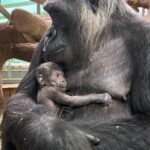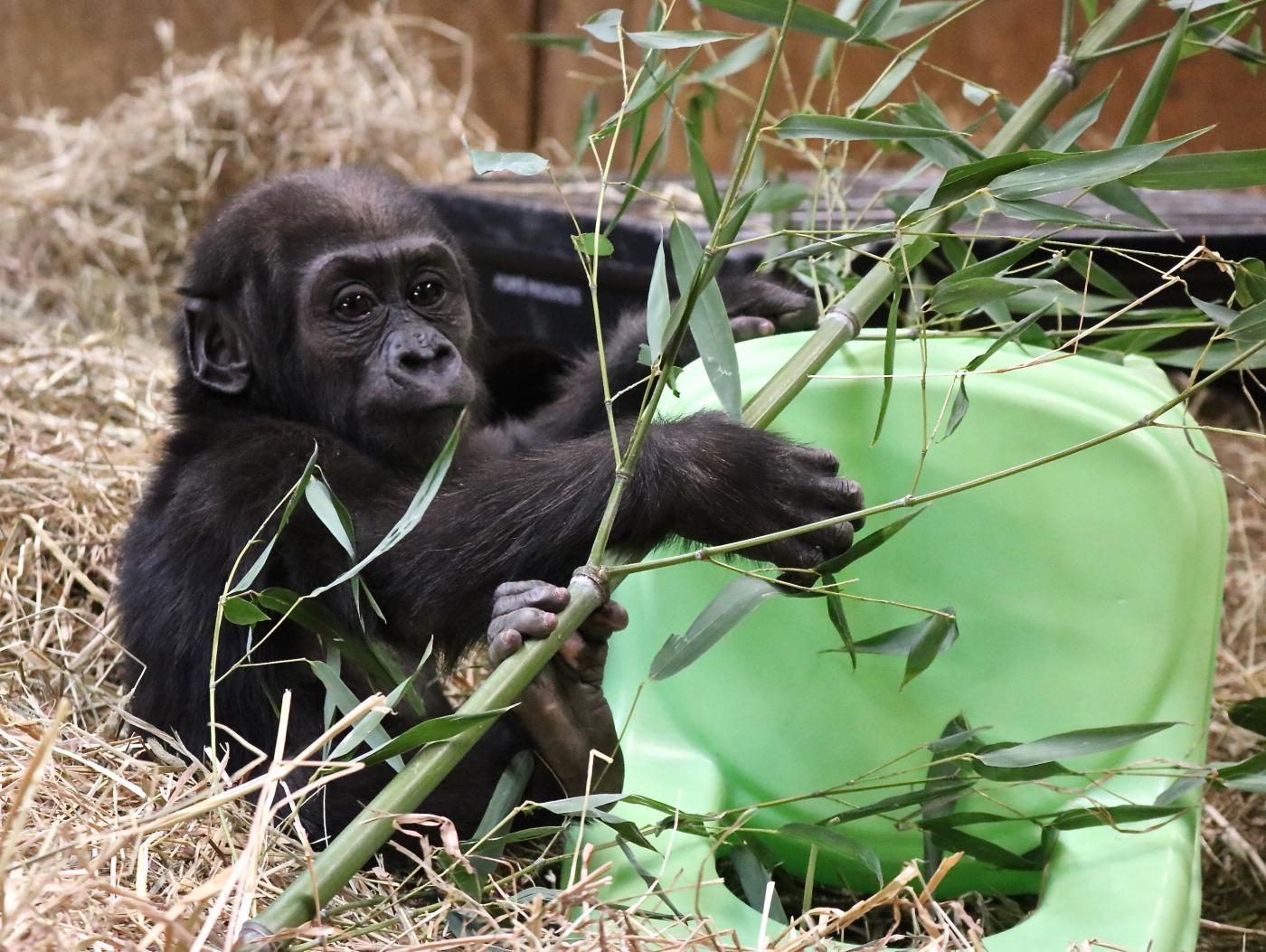
Moke, the National Zoo’s “daredevil” nine-month-old gorilla has a broken leg, but zookeepers say Moke has already started the healing process and should be fine in about a month.
While zookeepers are unsure how the western lowland primate became injured, they think it was likely a playtime accident. “Around 2 p.m. on Sunday, Jan. 27, keepers first noticed that Moke was favoring—or not placing weight on—his left leg,” Primate Curator Meredith Bastian said in a statement. “The primate team kept a close eye on Moke Sunday afternoon and all day Monday, Jan. 28. Although it was clear that there was something wrong with his leg, Moke did not appear to be in any obvious discomfort. He was nursing and eating, walking, moving quickly, climbing the mesh, and even playing with his mother (Calaya), father (Baraka), and Kibibi just as he normally would.”
The good news, according to Moke’s veterinary team, is that the x-rays revealed that the break isn’t that bad. The two parts of his fractured femur aren’t completely separated and the break isn’t through the growth plate, so the injury won’t affect his growth later.
Zookeepers say they had three treatment options for Moke: to not intervene and allow the fracture to heal on its own, to put a cast on his leg, or to surgically implant a plate in his leg. Because of the added risk of anesthetic or fear that Moke’s family wouldn’t allow the cast to do its job, keepers went with the first treatment plan. However, zookeeper staff will watch the young gorilla closely while he remains with his mother and father. Thanks to Moke’s youth, the outlook on his healing is positive and the zoo believes his fracture should be healed within 30 days.
The zoo says the primate is still in very good shape. According to Chief Veterinarian Don Neiffer, “Apart from the fracture in his leg, Moke is very healthy. We did bloodwork to make sure his organs were functioning properly (they are), and his mineral levels—particularly calcium and phosphorus, which are part of bone development—are normal. His muscle mass and bone density also look good.”
During his rehabilitation, Moke and his parents have been separated from their troop to prevent him from roughhousing with his favorite playmate, Kabibi, another western lowland gorilla. However, zoo spokesperson Jen Zoon says the two can still interact through a thin mesh wall called a “howdy door.”
Visitors can check on Moke’s progress at the National Zoo’s Great Ape House, which reopened Feb. 2 after closing for a week for primate veterinary exams.