 Rachel Sadon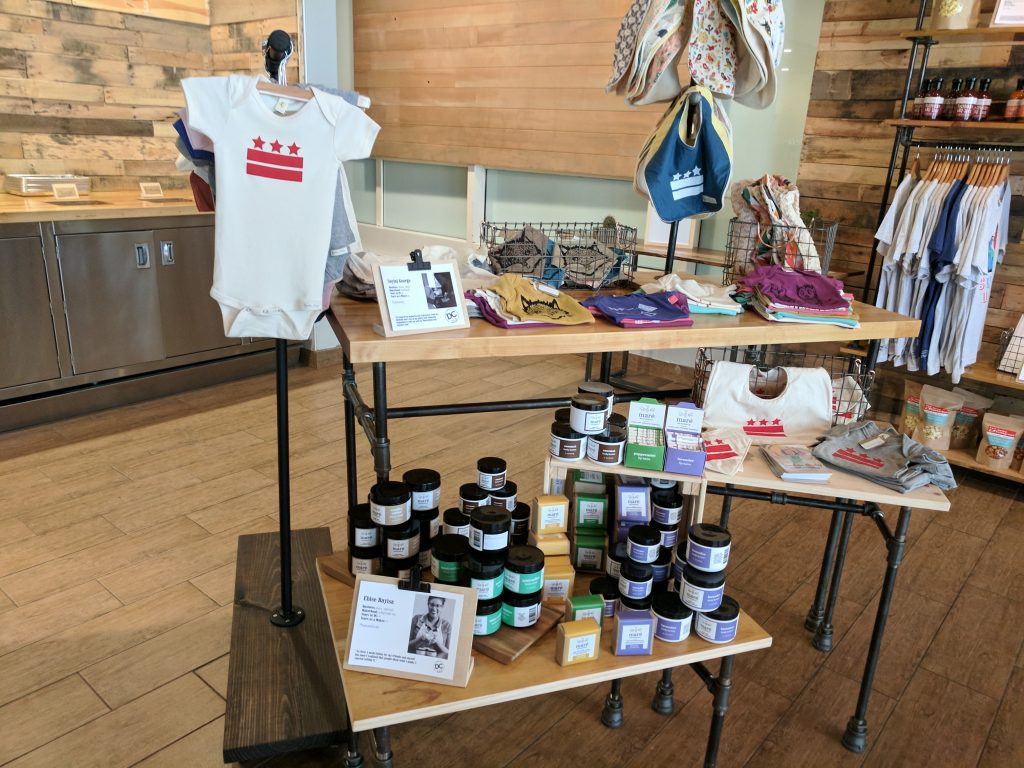
Stacey Price and Michael Babin opened Shop Made in D.C. in Dupont Circle in 2017 with a leap of faith.
“When we opened we were like, ‘we think we’ll be around two years from now,'” says Price. “It wasn’t a typical business. We were doing an economic development experiment.”
The store only stocks products made in the District, with the goal of bolstering the city’s artisan community. And it’s been so successful that they’re now setting up another location at The Wharf.
“What has happened is that we found that this model does work,” says Price. “We have makers that, because of their success in the store, are contemplating quitting their jobs and being full-time makers. We have makers that have hired staff. We have makers that have changed their whole way of producing because we’ve helped them get to scale.”
The Dupont shop features goods from about 100 artisans—clothing designers, woodworkers, ceramicists, jewelry makers, the list goes on—along with a cafe that serves up dishes from a rotating cast of local food businesses. In a bit more than a year in operation, Price says the store has paid more than $800,000 to their local retailers and food partners.
The city helped fund Shop Made In D.C.’s opening with a seed grant, but it has since been able to sustain itself and the new location on sales alone. Still, operating a retail business in D.C.’s expensive real estate market is a tremendous challenge, and out of reach for much of the city’s creative class. Even with a conglomerate of so many artisans in one place, Price says it would be near impossible without what she calls “creative agreements” with developers who offer subsidized rent because they see value in supporting local makers (the fair market rent on their sizeable space in Dupont? $38,000).
At The Wharf, developer Madison Marquette was willing to offer them a one-year lease instead of the traditional five or ten year period to give them a chance to feel out the environment. “The Wharf is exciting. It’s this new neighborhood, but it has still got a big question mark on it.” Price says. “We want to make sure that it’s viable for us to run this business over there.”
The new shop will be located in a 1,400 square-foot space previously occupied by a furniture store. It will eschew the cafe component, and the space is correspondingly a bit smaller than in Dupont, but otherwise the goal of showcasing products made by Washingtonians remains the same. Shop Made in D.C.’s Wharf location will open on Tuesday with work on hand from about 80 makers (not to mention artwork and fixtures and furniture all made by locals).
Part of the thinking in opening up at the glitzy new development is that the shop appeals to both locals who want to show off their city pride and tourists looking for more interesting offerings than the ubiquitous FBI sweatshirt. To that end, they are also experimenting with selling goods at the Kimpton Hotel’s Glover Park location, starting next month.
“It allows us to show this tourist population that there’s more to the city than the things they’re seeing on the Mall in terms of souvenirs and D.C. products,” Price says.
Shop Made in D.C. will be open daily from 10 a.m.-8 p.m. starting February 12. Grand opening festivities will take place on February 16, followed by a series of special workshops.