Rachel Kurzius
Since launching in 2010, the Capital Bikeshare program has increased its offerings to hundreds of bikeshare stations across the city and region. But whiter, high-income neighborhoods generally have more stations than others, and the docks that do exist in low-income neighborhoods are generally used much less. While wards 7 and 8 have about 10 percent of the city’s total stations, approximately 0.5 percent of total trips began east of the river in 2017, according to new analysis from the Urban Institute.
Capital Bikeshare is a public-private partnership between D.C., Alexandria, Arlington County, Montgomery County, and Fairfax County. It’s operated by Motivate International, and one of its stated goals is to “attract a wide variety of users regardless of age, race, income, and gender” who can ride the system’s big red bikes from any of its stations to another. Annual memberships cost $85.
The system publicly shares ride data, unlike many of the privately owned dockless bike and scooter companies that have since come to town. Using information from registered members (66 percent of total rides), Urban Institute researchers set out to determine whether CaBi was meeting its goal to be available to “all users.”
The short answer: no.
There are more stations in “areas with higher shares of white residents, lower poverty rates, higher income, and higher college attainment,” according to the report. CaBi’s user survey, which it undertakes every two years, bears this out. The 2016 survey found that 80 percent of Capital Bikeshare users were white, with Asian and Hispanic/Latino riders both at 7 percent, and African-American riders at 4 percent.
Use Is Clustered In Less Diverse Neighborhoods
One study indicates that that lack of diversity in bikeshare programs has less to do with whether or not communities are interested in the bikes, and is more about whether they have access to information about them.
There’s anecdotal evidence that dockless bikes attract a broader clientele—a hypothesis that’s tough to prove, given the lack of data, but one that Yipeng Su, the Urban Institute research analyst who co-authored the report, says would be reasonable to assume. Because dockless bikes don’t require stations, “your trip can be more flexible,” she says. Stations are most often placed close to other transportation infrastructure: 67 percent are within half a mile of a Metro station, and 99 percent are within a half a mile of a Metrobus stop. “That naturally limits where people can start and end their Capital Bike trips.”
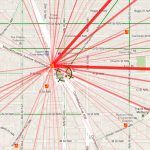
While CaBi has expanded its offerings east of the river since its initial launch, use in wards 7 and 8 is flagging compared to other parts of the city. These two wards have a combined population of about 150,000 people, mostly African-American, and only three (soon to be four) grocery stores. Of the tiny sliver of rides that begin there, 37 percent of them go across the river and dock bikes west of the Potomac. Meanwhile, 0.1 percent of the trips that begin west of the river end up east.
“Part of the reason is because of historical disinvestment,” says Su. “There aren’t as many jobs, there aren’t as many activities people can bike to” east of the river.
In 2016, Capital Bikeshare created a reduced membership program to broaden its ridership. By the end of 2017, Capital Bikeshare announced it would add six more stations east of the Anacostia River, alongside the 24 already in place. But according to Su, those new stations rank among the least used in the system. Urban Institute researchers note that the comparative lack of Capital Bikeshare use in wards 7 and 8 might be tied to the lack of bike lanes there.
Use Is Clustered In High-Income Neighborhoods