Starting in July 2020, more than half a million people who work in the private sector in D.C. could be eligible for the District’s new paid family leave program. It gives new parents a portion of their wages for up to eight weeks.
For local couple Rachel Wynn, 29, and David Poms, 31, that’s something worth waiting for.
The couple knew early in their relationship that they wanted to have kids.
“We were both kind of on the same page,” Poms says. And Wynn says she always knew she’d be a mother.
“I’ve always wanted to be my mom, like when I was a toddler. My mom would find me nursing my little baby doll,” she says. “I’ve always loved kids.”
The two have a very D.C. love story. They first met while working at a local nonprofit, then later connected on a dating app. In 2017, they got married (at an &Pizza!).
Kids were a goal but not a priority. But before their wedding, Poms lost his grandmother and his great-uncle in the same week, and their plans to have kids took new urgency.
“Going to two funerals back-to-back just made me think about it would be nice to have children when we’re young enough that they could form a relationship with their grandparents,” Poms says.
Now the couple is ready. But they’re waiting until 2020 because while Poms has paid leave through his employer, Wynn, who owns her own social media business, doesn’t.
“I’m self-employed so my options are nothing or short-term disability,” she says. She talks about how a business colleague had twins who came early—and ended up working while in the hospital.
“It was terrible because she didn’t have maternity leave, and especially with the expense of the two boys—it was just like a lot,” she says.
In 2016, the D.C. Council passed a paid leave law, joining Rhode Island, New Jersey, California, and New York. Anyone who works in the District—except city and federal employees—would be eligible. That includes people living in Maryland and Virginia.
The District’s program will pay a portion of wages for new parents up to eight weeks to take care of a child, six weeks of leave to take care of a family member, and two weeks of guaranteed medical leave. To pay for the program, D.C. will start collecting a quarterly 0.62 percent employer payroll tax starting this July.
Wynn, as a self-employed business owner, will also pay into the fund.
“I plan to have a baby after July 1, 2020,” she says. “That is the date that is just the earliest when we would want to birth a child.”
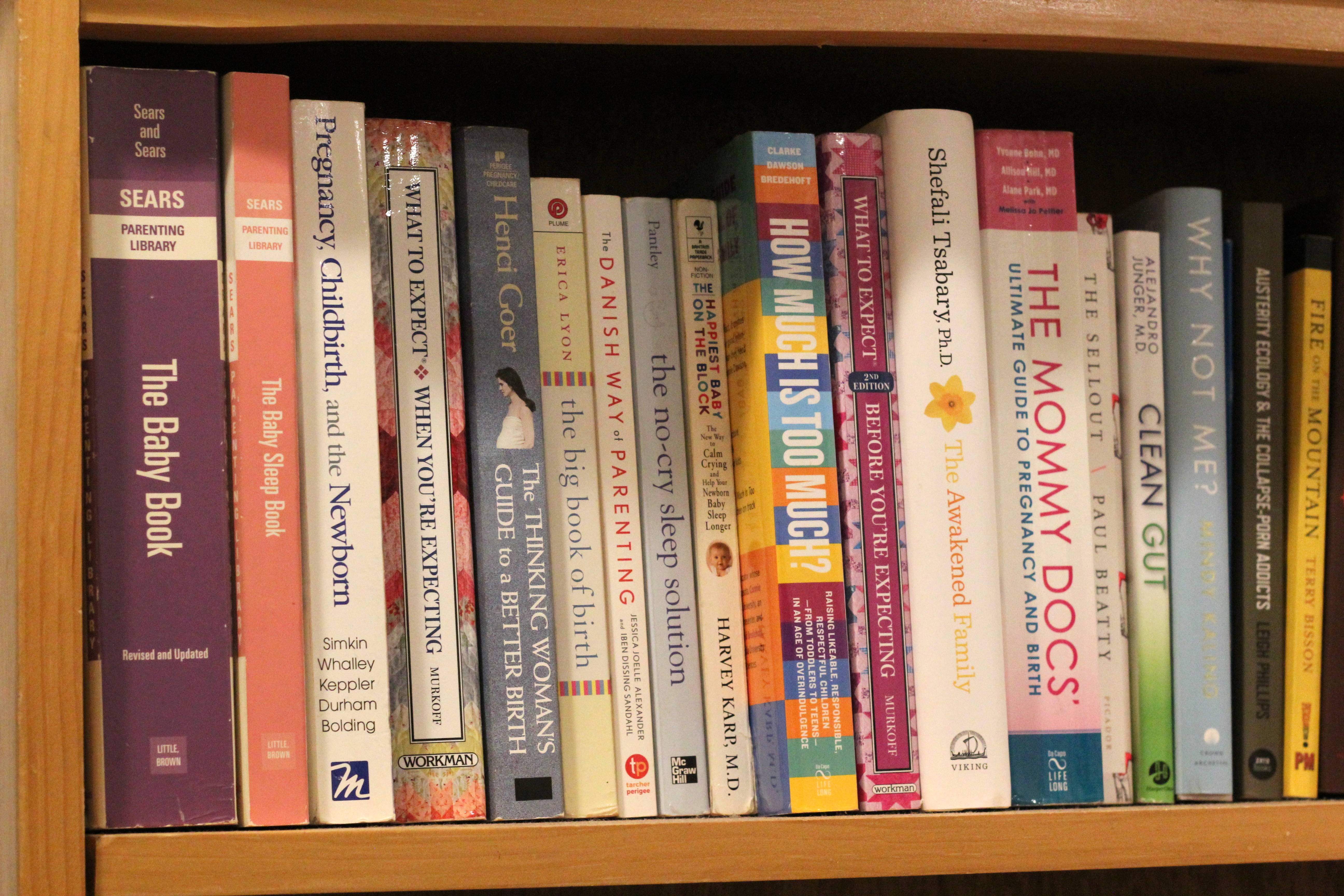
Wynn has been collecting books on pregnancy and parenting — but she hasn’t dug into all of them yet.Elly Yu / WAMU
While the new policy is helpful for potential parents like Wynn and Poms, it’s not expected it will suddenly make people want to have kids.
“If you’re already there, it might give you a little bit of a nudge,” says Elizabeth Peters, an institute fellow at the Urban Institute who researches family policy.
In states that have paid leave policies, Peters says women have been more likely to breastfeed their babies. Studies have also shown that women in those states are more likely to return to work when their leave runs out.
It’s had other benefits too.
“The policies implemented by the states have been beneficial to the lower-wage, lower-educated, more disadvantaged workforce because they won’t have those things through their employers,” Peters says.
D.C.’s impending policy has taken a lot off of Wynn and Poms’s minds. And they’re focusing on other ways to prepare to start their family. They’re preparing to move to an apartment with room for a nursery. And Wynn has been collecting books on pregnancy and parenting, mostly from thrift stores. They’re lined up on a shelf in their kitchen.
“Of course, I’m that person who bought “What to Expect” before you’re expecting—and I’m reading stuff like “oh, eat walnuts to increase sperm health,” and all these little things,” she says.
But she’s holding off on reading most of the books for now to not get ahead of herself.
“I’m going to wait until I’m actually ready to start conceiving because I love researching and planning. And I feel like if I started now, either I’d want to get pregnant right away, or just, I would just get caught up in all of it,” she says.