

About 15 miles south of San Diego, there is a narrow sliver of fenced-in space known as Friendship Park where, on weekends between 10 a.m. and 2 p.m., families can reach through the slats of a tall metal fence to touch their loved ones on the other side, in Mexico.
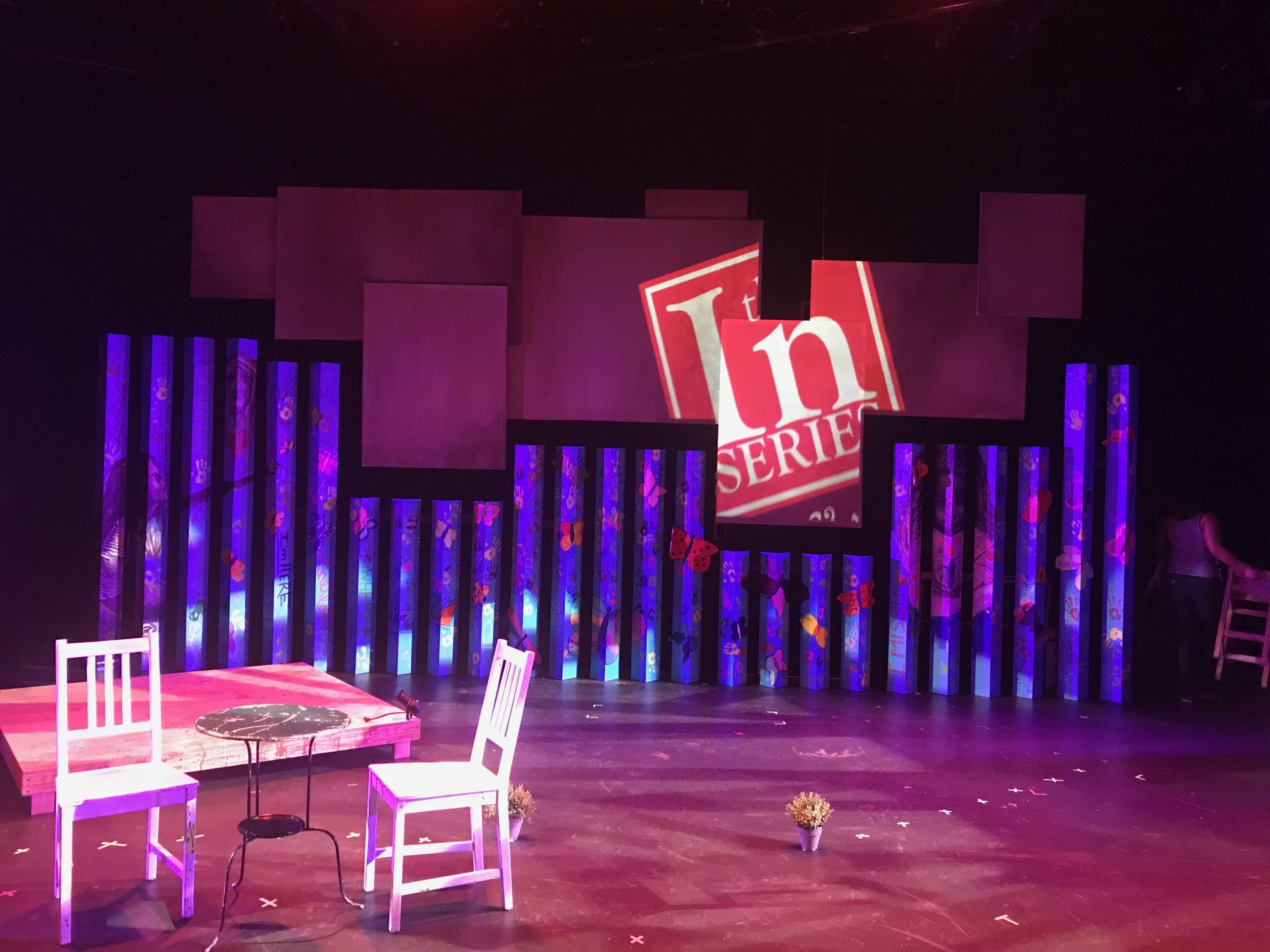
“That’s the official legal space you can go into, but you can see in many of those pictures or videos that people make connections in all sorts of places,” said Anna Deeny Morales, writer of La Paloma at the Wall, which opens Saturday at GALA Hispanic Theatre. The play follows a Guatemalan woman’s search for her separated daughter, and takes place entirely in the shadow of a 25-foot border wall.
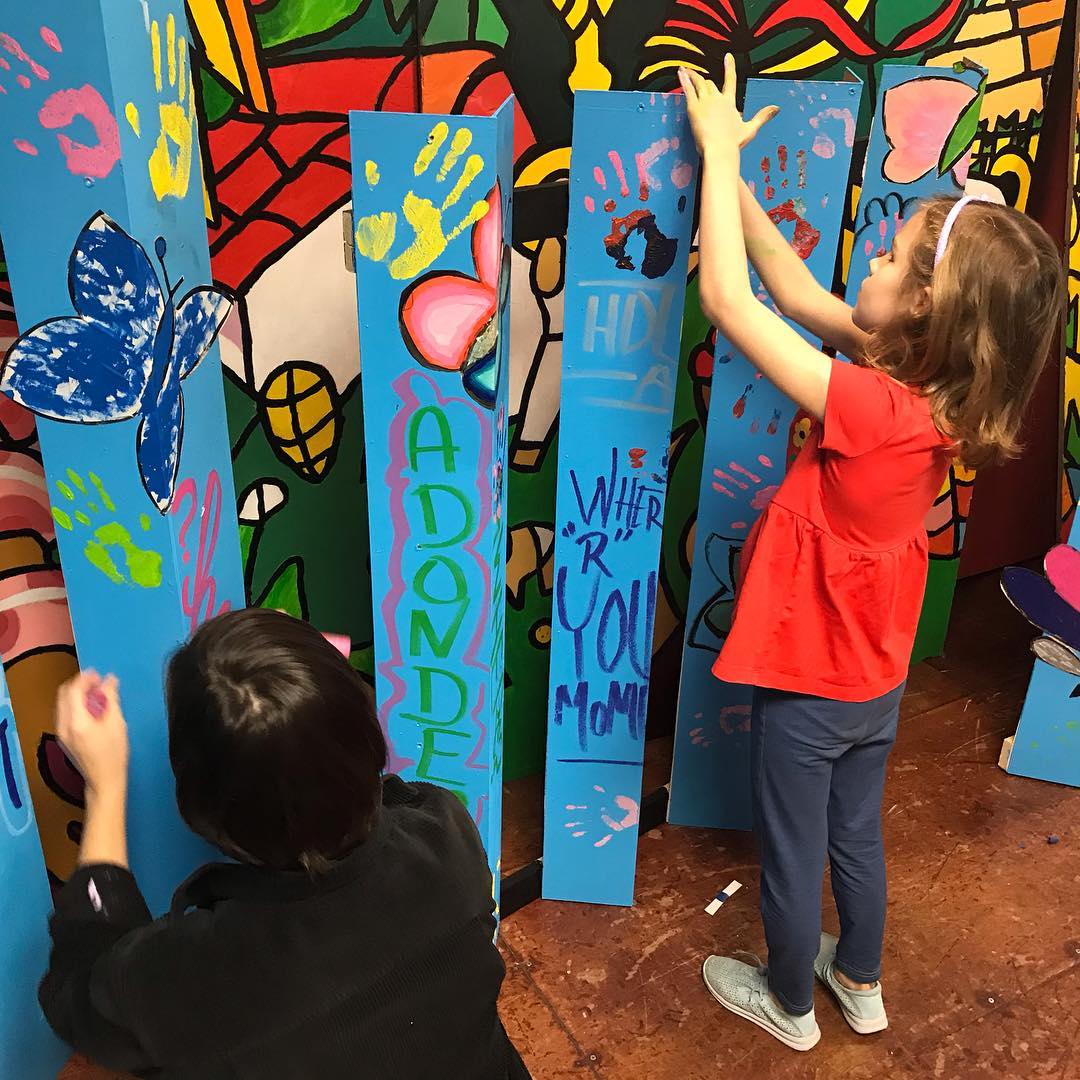
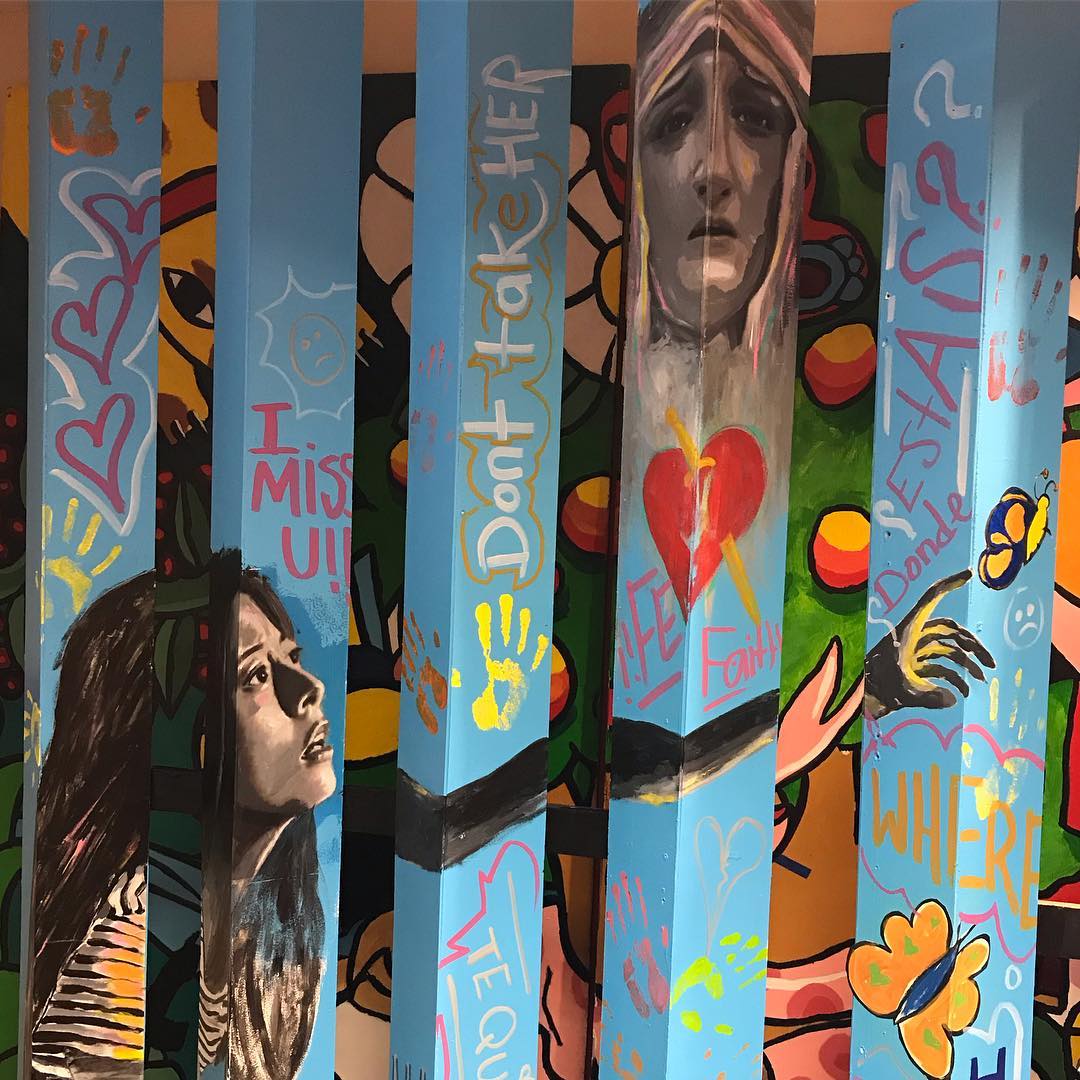
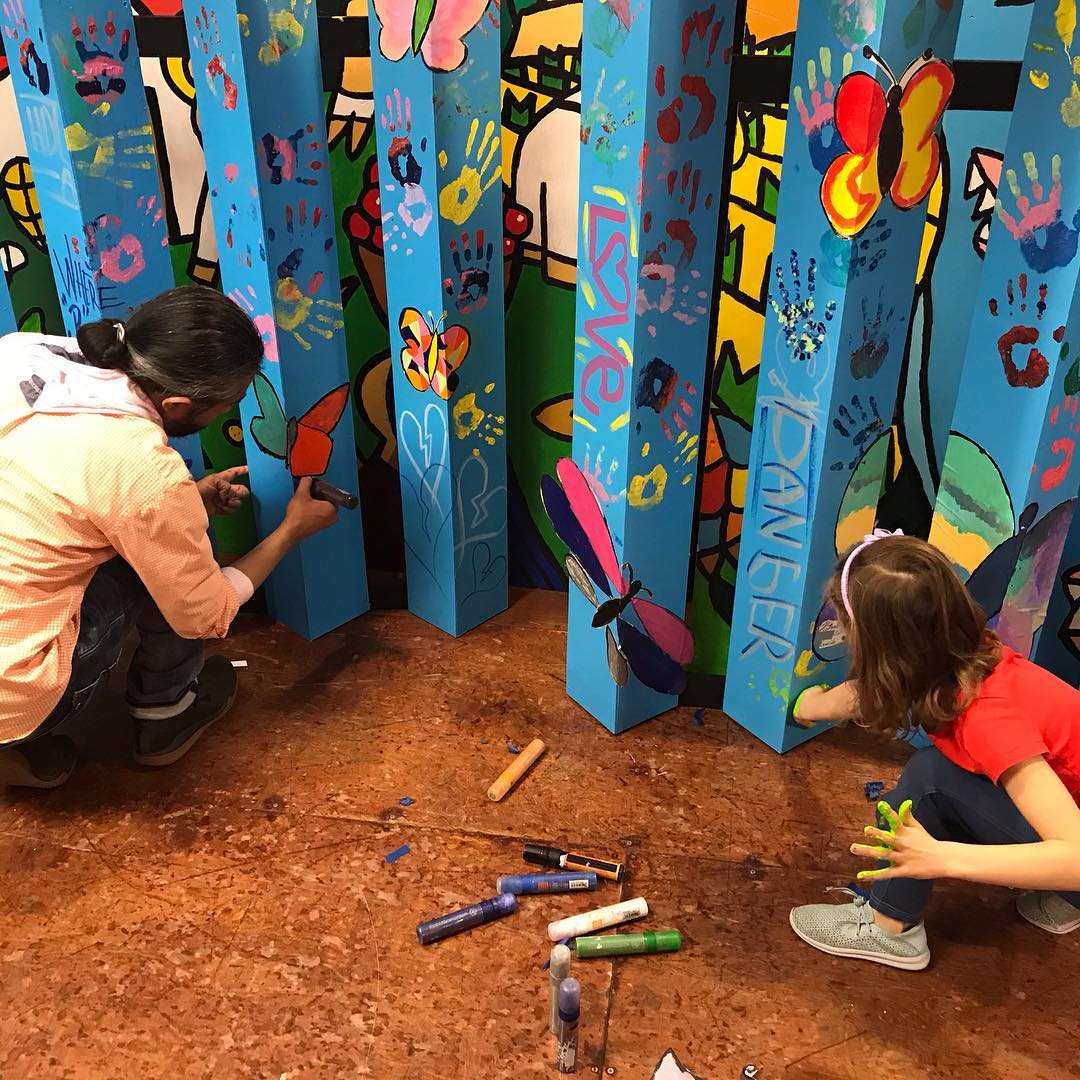
Deeny Morales visited the Tijuana border while writing the play, which is an adaptation of La Verbena de la Paloma, a popular 1894 zarzuela, a Spanish genre of typically light and comic musical theater. Much of the plot is different, including the Mexican setting and the looming border wall behind the action. That wall, painted a vibrant blue, was created and muralized with the help of student volunteers at the Latin American Youth Center in Columbia Heights.
“The idea is to take that awful thing that’s on everybody’s mind and create a new opportunity out of it,” said Cara Gonzales, outreach coordinator for the In Series which is producing the show. The company specializes in operatic and musical theater works that focus on Latinx culture. Now in its 37th season, the company is making an effort to diversify its repertoire. A demographic survey distributed at recent shows confirmed that the series’ audience is mostly white and high-income, Gonzales said.
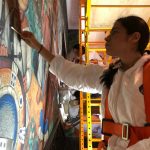
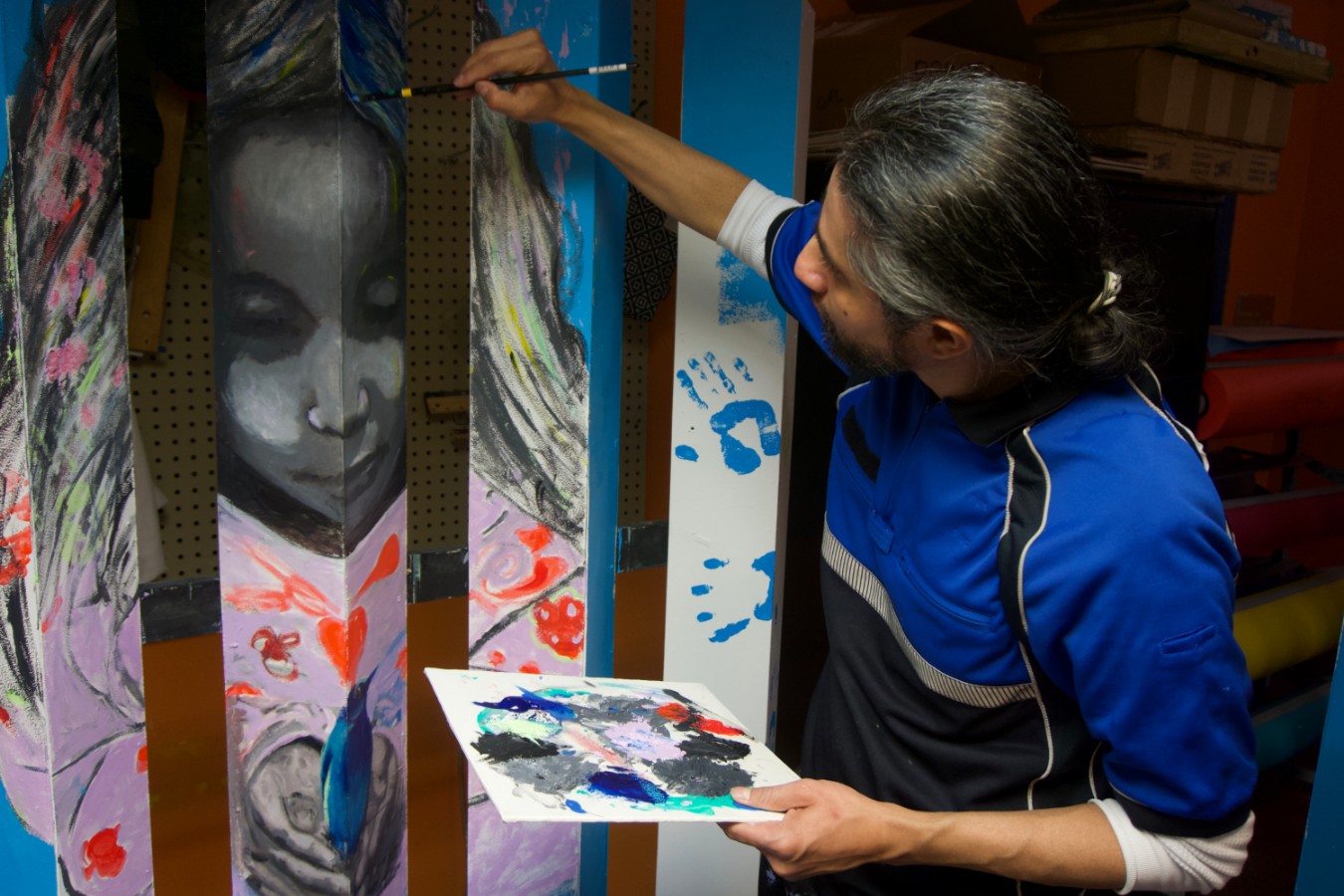
Earlier this month at the youth center, students made handprints and painted watercolor butterflies (which were later wheat pasted onto the wall) under the direction of artists Luis Peralta Del Valle and Sarah Craft.
“It’s a pretty accurate recreation of the Tijuana border wall,” said Del Valle, gesturing at the blue angled wall slats, onto which he has painted a small girl reaching across to her mother.
The mural design was developed through conversations with the students about migration and life at the border. Deeny Morales showed photos of mural art along the Mexican side of the border fence, and talked about the history of artists like Diego Rivera, José Clemente Orozco, and contemporary Mexican-American artists like Yolanda López.
“We saw how the American side was just black, and the Mexican side was full of colors,” said 12th grader Alicia Bell. “It was just a wall on the American side.”
Del Valle, like many of the students, has his own migration story: He came to D.C. with his family at age five to escape the contras in Nicaragua. His career includes many commissioned murals across the District, such as a recent one at nearby Bancroft Elementary School that depicts a 2018 march against family separations.
With walls increasingly a symbol of racism and xenophobia, Deeny Morales and Artistic Director Timothy Nelson say they hope to reclaim the idea of the border and celebrate the rich Mexican music and art traditions that flow from it.
“The border doesn’t just affect the people of those regions. People come across the border and they have migrant jobs, day laborer jobs all over the United States,” Deeny Morales said in a conversation with DCist last week. “When you go to the Latin American Youth Center, you talk to those kids and either they have crossed themselves or their parents did, or their aunt or their siblings.”
The show also includes traditional Spanish dance by D.C. company Corazón Folklórico and son jarocho music, a Mexican folk style with African and indigenous influences (the show’s music is by Ulises Eliseo).
Back at the youth center, Bell said she was surprised by how vibrant the wall art on the Mexican side of the border was.
“You’d think it would be different because the American side is the dream side, and the Mexican side is where everyone is trying to leave,” she said. “You wouldn’t expect it to be so bright on that side when everyone is trying to get to the other side.”
La Paloma at the Wall runs at GALA Hispanic Theatre from March 23-31. Tickets $20-$45. Representatives from Immigrant Families Together will be at three of the performances and will speak at a panel discussion following the final show on March 31 about how audiences can help recent immigrants in D.C.