Martin Austermuhle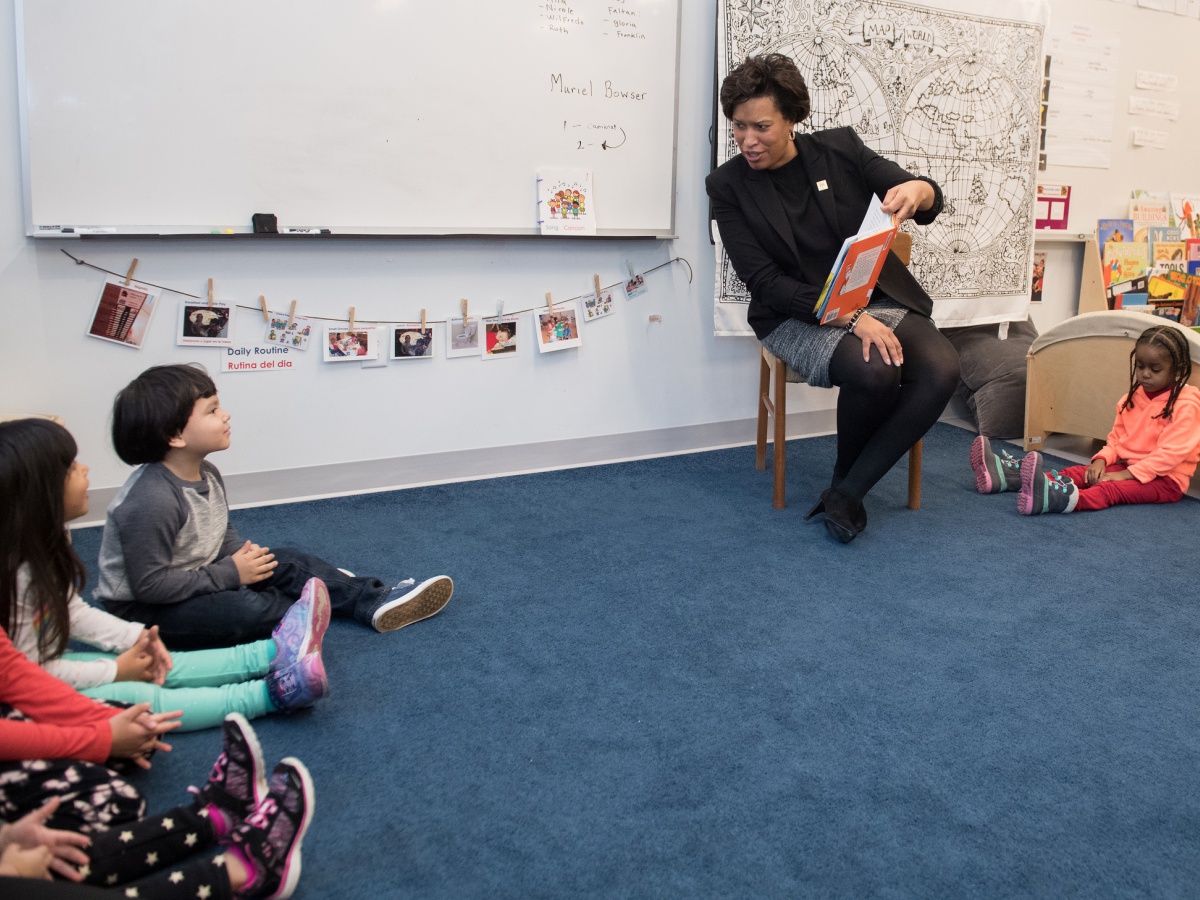
The effort to bring down the sky-high costs of child care in D.C. is getting a partial boost in Mayor Muriel Bowser’s budget for the upcoming year.
The mayor has proposed building three new early education centers for kids 4 and under. This could create more than 500 new openings for child care in the District.
Bowser is asking for $30 million to renovate two old school buildings—Randle Highlands in Ward 7, and Miner in Ward 6—and put up a new building on the site of the old Thurgood Marshall Elementary School in Ward 5. All three would be transformed into stand-alone early education centers, offering child care for kids 0-3 and pre-K for 3- and 4-year-olds.
City officials say the plan—which would bring 360 seats to Randle Highlands and Miner, and an estimated 200 to Thurgood Marshall—is aimed at addressing one of the factors that has made child care in D.C. among the most expensive in the country: a shortage of spots for kids.
“We know currently that there is more demand than supply for child care seats and for high-quality seats,” says Deputy Mayor for Education Paul Kihn. “We need more space in facilities across the city.”
While Bowser’s proposal is still in its early stages, Kihn says they envision private operators providing the child care and D.C. Public Schools operating the pre-K classrooms.
According a report published by the Bethesda-based Bainum Family Foundation last year, the demand for child care in D.C. could exceed supply by as much as 30,000 seats.
Bowser started taking steps to address child care costs and quality two years ago. She initially offered space in two government buildings to child care providers at reduced cost, and last year increased the subsidy rates for child care providers that serve low-income families. As part of last year’s budget, Bowser offered a one-time $1,000 refundable tax credit for families paying for child care.
D.C. has also started increasing the higher education requirements for child care workers. While city officials say this is to ensure that all children are receiving care from individuals versed in the latest understanding of how kids learn, critics say it’s over-regulation that could make child care even more expensive.
As part of her new budget, Bowser is making the child care tax credit permanent, and wants to dedicate another $5 million to increasing subsidy rates for providers.
“The way we’re thinking about early childhood education is around three elements: affordability, access and quality. When we do this work on the sites, that’s about access. Things like the subsidy helps us with quality, and we’ve made the $1,000 tax credit permanent, and that goes to affordability. We’re trying to keep a balance when we do the investing,” says Kihn.
But Bowser may face some pushback from activists who want to see more money put towards “Birth to Three for All D.C.,” an ambitious bill passed by the D.C. Council last year aimed at improving quality, reducing costs, and increasing pay for child care workers, many of whom are paid little more than minimum wage. Activists called on Bowser to put $30 million toward implementing the bill—it’s expected to cost $500 million over a decade—while she’s only putting in a sixth of that amount.
“The real problem is we’re putting in dribs and drabs,” says Judy Berman from the D.C. Appleseed Center for Law and Justice. “I give this mayor credit for putting more in than in the recent past. But we’re not seeing the major systemic changes we want to see to enable providers to make real changes.”
But for the time being, Kihn remains optimistic on the work being done around child care in D.C. (Similar work is happening in Arlington County and Montgomery County.) When coupled with the city’s existing free pre-K program, he says D.C. could eventually be one of the better places to raise a child.
“We are certainly on a path to be the preeminent early childhood provider or any large metropolitan part of the country,” he says. “That said, we have a lot of work to do. We understand the supply of our seats does not yet meet the demand.”