Earlier this month, the National Park Service announced that it would be lowering the speed limit on part of the Baltimore-Washington Parkway because potholes are making the road bumpy and dangerous. The B-W Parkway is hardly the only road in the region plagued by potholes. Repairing them is a year-round effort for road crews across the Washington region.
Charles Schwartz, a professor of civil engineering at the University of Maryland who studies pavement resilience, says that weather, poor road construction and maintenance, and heavy traffic all contribute to pothole formation.
What Really Causes Potholes
There’s a simple recipe: add water, freeze, and thaw, then apply traffic. The worst potholes typically follow this scenario. Cracks appear in the asphalt’s surface either because of fatigue of the asphalt under the repeated traffic loading, or possibly because of seeping around the edges of utility cuts or other patches. Water seeps into the cracks and into the soil layers where it can freeze and expand, and this can create more cracks. More importantly, it can cause the pavement to heave slightly. The ice then thaws, leaving a void beneath the pavement surface and the soft, saturated soils underneath. Then, traffic over this causes more cracks until all those loose pieces of asphalt and the underlying soils begin to be ejected.
Does More Rain Mean More Potholes?
A lot of rainfall certainly is a contributing factor. We’ve also had a winter where we’ve cycled through some very cold periods and some very warm periods. It’s this freeze-thaw cycling that is the worst for the pavement. If it were to freeze and stay frozen, we’d actually be in better shape than we are now.
How To Fix A Pothole
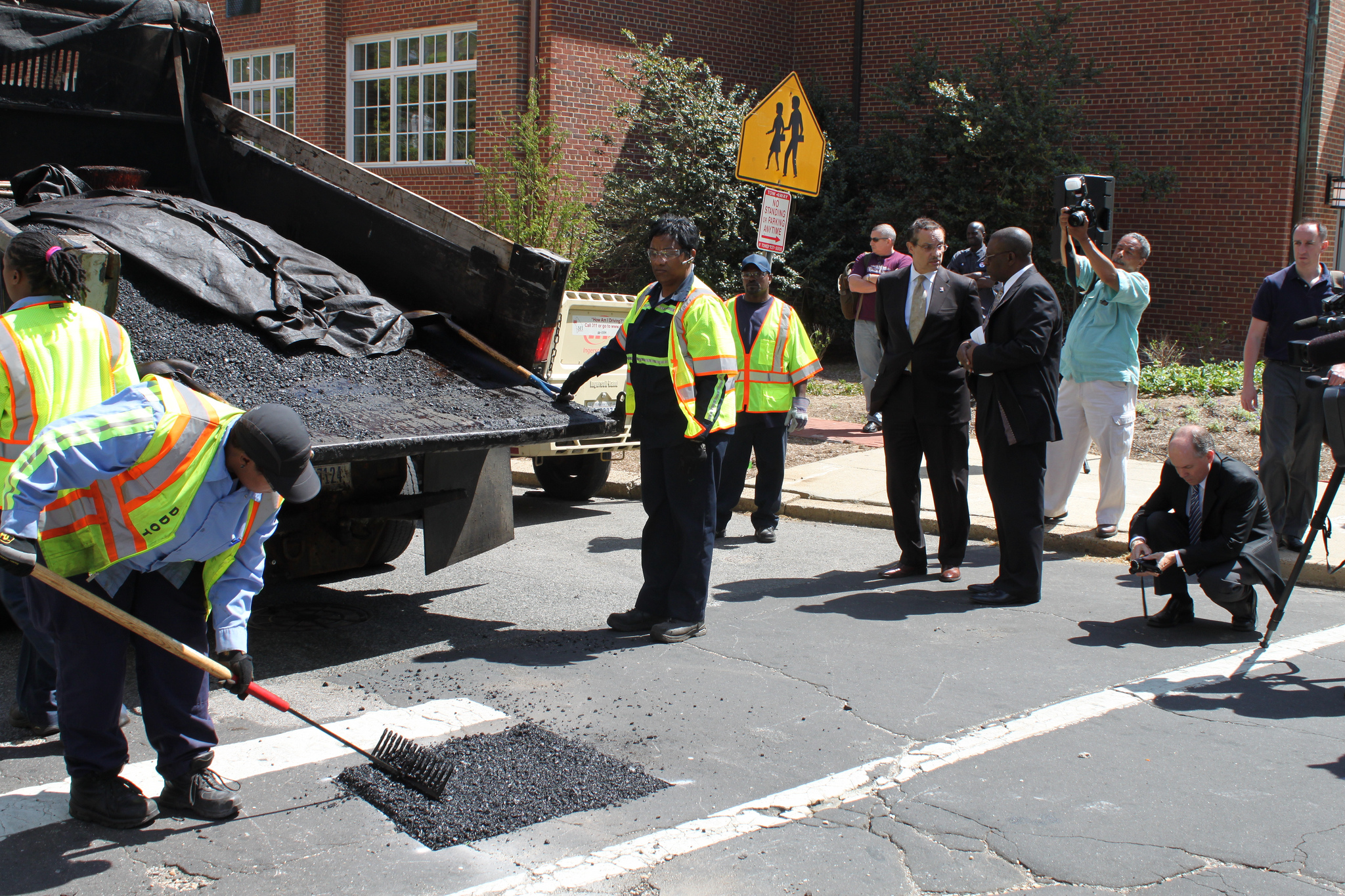
The most common repair technique under these cold temperatures is cold patch material applied using what’s called the “throw and go” approach, where you fill a hole with cold patch and let the traffic compact the material. We’ve all seen this out on the roadway. The most typical life span of this material is maybe a month, sometimes a lot less. Typical cost is $35-$50 per patch, depending on the size.
We did some research recently on techniques for high-quality patching in cold temperatures. The technique we looked at it is called infrared asphalt repair, which uses a large propane-fueled burner on the back of a truck to heat the pavement locally—even in the depths of winter—so the road can be repaired properly using hot asphalt patching material. This gives very high quality and durable patches under all weather conditions, but obviously at a higher cost.
How To Stop Potholes From Forming
The way to prevent potholes is to start with proper roadway design with cross slopes to drain off water and a high-quality asphalt surface. But then what you really need is vigilant maintenance to make sure all the open cracks are sealed and they don’t appear, and it may require frequent resurfacing of the roadway, likely at intervals that are more expensive than agencies can afford or that the driving public is willing to tolerate. We’re always going to have potholes, we just have to be more diligent about repairing them quickly and repairing them better.
This story originally appeared at WAMU.