Nearly 500 years ago, Jacopo Tintoretto was Venice’s avant-garde artist. He was, “a challenger who broke with tradition,” explains Robert Echols, co-curator of Tintoretto: Artist of Renaissance Venice at the National Gallery of Art. One 16th century biographer described Tintoretto as “a peppercorn overwhelming all other flavors in a dish” (somebody should write a rock opera about this guy). Which makes Tintoretto the approximate cultural equivalent of Jackson Pollock and Guy Fieri.
Now, the National Gallery of Art celebrates the 500th birthday of one of the great Venetian masters with the first Tintoretto retrospective ever mounted in North America. Yet Tintoretto: Artist of Renaissance Venice is also strikingly modern.
As a young painter Tintoretto is said to have inscribed an inspirational motto on his studio wall: “The draftsmanship of Michelangelo and the paint handling of Titian.” But the upstart Venetian, whose reputation has long been in the shadow of his peers, did more than absorb their technique. With brush strokes so bold and free he was described as “drawing with paint,” he infused his work with a raw excitement that’s palpable centuries later. If Sartre was right about Tintoretto being the first film director, then it was as a precocious pioneer of a freewheeling new wave.
He was also a showman, in the stories his canvases told and in his visible brushwork, which frequently reveals a performance that is both aesthetic and athletic. As Echols puts it, he “charges the surface with energy.”
It’s tempting to project a modern sensibility onto such a raw, seemingly unpremeditated talent. LIke many a modern artist, he was driven by money, taking on portrait and other commissions that kept him busy enough to require well-trained assistants to help produce his work.
Yet his most monumental works were driven by his Christian faith.

The 70-foot Il Paradiso can’t travel to the NGA, but is represented by an oil sketch that is a mere 16-feet wide. The massive Crucifixion, 40-feet wide and here represented by a three-plate engraving just five feet wide. You’ll need to travel to Venice to visit these Cinemascope-scale masterworks, but what did travel to the States can still make you gasp.
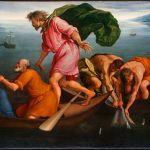
Take his majestic The Creation of the Animals, just nine feet wide but a fantastic vision of big-eyed fish, cute bunnies, and porcupines. Whether depicting the glories of creation, the agonizing passion of Jesus, or a contemplative Virgin Mary, Tintoretto’s heightened reality sold his talent and profound beliefs.
Frederick Ilchman of the Museum of Fine Arts in Boston, who curated the show with Echols, told the New York Times that, “What he does better than anyone are these energetic religious paintings that make you feel some miracle is actually happening.”
Still, Tintoretto was characterized as an artist who painted so quickly he didn’t have time for detail. As John Marciari, curator at the Morgan Library & Museum in New York, which hosted the exhibit Drawing in Tintoretto’s Venice this winter, explains, Vasari propagated the myth that Venetians, Tintoretto in particular, were impetuous geniuses who didn’t have time to draw and lay a foundation for their massive works.
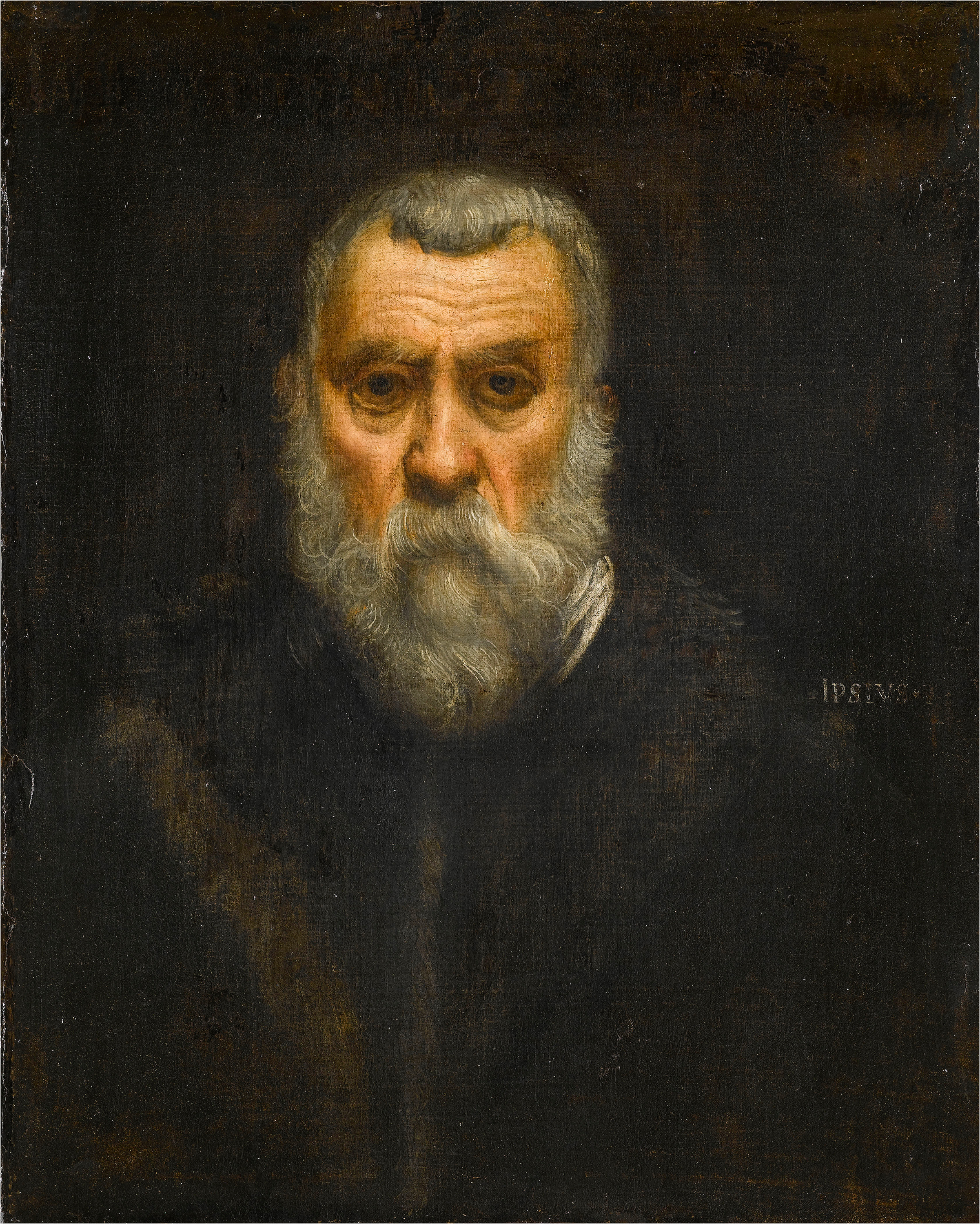
Venice artists were apparently okay with this stereotype—it was good spin that set them up as rebels. But existing drawings indicate that Tintoretto very much worked out the anatomy of his figures, making sure the underlying figures seem even if they were layered in heavy clothing that obscured the body.
The renaissance masters may seem far removed from the age of dazzling museum spectacle, but Tintoretto: Artist of Renaissance Venice immerses you in this storied world with a vivid immediacy that can’t be captured by a selfie.
Tintoretto: Artist of Renaissance Venice is on view at the National Gallery of Art, West Building, through July 7.