 Mikaela Lefrak
Posting photos of the cherry blossoms is a springtime tradition for both Washington newbies and longtime locals. Sure, it feels kind of basic, but those flowers are just calling to be photographed. How can we resist their siren song?
Maybe you’ll take a selfie amidst the pink and white blooms and send it to your family. Perhaps you’ll heavily filter your snapshot of the Jefferson Memorial peeking through the branches and post it to Instagram. Or how about tweeting a shot of the crowds at the Tidal Basin along with a curmudgeonly gripe about tourists?
Whatever type of picture you decide to take this year (and trust us, you will take at least one), it will be part of a long history of cherry blossom photos dating back over 100 years.
Here’s a brief history of Washington’s cherry trees and their admirers, for the uninitiated.
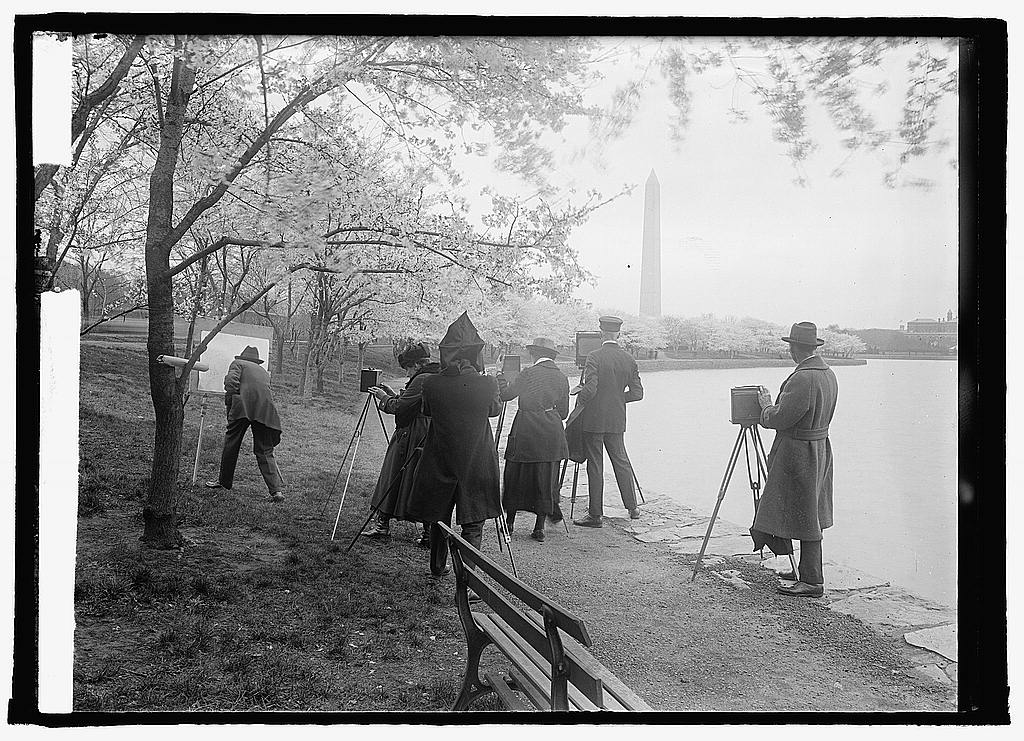
Doing it for the ‘gram, 1922 edition.LIbrary of Congress
How The Trees Came To Washington
The push to bring cherry trees to Washington began all the way back in 1885, when the writer and adventurer Eliza Scidmore learned of the trees during a visit to Japan and petitioned the U.S. government to plant them along the Potomac waterfront.
Two decades later, a Department of Agriculture official named David Fairchild joined in on the blossom advocacy. He helped import hundreds of cherry trees from Japan and get them planted in Chevy Chase, Maryland, where he lived. He gave a speech on Arbor Day in 1908 in which he suggested turning the “Speedway” (a road that used to be near the Tidal Basin) into a “Field of Cherries.”

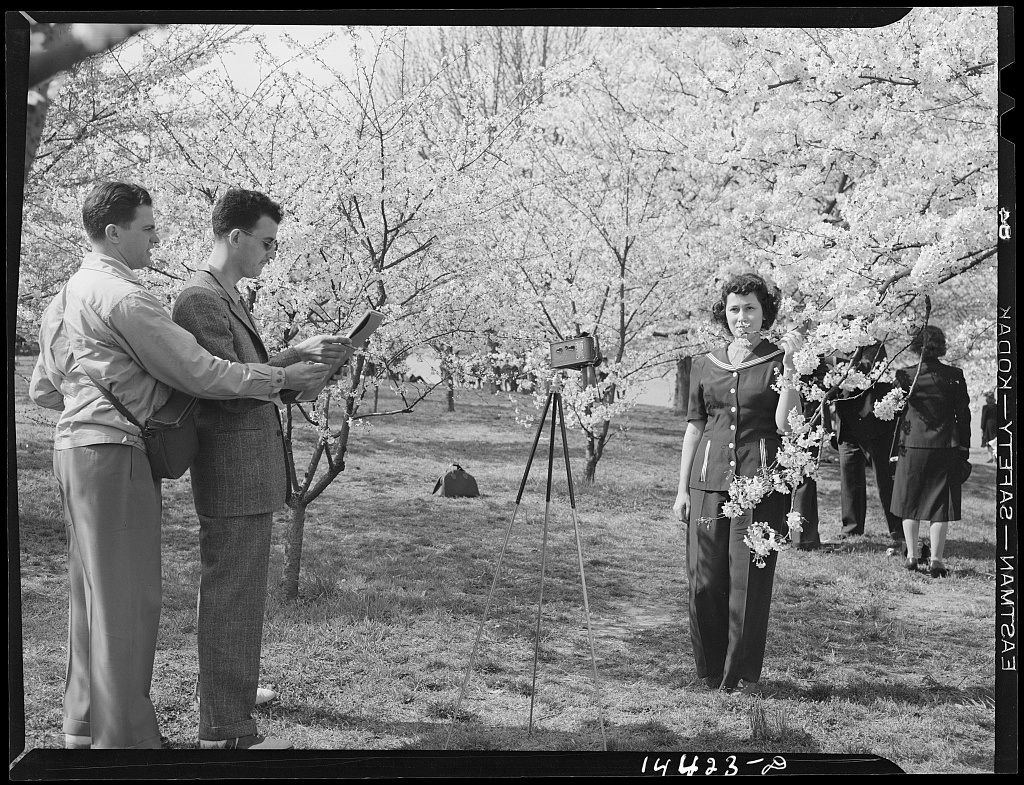
Acting totes casual along the Tidal Basin during the 1941 Cherry Blossom Festival.Martha McMillan Roberts / Library of Congress
The next year, Scidmore succeeded in getting First Lady Helen Taft on board with the cherry tree plan. Things started moving quickly after that: The city of Tokyo offered to donate 2,000 cherry trees, and they arrived in January of 1910.
There was only one slight hitch: The trees were diseased and infested with insects and nematodes, and they had to be burned in pyres.
Two years later, 3,020 new trees consisting of 12 varieties of cherry blossoms arrived in Washington from Yokohoma, Japan. The first two Yoshino trees were planted by First Lady Helen Taft and the Japanese Ambassador’s wife, Viscountess Chinda. Those trees are still standing: They are marked by a bronze plaque near the intersection of 17th Street NW and Independence Avenue SW.
Tree Drama: It’s A Serious Thing
Like anything gorgeous and ephemeral, the cherry blossoms attract drama. First, there was the insect-and-disease issue with the first batch of trees. Then, there was a full-on Cherry Tree Rebellion.In the fall of 1938, a group of women chained themselves around trees scheduled to be cleared to make way for the Thomas Jefferson Memorial. Some women reportedly even grabbed shovels from workers and began refilling the dirt around the trees. According to the NPS, they eventually reached a compromise in which the trees were removed, but others were planted along the Tidal Basin.
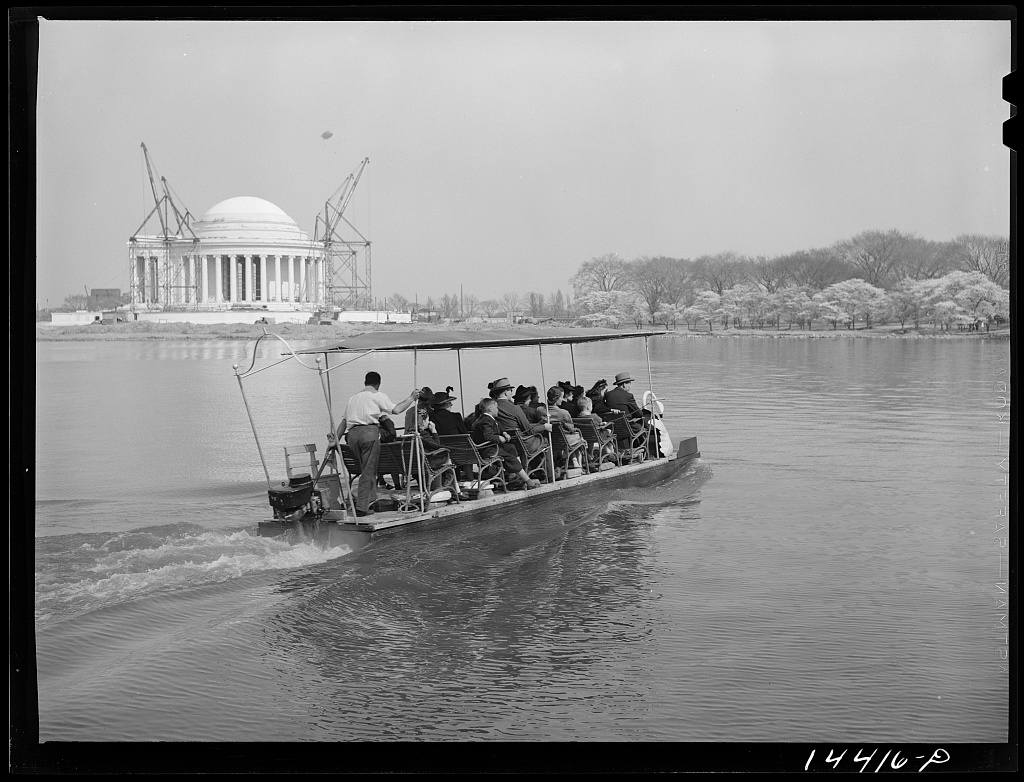
Walk to the cherry blossoms? Certainly not! We shall boat.Martha McMillan Roberts / Library of Congress
A few days after the Japanese attacked Pearl Harbor during World War II, vandals cut down four trees and carved “TO HELL WITH THOSE JAPANESE” into one of the stumps. NPS renamed the trees “Oriental cherry trees” until the end of the war.
Then in 1999, while the rest of us were distracted with our Y2K worries, beavers gnawed at nine trees and severely damaged them. NPS eventually captured and relocated the rodents to an undisclosed location.
When And Where To See Them
The National Park Service previously predicted that peak bloom will occur between April 3 and April 6 — smack dab in the middle of the National Cherry Blossom Festival, which is scheduled for March 20 through April 13. It has since amended its prediction, saying peak bloom will now take place April 1.
If you want to avoid the Tidal Basin crowds (which can make even the non-claustrophobic among us enter a panic state), check out our guide to other places around the region to see flowering trees.
And because we love you, we even made you a map.
Happy flower-peeping!
This story originally appeared at WAMU.