 Carmel Delshad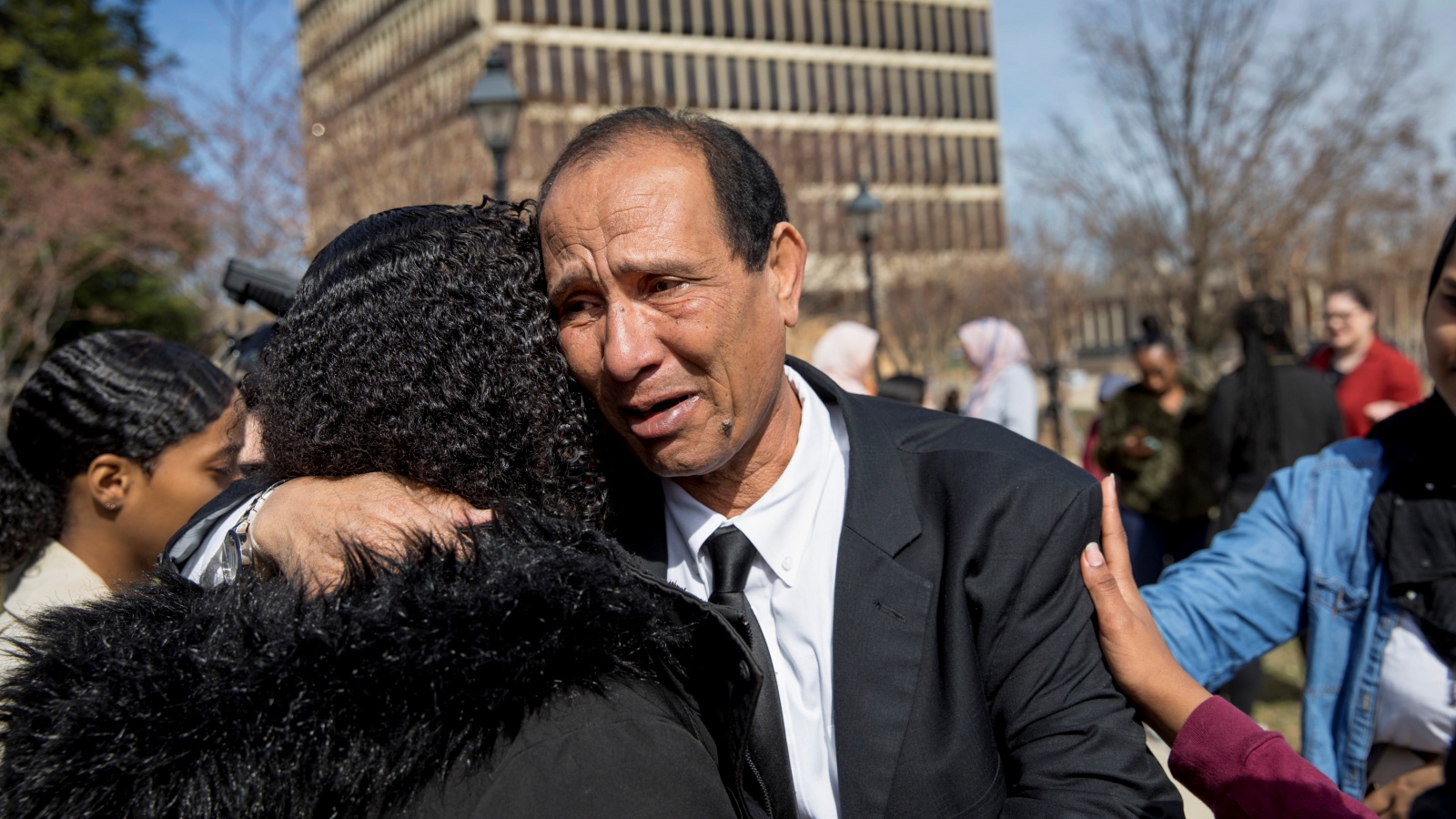
Nearly two years after the high-profile murder of his daughter, Mahmoud Hassanen finally has some legal closure.
On Thursday, a judge sentenced Darwin Martinez Torres to life in prison without parole in the rape and murder of 17-year-old Nabra Hassanen in 2017. Martinez Torres pleaded guilty in November to eight charges, including capital murder and rape, each carrying a life sentence. The plea agreement spared him the death penalty, and was part of a deal agreed upon by Martinez Torres’ lawyers and the Hassanen family. The family will also be able to question Martinez Torres about the murder, in an unusual provision that’s part of the plea deal.
Martinez Torres addressed the court through an interpreter, and said he is remorseful for what he has done.
“I will do anything and everything to help [her family],” he said.
Speaking outside the Fairfax County Circuit Courthouse after the sentencing, Mahmoud Hassanen wiped away tears as he addressed a crowd of media and Nabra’s friends.
“I remember her every day. Every minute. I never forget her. She loved to help everybody. I miss her,” Hassanen said.
“I don’t want something like that happening to any family,” he continued.
Nabra Hassanen and a group of friends were walking back to the ADAMS Center Mosque in Sterling, Virginia, after grabbing a late-night meal. Some were walking on the sidewalk, others in the road. A dispute escalated between a member of the group and Martinez Torres, who was driving by. He chased after them with a baseball bat, and the teens scattered. Nabra lagged behind. Her body was found in a nearby pond hours later, according to police.
“I think all of us who are moms and dads know that there’s really no greater tragedy that can befall a family than the death of a child,” said Commonwealth’s Attorney Ray Morrogh.
“But to have a child taken in this manner, especially such a sweet, wonderful, religious child … the family is obviously devastated and our hearts are with them at this moment and in the future,” Morrogh continued.
Martinez Torres will be transferred to a maximum-security prison, given the severity of the crime, according to Morrogh. An Immigrations and Customs Enforcement detainer, first issued in 2017 after the murder, will be null as it would only be acted upon if Martinez Torres’ is released from prison; Martinez Torres will be serving eight consecutive life sentences.
“The sorrow from this case will ripple through this community for 100 years, I’m sure. But Nabra will never be forgotten,” Morrogh said.
Two Years Later, The Effects Remain
Hassanen’s death during the Muslim holy month of Ramadan captured national and international attention. Many questioned whether her faith was a motivating factor in her murder, although authorities say they have no evidence to indicate it was a hate crime.
To Nabra’s friends, the impact of her death and the graphic details of what happened on that night she died— an still be felt. In the two years since her burial, her friends have organized philanthropic events in her honor.
One is “Nabra’s Blessing Bags,”which will take place on April 14, what would have been her 19th birthday. Her friends will be buying food, clothing, and sanitary supplies to make care packages for the homeless.
“We decided to make a charity event in her name,” said Mai Wedatalla, a friend of Nabra’s. “We’re going to go to D.C. and distribute them to members of the less fortunate in the community.”
Many of her friends showed up to the sentencing wearing white t-shirts reading, “Justice For Nabra.”
While several declined to be interviewed, others said they wanted to talk about Nabra’s legacy.
“Nabra was always very kind and giving. There was this unfortunate guy and he would come to McDonald’s and she’d always give him food,” said Afnan Abdelmaguid. “And so this is something that she would love for us to do.”
Both Wedatalla and Abdelmaguid say they want Nabra to be remembered not by how she died, but how she lived.
This story was originally published on WAMU.