 Mikaela Lefrak
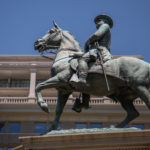
In certain parts of D.C., it can feel like there are statues everywhere. Often these statues are of white men on a horse. Or white men holding weapons. Or white men sitting in chairs.
If you’re looking for statues of native Washingtonians, women, or minorities, you’ll probably be searching for a while. Of the more than 100 statues in the District, about a half-dozen are of American women. Of those, only one is of a woman of color—Mary McLeod Bethune in Capitol Hill’s Lincoln Park. There’s also only one statue of a D.C.-born person of color: Jazz phenom Duke Ellington stands on Florida Avenue Northwest in Shaw.
Ward 5 Councilmember Kenyan McDuffie wants to change this ratio. On Tuesday, he introduced a bill to the D.C. Council to build eight new statues in the city—one in each ward.
“D.C. is known for its statues and monuments,” McDuffie said. “But the makeup of the people we honor doesn’t reflect the beautiful diversity of this city.”
The statues would be of accomplished women and people of color who were born and raised in D.C. The bill identifies four names: Dr. Charles Drew, a medical researcher who developed groundbreaking blood storage methods; Rose Greely, the city’s first licensed female architect; Mary P. Burrill, a playwright and teacher at Dunbar High School; and the five Shaed sisters, who were all D.C. public school teachers.
The other four names would be selected by the Commemorative Works Committee, which would make its recommendations based on community and expert input.
The statues would be erected no later than January 1, 2030.
McDuffie introduced an earlier version of the bill in 2017, but it never made it to the mayor’s desk. He said he’s received dozens of letters from D.C. public school students with ideas for the statues since then.
“When women and residents of color and children walk around D.C., it’s critical that they see images of themselves,” McDuffie said.
D.C. Mayor Muriel Bowser also established a committee last year to erect a statue of D.C. native Charles Hamilton Houston, the former dean of Howard University Law School and a key figure in the dismantling of Jim Crow laws. Houston also was responsible for laying the groundwork that led to the historic Brown v. the Board of Education Supreme Court decision. The city allocated $300,000 in its budget last year for that project.
Other cities around the country are also working to correct their own gender imbalances in public monuments. Last month, New York City announced that it would erect four statues of female historical figures. Once the statues go up, each of the five boroughs will have at least one public statue of a woman, according to the New York Times.
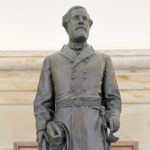
The conversation around public memorials gained steam in the wake of the Charlottesville protests in August 2017. What started as a debate over a statue of Confederate General Robert E. Lee morphed into violent demonstrations by white nationalists that left one counter-protester dead.
McDuffie also introduced a bill on Tuesday to establish an advisory commission that would study the “cultural and historical appropriateness” of monuments, street names, and school names around the city. The councilmember is a graduate of Woodrow Wilson High School and has joined a push to change the public school’s name.
Diverse Native Washingtonians Commemorative Works Amendment Act of 2019 by wamu885 on Scribd
This story was originally published on WAMU.