 Rachel Sadon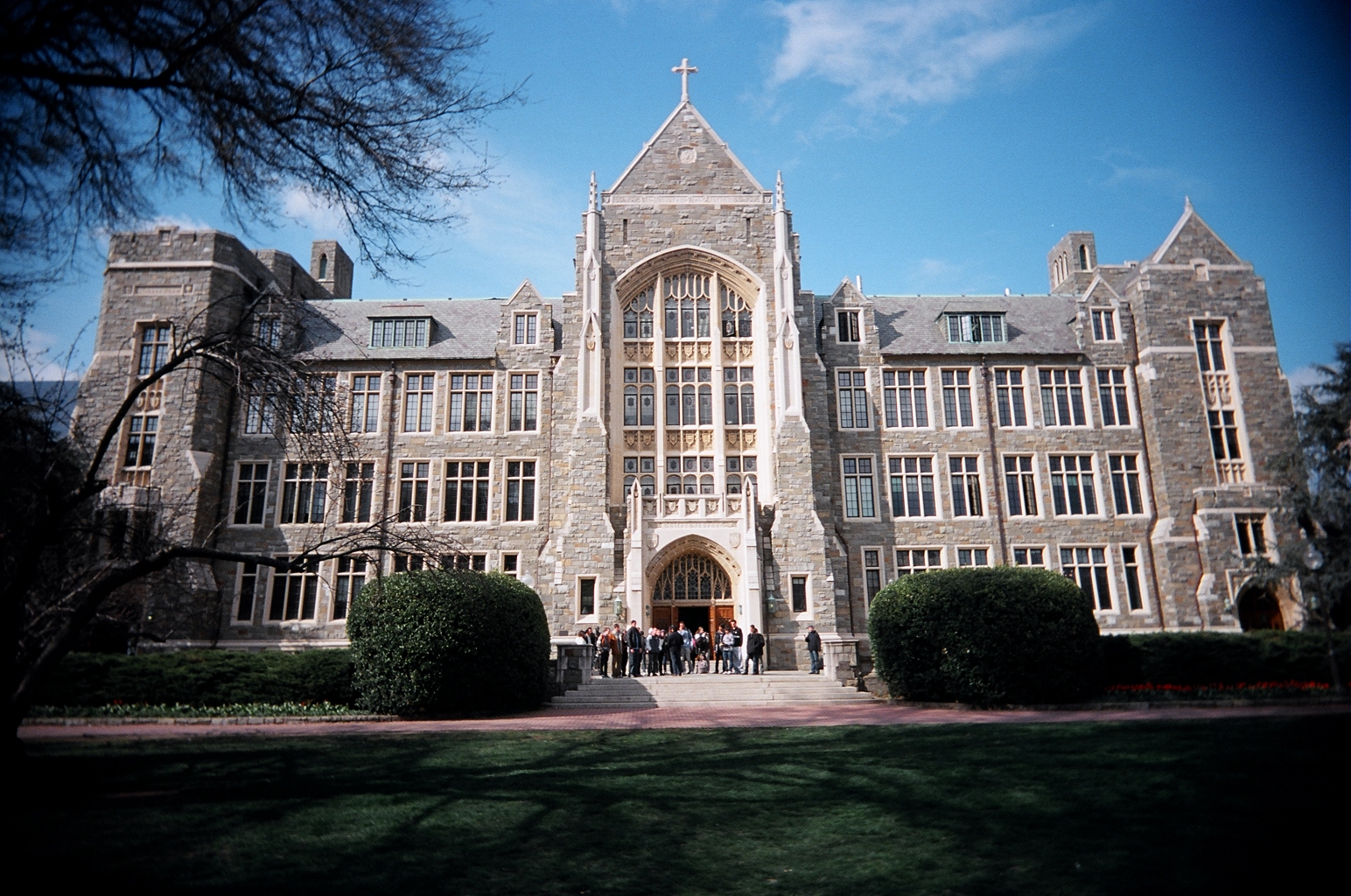
Georgetown University students are voting today on a proposed student fee that would benefit the descendants of slaves sold in 1838 to benefit the university.
“As students at an elite institution, we recognize the great privileges we have been given, and wish to at least partially repay our debts to those families whose involuntary sacrifices made these privileges possible,” the referendum reads. It calls for adding a $27.20 fee each semester that would go toward “charitable purposes directly benefiting the descendants.”
Even if passed by the student body, there’s no guarantee that it would be enacted. The university’s board of directors would need to approve the policy. While school officials haven’t formally taken a stand on the proposal, they have noted the results aren’t binding.
“Student referendums help to express important student perspectives but do not create university policy,” Georgetown spokesperson Matt Hill said in a statement. “The university will carefully review the results of the referendum, and regardless of the outcome, will remain committed to engaging with students, Descendants, and the broader Georgetown community and addressing its historical relationship to slavery.”
The university has been publicly reckoning with its slaveholding past since a 2014 op-ed in the student paper drew attention to that chapter in the school’s history. The editorial called on officials to rename a building that honored a man who brokered the sale of 272 people to help pay back massive debts the school had incurred. In 2016, after a series of protests, Georgetown formally apologized and announced plans to make amends, including rededicating two buildings, granting priority admissions to descendants, and establishing an academic institute.
The GU272 Advocacy Team, a student organization comprised in part of descendants, believes that those actions weren’t enough. Over the fall, the group lobbied the student government to hold the referendum, and led a campaign in favor of the vote.
“This fee is not about morally rectifying slavery, because we can never morally rectify slavery. This is about financially supporting communities that were and are still impacted by the 1838 sale,” said Hannah Michael, a member of the advocacy team at a town hall debate last week.
Critics of the referendum have pointed to unclear plans for the fund, the symbolic amount (rather than some specific financial calculation), and the addition of economic hardship, along with a more philosophical argument about who is responsible for rectifying the sins of the past.
“Georgetown University alone, not the student body, has the obligation to pay for its past transgressions,” students Samuel Dubke and Hayley Grande wrote in a February op-ed in The Hoya. “Most students were unaware of the darker aspects of Georgetown’s history when they decided to enroll. Most certainly, no member of the current student body ever participated in the slave trade nor willingly operates an institution that does.”
The editorial boards of both The Hoya and The Georgetown Voice have come out in favor of the referendum, but the outcome is hardly a foregone conclusion. Voting closes at midnight tonight.
“It’s a very divided topic. There’s this very strong ‘vote yes’ campaign, but there’s also a ‘vote no,'” says Yasmine Salam, a junior and the executive editor The Hoya. “It could definitely go either way in terms of how the result will be.”
The topic has animated the campus, and turnout is already higher than in the student body’s last election, she says. The debate has ramped up recently in part thanks to a slew of national media attention driven by a Politico Magazine article entitled “This Could Be the First Slavery Reparations Policy in America.”
Still, Salam notes that the proposal, even if it is enacted, doesn’t constitute direct reparations. “If you look at the details, it’s not like this money is going into someone’s bank account,” she says. And the student advocates themselves have pushed back on using the term.
When The Hoya used it an early article about the referendum, Salam recalls, “they said, ‘We need to have a talk. This coverage was not on par with what we’re suggesting. We’re suggesting a fund to support the descendants of a community. But it’s going to go to fund eye exams, primary education; it’s going to charitable causes that would directly benefit them. But it’s not reparations’ … They explained to us how it’s a politicized term, and that’s not at all their kind of advocacy work.”
Mélisande Short-Colomb, a sophomore at the school and a descendant of the “GU272,” wrote in an op-ed earlier this year that “this debate is not really about reparations as we usually imagine them, but has more to do with other words that we value: responsibility, respect, and reconciliation.”
This story has been updated to correct two formal titles.