Martin Austermuhle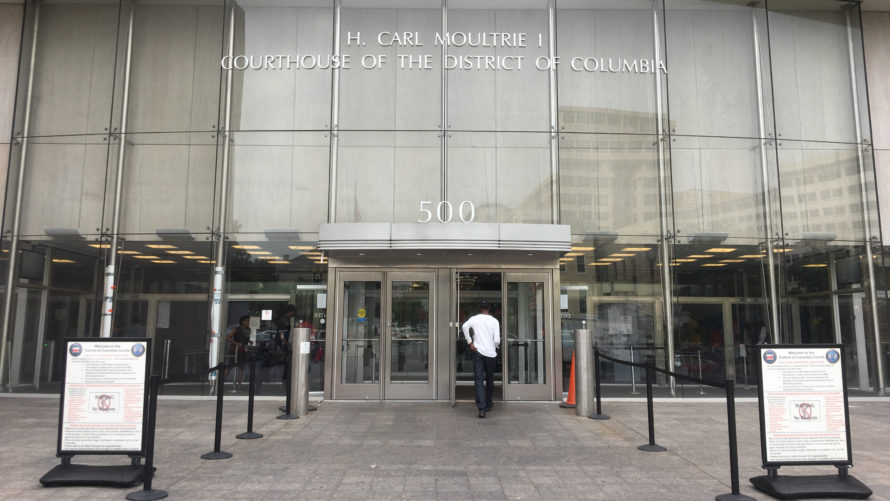
Higher caseloads for judges, slower decisions for the public. Those are the consequences of an “unprecedented” number of judicial vacancies in D.C. Superior Court and the Court of Appeals, according to the top judges on both courts.
“It is just slowing down the wheels of justice,” said Court of Appeals Chief Judge Anna Blackburne-Rigsby on Friday, after speaking to the city’s annual Judicial and Bar Conference.
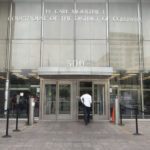
Superior Court and the Court of Appeals serve as D.C.’s local judiciary, but—because of the city’s lack of statehood—they are funded and operated by the federal government. Judges for both courts are nominated by the White House and approved by the U.S. Senate, but that process has failed to keep up with a string of retirements on both courts.
There are supposed to be 61 associate judges and one chief judge in Superior Court, but there are currently 10 vacancies. In the Court of Appeals, there are supposed to be nine judges, but two seats are currently vacant—one since 2017, the other since 2013.
In Superior Court, which handles almost 90,000 cases a year, that’s left Chief Judge Robert Morin to shuffle judges between the five divisions: criminal, civil, domestic violence, family, and probate and tax.
“It’s sort of a reverse whack-a-mole,” he said. “When you’re taking from one division, you’re short-changing another.”
Morin said he’s left the domestic violence and probate and tax divisions alone because they are the court’s smallest. But he’s shuffled judges out of the civil division, which has increased the workload on the judges that remain and slowed the progression of cases through the court. Ideally, he said, judges should have a caseload of 250 cases. But the caseload for some judges in the civil division is now approaching 400 cases.
“It’s that increase of caseload, it’s hard to translate how difficult that is for the court to handle,” he said.
In the Court of Appeals, which functions as D.C.’s supreme court, Blackburne-Rigsby said the shortage of judges has made it more difficult to cobble together the three-judge panels that often hear appeals. That means it’s taking more than a year to reach decisions on certain cases — notably appeals of controversial development projects.
“We see an impact in expedited cases like zoning cases. We’ve seen an increase in zoning cases. Those are complex cases with huge records that take a long time under the best of circumstances,” she said. “Now they’re taking a lot longer.”
Last month, Mayor Muriel Bowser raised the issue directly with President Trump, and Blackburne-Rigsby and Morin separately spoke to staff in the White House counsel’s office about sending more nominations to the Senate.
“We saw some positive responses. Since the new White House counsel’s team has come in January, they’ve sent four nominees up. We hope that they’ll be working to send up more in the near future,” Blackburne-Rigsby said.
But until nominations start clearing the Senate more quickly, Morin said he faces a “daunting” situation in Superior Court. He said he has one new judge coming on Monday, and she would likely be assigned to the family division.
In speaking to the attorneys who attended Friday’s bar conference, Morin also said he hoped that D.C.’s legal community would work towards offering more free representation to people dealing with civil matters like housing and family issues.
While criminal suspects are entitled to free representation, that doesn’t extend to civil cases. But there is a movement towards what’s known as “civil Gideon.” (Gideon was the name of the 1963 Supreme Court case that established the right to free representation in criminal cases.)
“We’re making judicial decisions affecting their children, their homes, their families, sometimes their employment,” said Morin of the tens of thousands of people who deal with civil matters every year in Superior Court. “And people are before us without lawyers. With such a rich legal community as D.C., I’m hoping we have a lot of people working on establishing civil Gideon.”
In 2017, the D.C. Council started a pilot program to give low-income residents in housing court access to a free lawyer.
This story originally appeared on WAMU.