Martin Austermuhle
Elon Musk’s dream of a 35-mile underground tunnel that could take electric vehicles from D.C. to Baltimore in 15 minutes cleared one regulatory burden this week, as a draft environmental assessment of the massive project was released to the public by the U.S. Department of Transportation.
The 400-page document lays out a number of details of what Musk, the founder of Tesla and the tunnel-digging Boring Company, pitches as an alternative to “soul-crushing traffic,” but it also highlights some shortcomings—including daily ridership of 1,000 people between the two cities—less than what can fit in an eight-car Metro train.
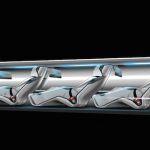
Musk had originally envisioned it as a hyper-loop system—tunnel-based pods able to carry people over long distances at speeds approaching 700 miles per hour. But when he unveiled a mile-long test tunnel in California late last year, the mode shifted: instead of pods, drivers of individual electric vehicles would be lowered into a tunnel, where they would be whisked to their destination at speeds closer to 150 miles an hour.
The assessment says that the local loop would be made up of two 14-foot tunnels connecting D.C. and Baltimore, with 70 ventilation shafts running along the length of the route—which would largely parallel the Baltimore-Washington Parkway, albeit underground. Baltimore’s station would be alongside Orioles Park, while D.C.’s would be on New York Avenue, just east of North Capitol Street.
The purpose of the project would be to offer an alternative mode of transportation in a heavily populated region that already suffers from significant traffic, and one that produces none of the environmental impacts of regular cars and buses.
“As an all-electric transportation system, the Project would provide a high-speed, zero-emissions transportation option connecting Washington, D.C. and Baltimore,” says the assessment. “The system would operate up to 20 hours per day (hours of operation are flexible and not yet determined), with AEVs leaving each Loop Station at predetermined times. Departure intervals would be determined by various factors including station size and passenger loading time. A one-way trip between Loop Stations in either direction would take approximately 15 minutes.”
Riders would be able to book a trip in advance, after which they would drive to either the D.C. or Baltimore station and be lowered into the tunnel. But the assessment also says that ridership would initially be limited to 1,000 people per direction per day until intermediate stations could be built.
While some locations for those intermediate stations have been proposed, including Greenbelt and Laurel, their timing remains unclear.
“The locations, quantity, and size of potential future Loop Stations are unknown,” says the assessment. “Additional study and analysis of potential future expansion in Loop System infrastructure and ridership would be conducted later as a pre-condition of expansion.”
The publication of the environmental assessment is but one of a significant number of obstacles Musk will have to clear before any construction starts. The public has 45 days to offer comments on the project, and afterwards every federal agency involved—from the National Park Service to the Federal Highway Administration—would then have to sign off on it.
But if that comes to pass, Musk’s Boring Company, which digs tunnels, says it could complete the entire project in as little as 23 months. The project would be privately financed. For comparison, the mile-long test tunnel in California cost $10 million.
Maryland Gov. Larry Hogan has already given Musk permission to tunnel below a 10-mile stretch of the route which is owned by the state. Last year, D.C. gave the Boring Company a permit for initial construction staging around its proposed station on New York Avenue.
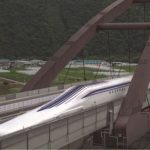
While Hogan and elected officials in other parts of the country have been enthusiastic supporters of Musk’s loop vision (Hogan also supports a proposed maglev train from D.C. to Baltimore), not every elected official in Maryland shares the excitement for the project—whether or not it is privately funded.
“This would be funny, if it weren’t so absurd,” tweeted Del. Robbyn Lewis, a Democrat representing Baltimore. “At a time when Maryland should be doubling down on MARC & light rail expansion, we’re wasting precious resources on ‘hyperloop.’”
“Public resources will be wasted on studies, design, diverting traffic, community outreach, opportunity cost & more,” she added, calling the project a “hyperboondoggle.” “All infrastructure projects use public resources. Will the public benefit? Let’s not get it twisted.”
This story was originally published on WAMU.