 Rachel Sadon
 Jordan Pascale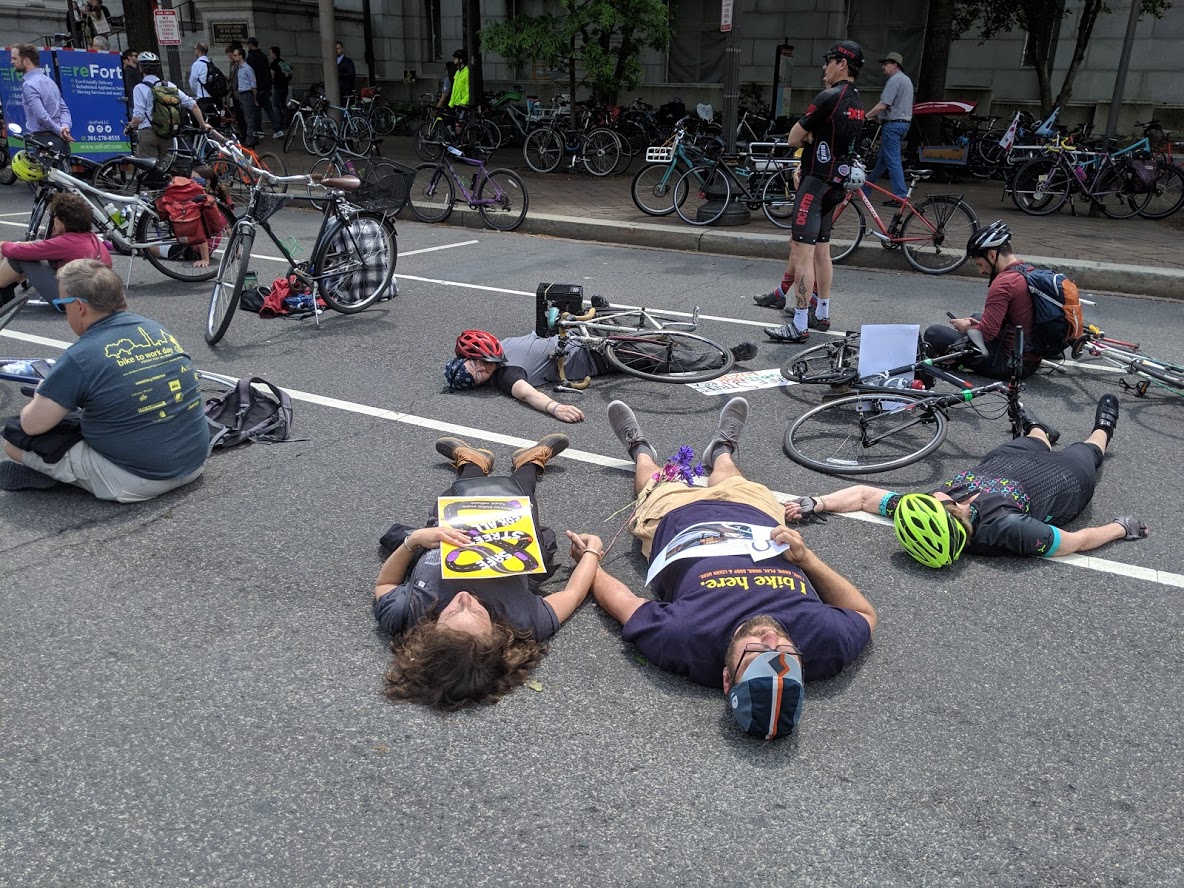
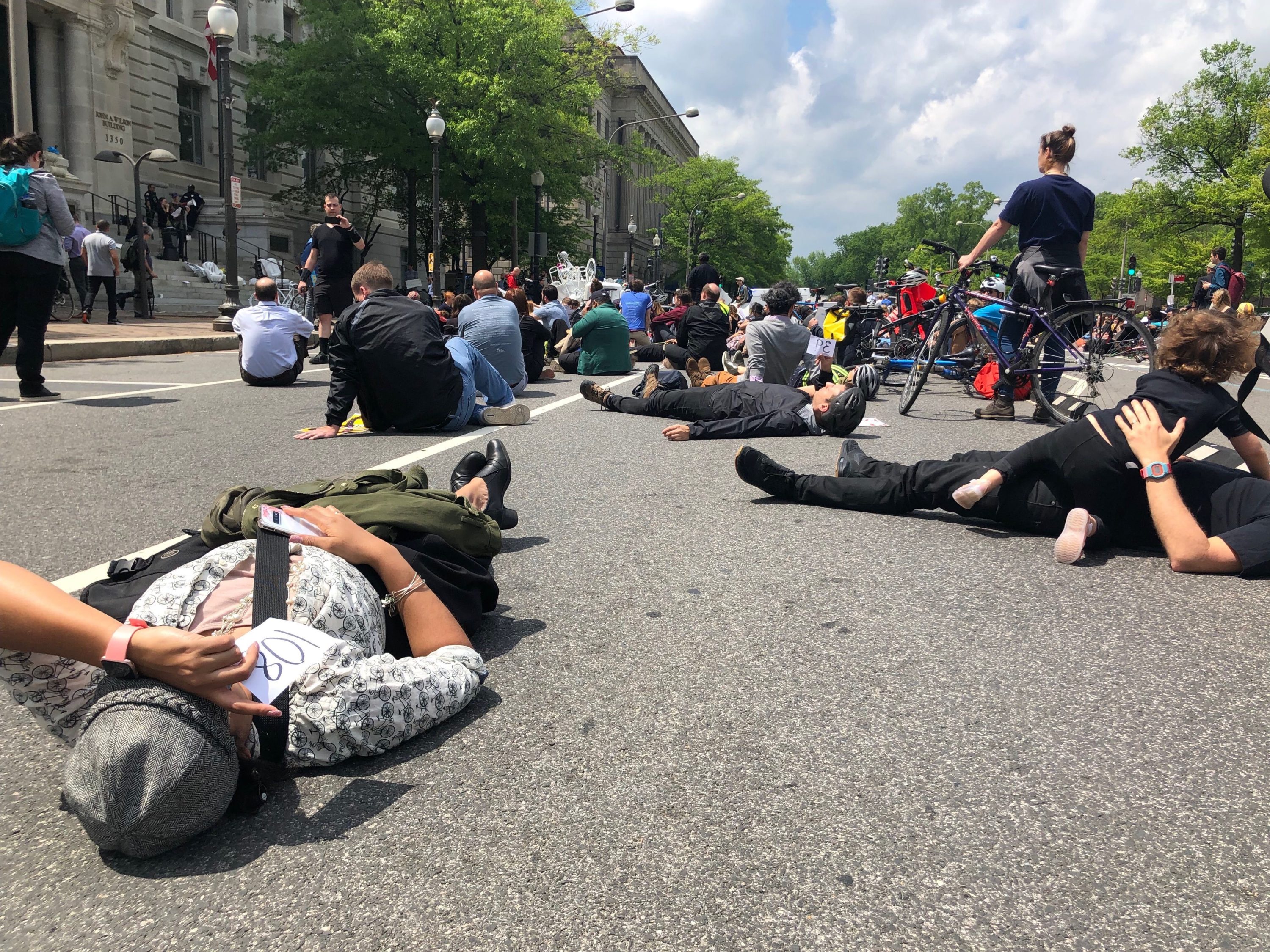
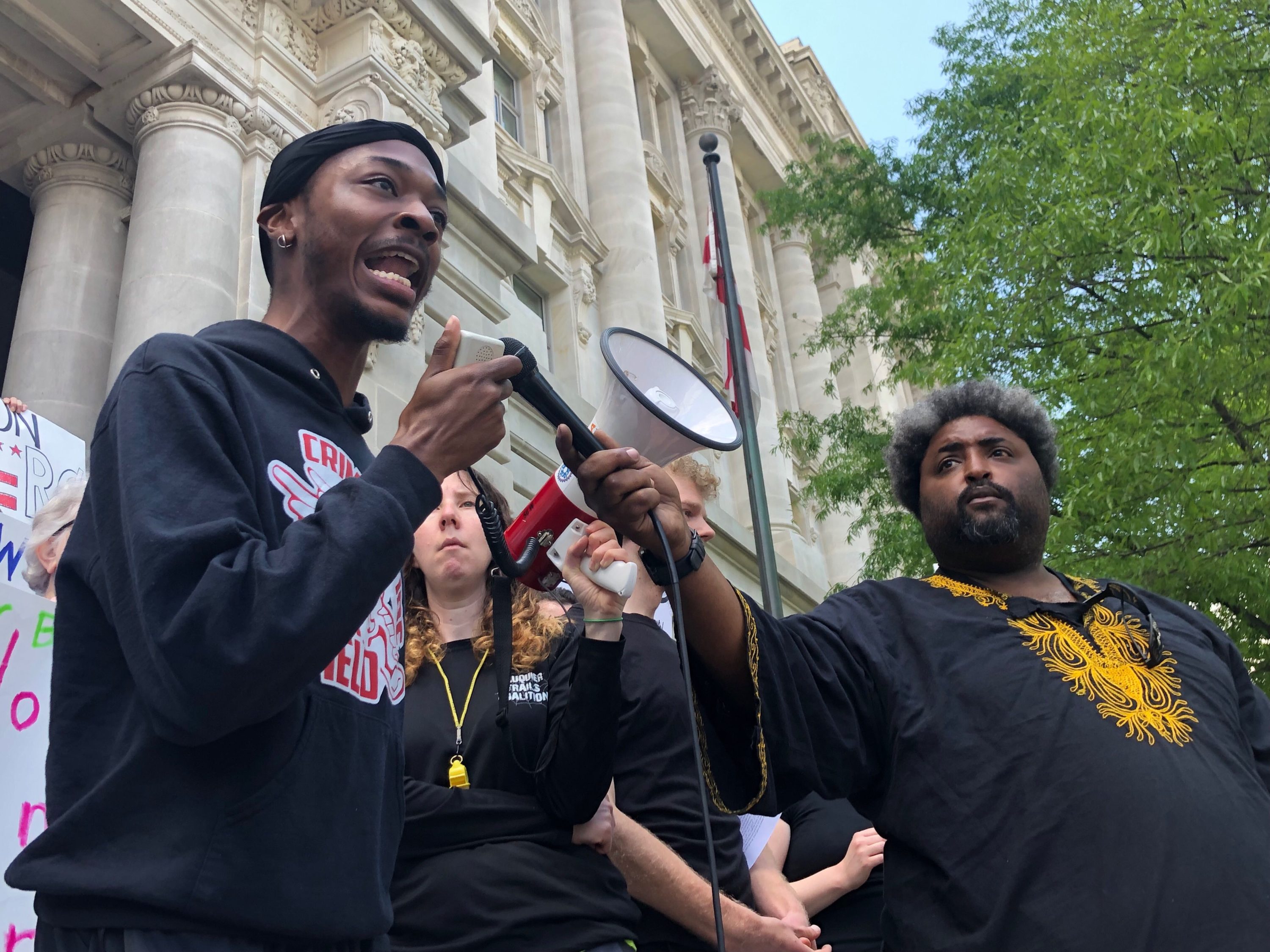
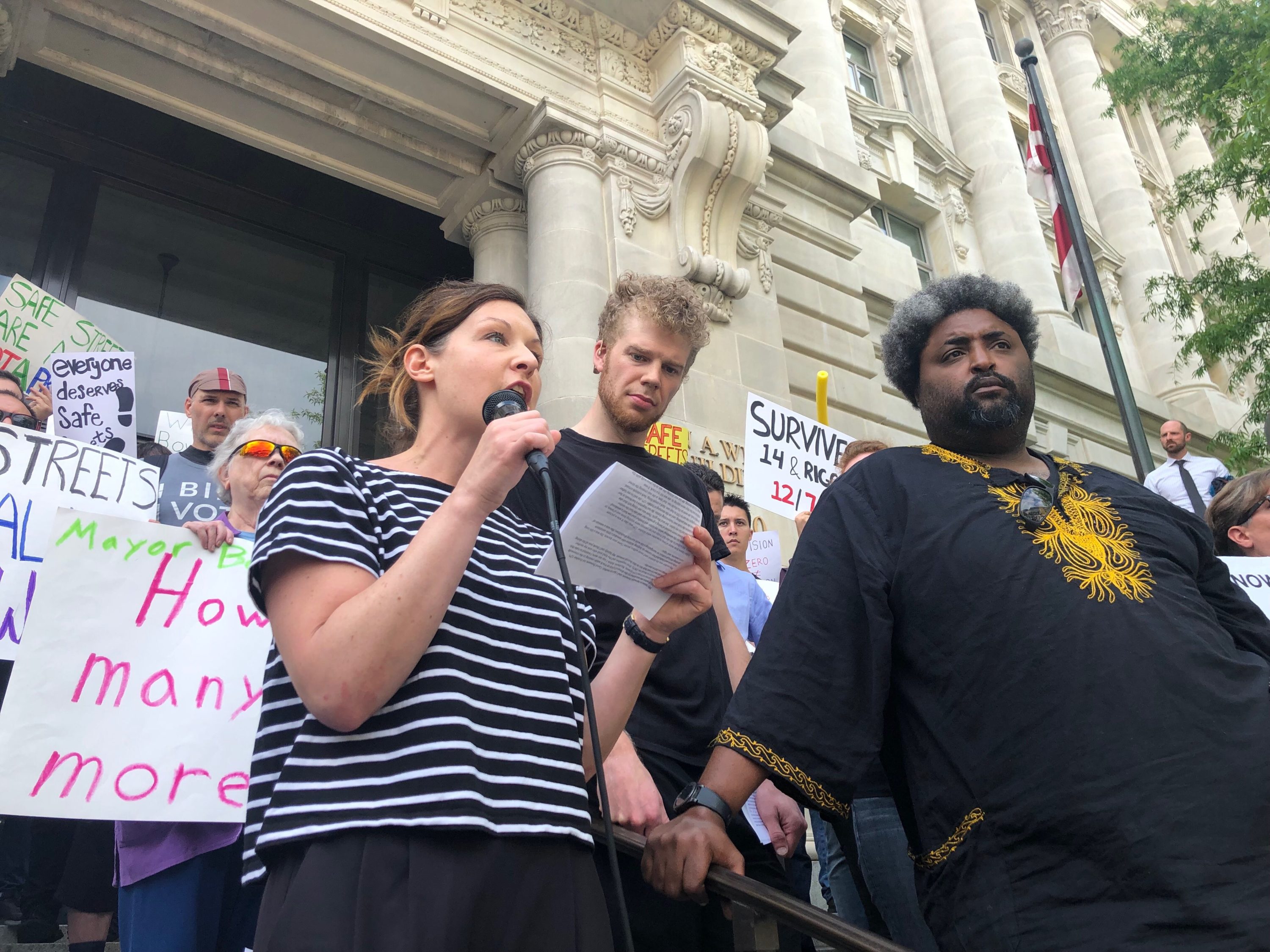
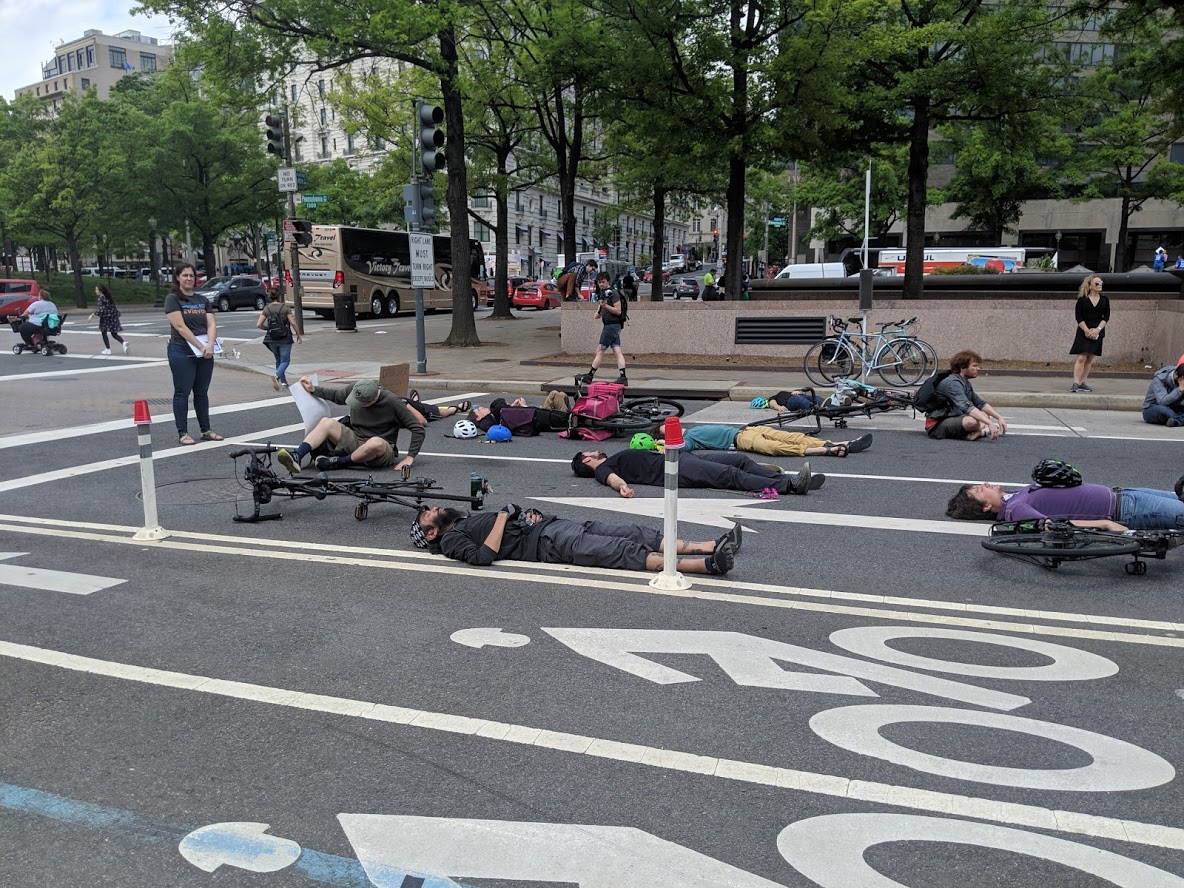
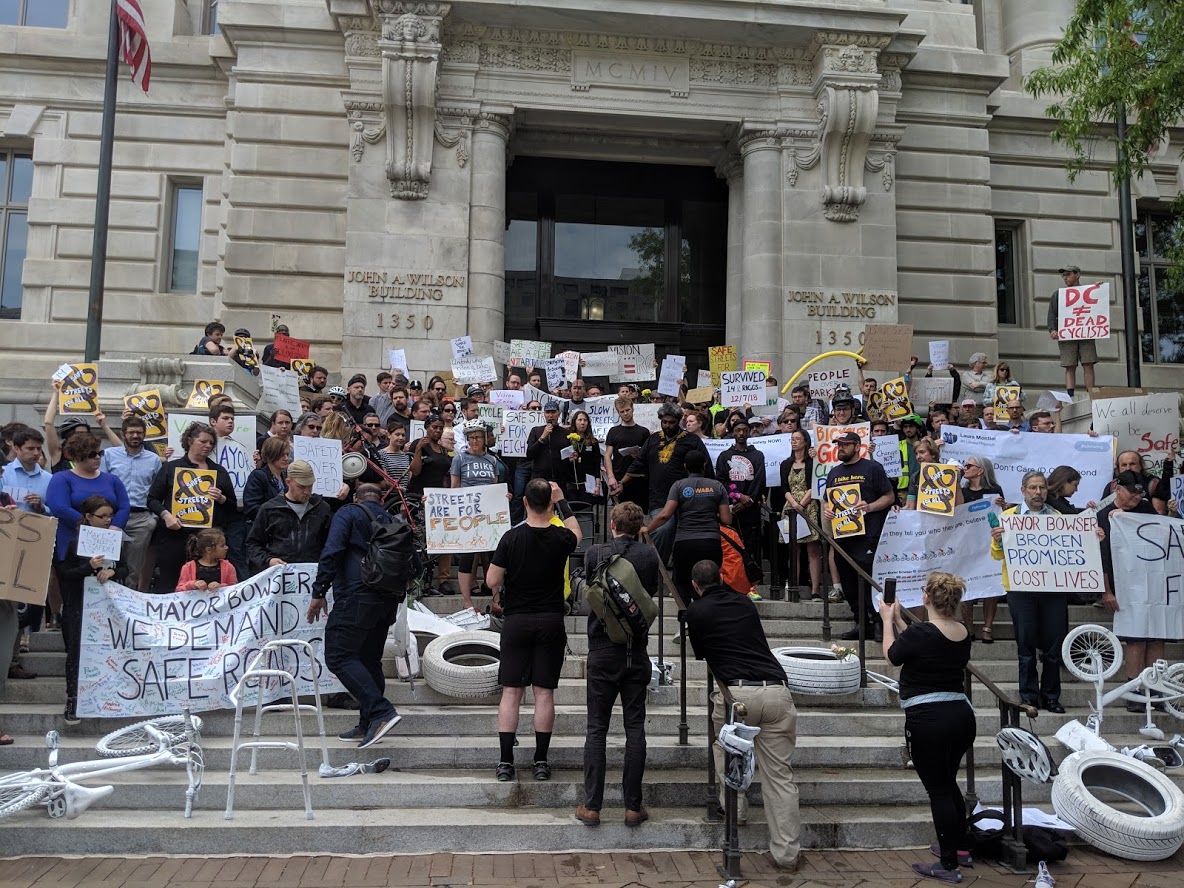
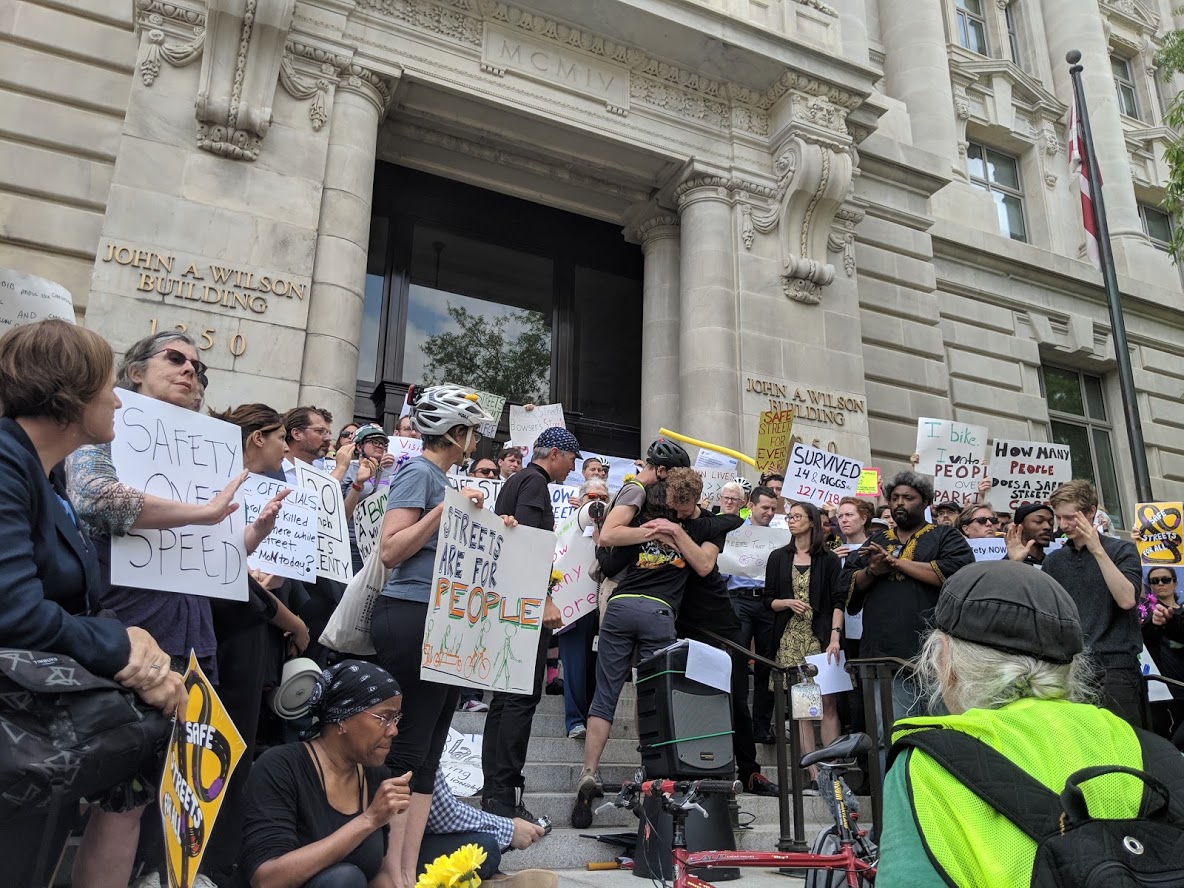
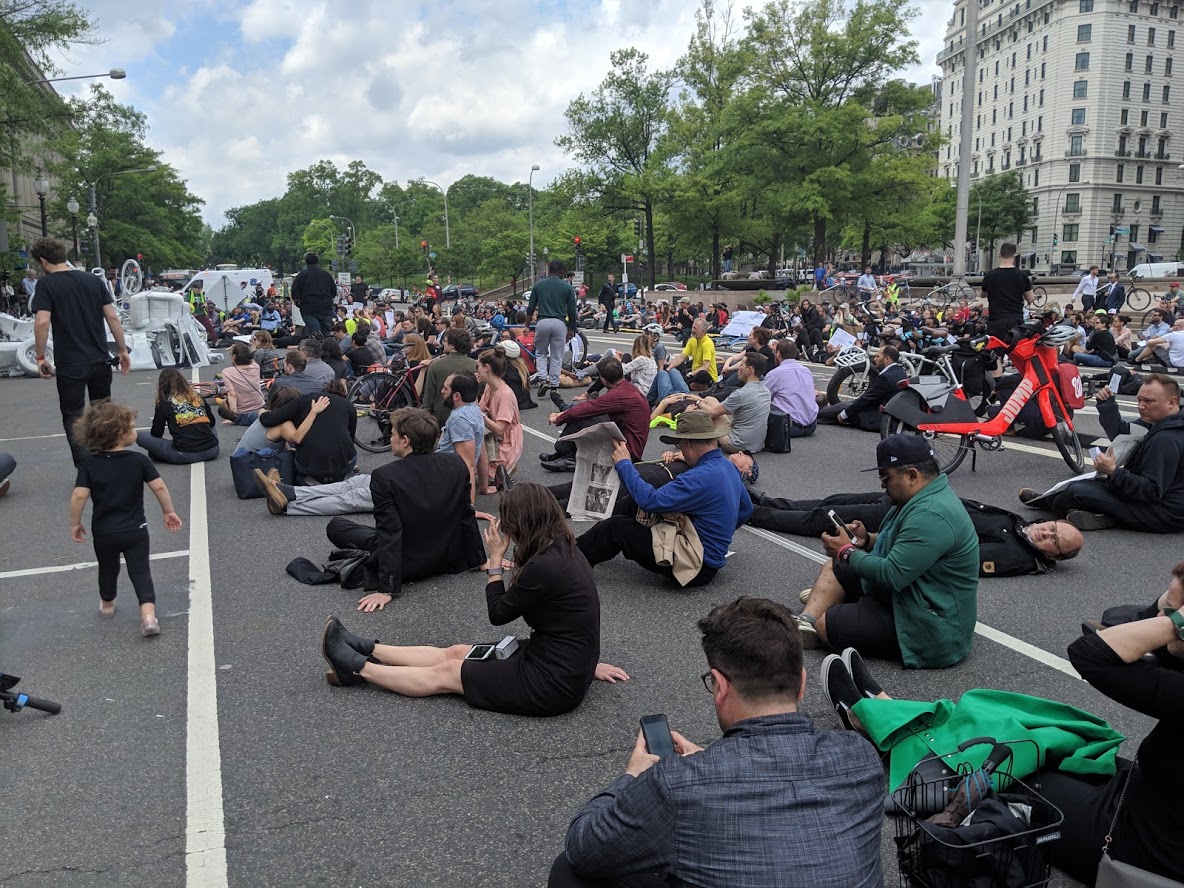
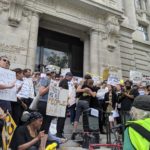
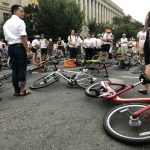
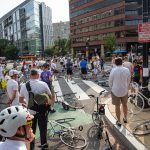
For eight minutes—a minute for each person killed in a traffic crash since the year began—hundreds of safety advocates blocked one of the city’s main thoroughfares.
They lay down on Pennsylvania Avenue, directly in front of the Wilson Building. Some cried, some held each other in grief, most sat in a solemn silence while the names of the 128 people killed in traffic accidents since 2015 were read aloud. A pile of tires, bikes, walkers, and car parts, all painted white, towered over them.
Protesters said they are fed up with Mayor Muriel Bowser and the District’s ineffectual response in curbing traffic deaths. They said that it is an issue that should unite the city.
“Our streets are a public health hazard and I am looking at you, city officials, to make actionable change today,” said Meredith Tomason, whose mother, Carol Tomason, was killed by a truck driver in October while she was walking in a downtown crosswalk. “This kind of death does not know race. It does not know age, nor what ward you live in. It does not know if you ride a bike, a scooter, or are walking to buy a hairbrush.”
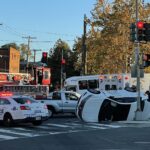
Exactly a week ago, one of the city’s most active cycling advocates was killed while riding on Florida Avenue in Northeast. Days later, a pedestrian was killed, and five other people were injured in Anacostia. Advocates say they had been asking for changes to both intersections for years, and the recent crashes have spurred a renewed commitment to activism.
For many, the death of Dave Salovesh, a well-known presence in the city’s tight-knit bike community, has made it even more personal. A number of protestors brought red cups and pool noodles, references to Salovesh’s attempts to draw attention to the issue of cyclist safety.
But ultimately, the protest was centered on calls for change.
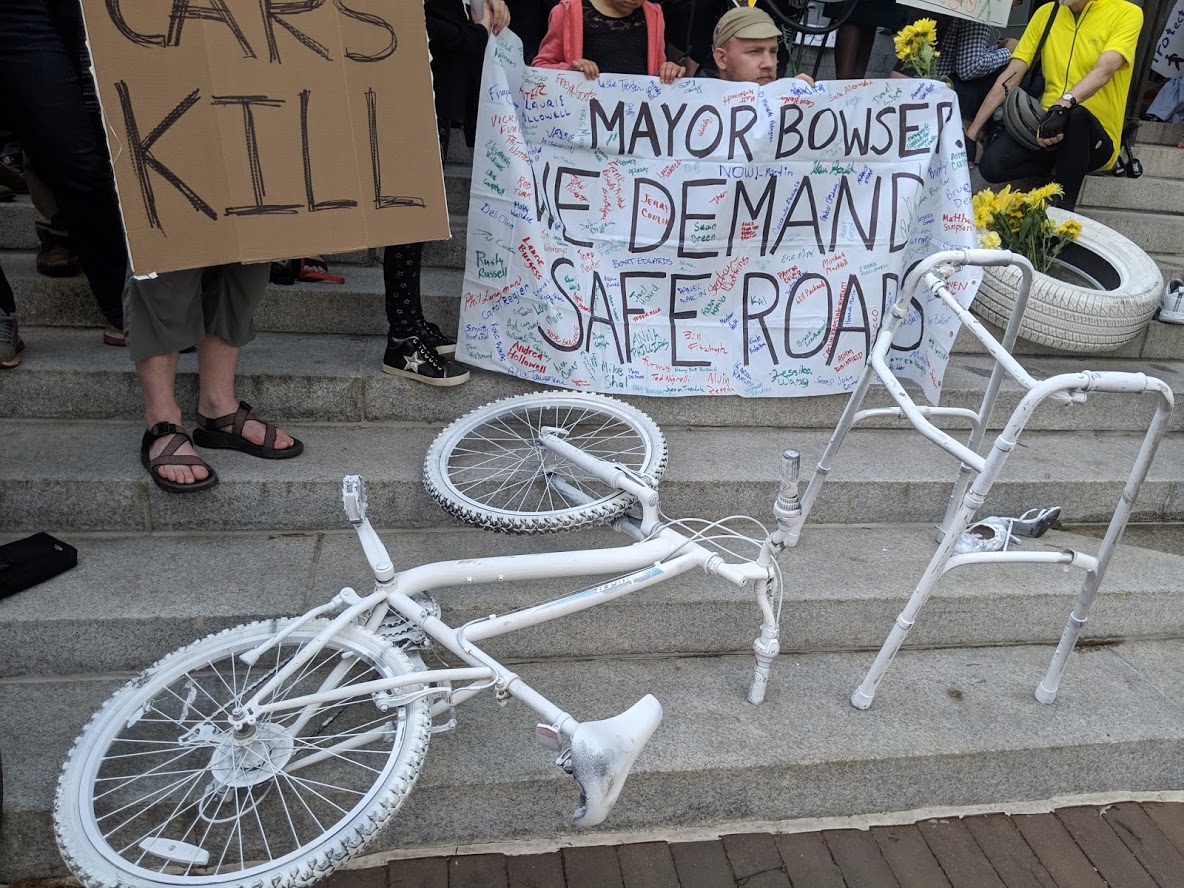
Over the past year, advocates have grown increasingly critical of the Bowser administration, and it reached something of a crescendo today with speeches, signs, and demands directed squarely at the mayor.
One protest sign read: “The Mayor of Don’t Care (D.C.) respond yet??”
Many are pushing for the D.C. Council to step in through new legislation and additional oversight. Ward 6 Councilmember Charles Allen has said he plans to introduce a comprehensive Vision Zero bill at the next legislative session. He also introduced a bill earlier this week aimed at speeding up plans to redesign Florida Avenue NE, while Ward 3 Councilmember Mary Cheh introduced a bill that would require the District to more quickly build bike lanes.
“We have to decide as a city, if we are committed to Vision Zero, if we are actually committed to that number at the end of that phrase: zero. That is what we want. That is what we should expect,” Allen told the gathered crowd. At-large Councilmember David Grosso was also in attendance.
Allen spoke of his renewed commitment to the cause. “I am tired, at oversight hearings and in meetings, to be calling for and advancing and pushing to have the type of investments made, the changes made, and to see delays and delays.”
Four years ago, Bowser launched Vision Zero, an ambitious effort to reduce traffic deaths to zero by 2024. The numbers since then have only increased. Last year, 36 people were killed.
Lucinda Babers, Bowser’s deputy mayor for operations and infrastructure, told the crowd that the administration hears safety advocates’ concerns. District Department of Transportation Jeff Marootian, and other members of Bowser’s administration were also at the rally.
“We are here to say: we hear you. We understand you, and we’re going to take bold action towards Vision Zero,” Babers told the protestors. “We are going to do better. We can, we should, and we will.”
Many in the crowd shouted her down with angry cries of “when?”
While much of the gathered crowd was white, it wasn’t exclusively so. Ronald Thompson Jr., a 21-year-old undergraduate student and advocate from Ward 8, pushed back on the narrative that these deaths only affect wealthy parts of the city.
“For so long, we have heard the message—in part from this mayor—that these folks do not care,” Thompson told DCist and WAMU. “And we saw today that they do care, and that they’re willing to stand in solidarity with Ward 8 residents.”
Advocates compiled statistics and found 11 people were killed in Ward 8 in 2018, the most of any ward.
“It is an issue that binds us,” Thompson said. “This is an issue of safety. That isn’t a luxury.”
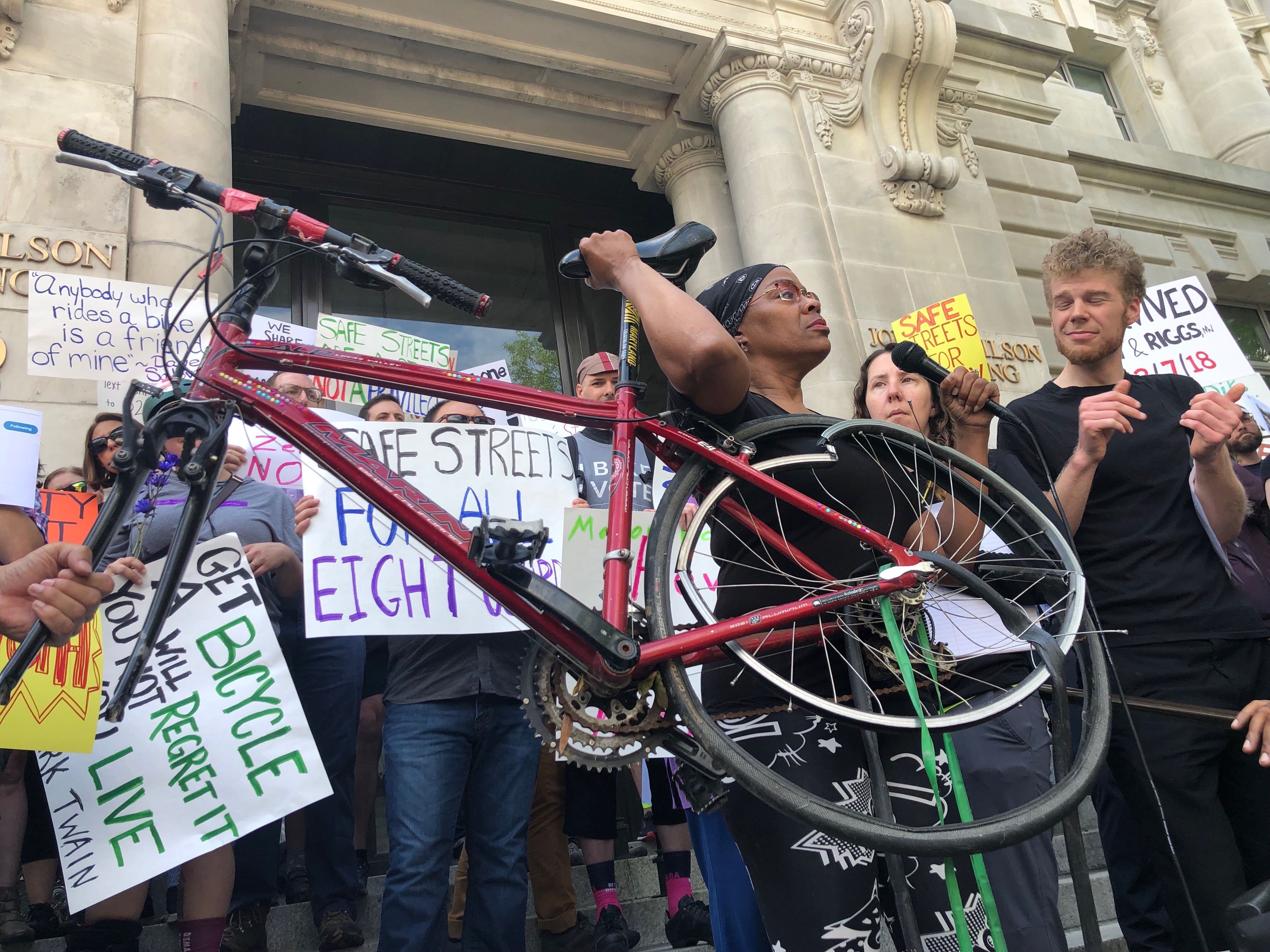
Holding a mangled bicycle over her shoulder, Sherri Joyner told the crowd: “I’m here representing people of color, black women. Black women bike. There are so many of us.”
She shook as she spoke, describing how a truck slammed into her from behind. “I survived,” she said. “I still wonder why.”
Joyner held her crumpled bike up high. Front wheel missing, the back wheel contorted. She pledged to bring it to every single vigil.
“Look at it. Look at it. Look at it!” she shouted. “And think while you’re driving, you don’t want to do this to anyone.”
Thomason described how her mother, who was visiting from out of town, had just been running a mundane errand: she’d forgotten to pack a hairbrush.
“This could have been any of us, but it was my mom,” she said.
She’s been frustrated by the lack of action from the District. She said it was difficult waiting weeks for an update on the case from police, and painful to go through the intersection while in an Uber.
And the hardest part: “When you finally muster up the courage to go through the bag the hospital gave you of your mother’s belongings, only to find that bag with a CVS brush in it.”

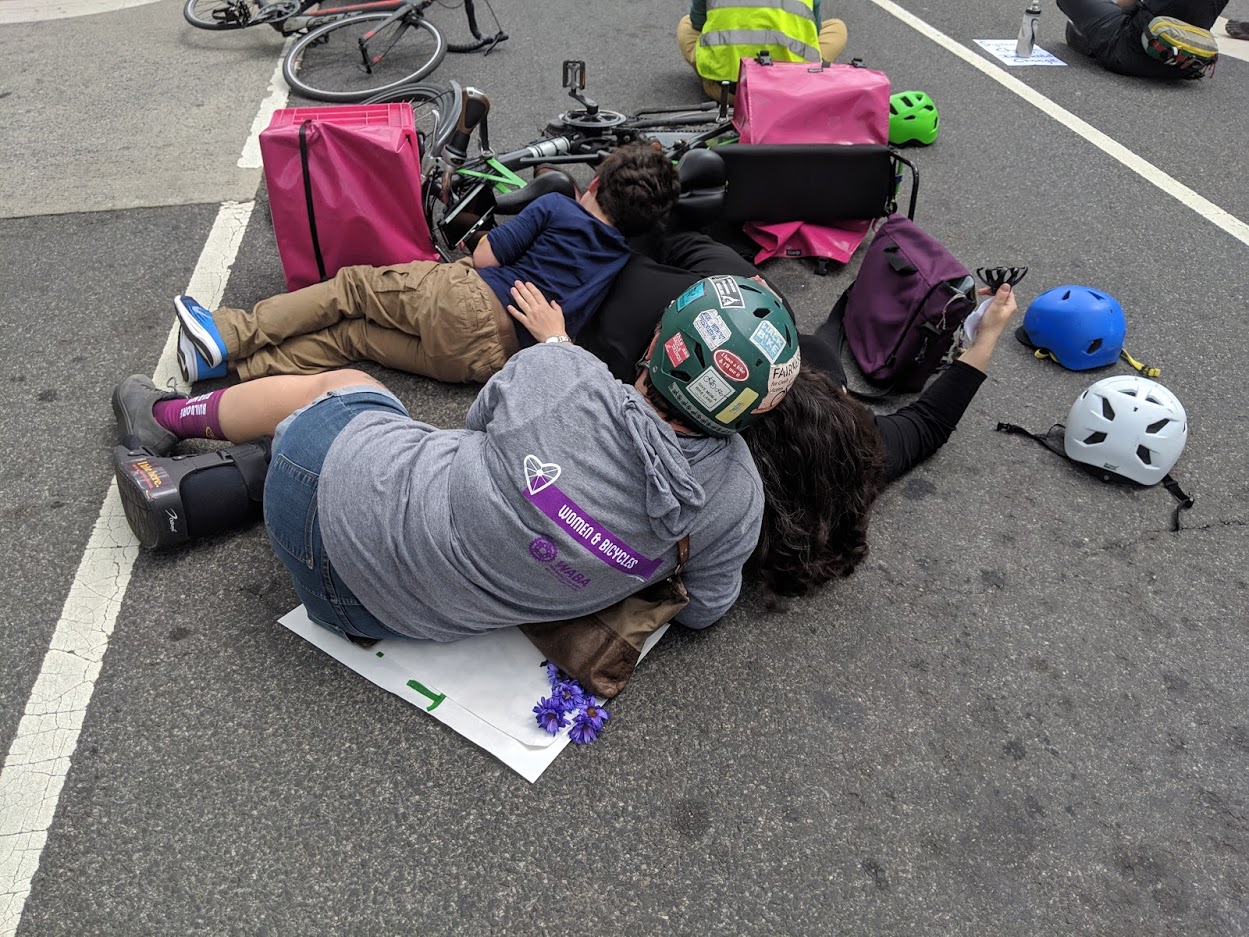
After listening to the speeches, advocates gathered in the road to listen to the names of those killed since the launch of Vision Zero: some of them family, some friends, some strangers, some unidentified.
Megan Odett lay down at the edge of the crowd near the intersection of Pennsylvania and 14th streets, where cars were still whizzing by, and listened. Her 9-year-old son, Alex, was nestled in her lap, and a longtime biking friend, Elizabeth Lyttleton, lay at her side.
Eight years ago, Odett was walking in a crosswalk in Shaw when she was struck by an SUV making a left turn. Alex, then one years old, was in her arms. Odett managed to shield her son with her body, but suffered a bad knee sprain. She still can’t totally straighten her leg. The driver was never found.
“I brought [Alex] to show everyone what the toll is of having unsafe streets,” says Odett, who founded Kidical Mass after the crash to normalize the scene of cycling with their kids in tow.
Odett and Lyttleton were among the many in the crowd who counted Salovesh as a friend.
“I’m here now to honor him,” Odett said. “It was supposed to get better and it didn’t. And honestly, I think that’s why I’m here.”
Previously:
As Changes Come To Intersection Where Pedestrian Was Killed, Community Raises Funds For Burial
‘It’s, Frankly, Personal’: D.C.’s Cycling Community Ramps Up Activism After Longtime Advocate’s Death
Cyclist Killed In Northeast Was A Longtime Bike Advocate Who ‘Lived And Breathed Making The Streets Safer’
2018 Saw A Significant Rise In Traffic Fatalities In D.C. And Fairfax
Bike And Pedestrian Advocates Plan To Protest D.C.’s Failure To Prevent Road Deaths
This story also appears on WAMU.