Rachel Kurzius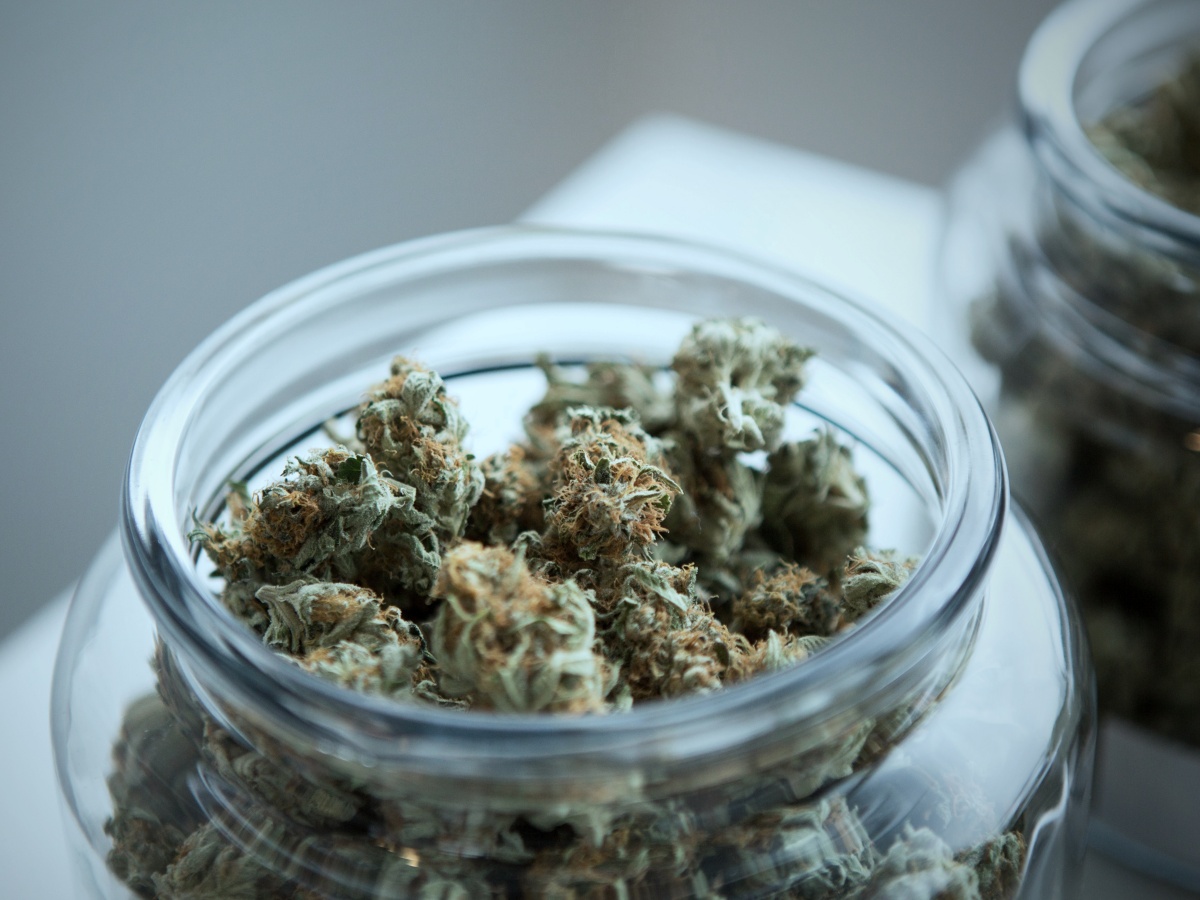
Mayor Muriel Bowser introduced a plan Tuesday to make it possible for recreational marijuana dispensaries to open in the District.
Her legislation comes five years after Washingtonians overwhelmingly voted to legalize marijuana use. Since then, the implementation of a regulatory scheme to tax and regulate sales has been repeatedly hampered by federal legislation. That restriction remains in place, and it’s not clear exactly how or if the mayor will be able to sway Congressional Republicans.
“We cannot wait, we will not wait” for Congress to act and fix “the untenable position the District is in,” Bowser said on Wednesday as she unveiled the Safe Cannabis Sales Act of 2019 at a new medical marijuana dispensary in Anacostia and encouraged the D.C. Council to hold hearings on her bill. (The drugs generally on display at Anacostia Organics were hidden, because under current law, it is illegal for people without medical licenses to be inside a medical marijuana dispensary.)
When it comes to weed (among other issues), the federal government has been a constant thorn in the side of the city. Republicans add an amendment every year to must-pass legislation that prevents D.C. from spending any of its funds to tax and regulate marijuana. Delegate Eleanor Holmes Norton says that she’s confident she can nix the amendment with Democrats in control of the House, but the current bill does not lapse until later this year.
So, even though District residents voted to legalize recreational marijuana in 2014 (and city officials upheld the ballot initiative, despite calls for their arrest from some GOP representatives), that measure makes it possible for Washingtonians to grow it, gift it, and use it in (most of) their own homes—but not to sell it. There’s no legal framework in place yet to open dispensaries, like those that exist in Colorado, California, and eight other states.
In this odd legal limbo, a gifting economy—in which people exchange weed for t-shirts or other items—has flourished, which Bowser said “exists because people can’t buy” legalized weed. This gray market and the more traditional black market for drug sales create a public safety hazard, the mayor said, in which people don’t have information about the marijuana products they’re consuming, and the District is missing out on potential revenue through taxation.
That would change under Bowser’s new legislation.
The oversight and licensing of marijuana businesses would fall to the Alcoholic Beverage Regulation Administration, which would be renamed the Alcohol Beverage and Cannabis Administration. The minimum age to purchase would be 21 years old.
The bill would allow the city’s eight medical marijuana cultivation centers to include the recreational market in their operations, and require that at least 60 percent of license employees and owners of each new license are D.C. residents. “The people making money will be our neighbors,” she said, rather than out-of-town businesses.
All cannabis products would be taxed at 17 percent, with 100 percent of sales and tax revenues going towards housing programs after the first three months of implementation. “We have the opportunity to right wrongs,” she said at a press conference at Anacostia Organics.
While home deliveries would be allowed through online purchase, the bill would crack down on the current “gifting” economy, in which businesses sell clothing, stickers, or something else while giving a gift of marijuana product. Home growing would remain legal under the bill. And while people couldn’t smoke weed at sidewalk patios, rooftop bars and other private businesses, they could consume marijuana at dispensaries and hookah lounges.
Bowser’s bill would also automatically seal the records of people with misdemeanor marijuana charges and permit them to work in the industry.
At-Large Councilmember David Grosso, who has already introduced his own legislation to create a regulatory system for dispensaries, says he’s “cautiously optimistic” about the mayor’s efforts, and he hopes to reconcile their bills during the legislative process. He says that, while the sealing of misdemeanors is a step towards “recognizing the harm that’s been done through the war on drugs,” he believes the mayor could do more on this front. “We’re already talking about what to do better for people with felony convictions.”
The mayor also faced questions about how this bill would address the ongoing racial disparity when it comes to marijuana arrests. Black people have consistently accounted for about 90 percent of marijuana-related arrests in D.C. since 2012, despite there being almost no statistical racial difference in who uses marijuana. Police data indicate that, while marijuana arrest rates dropped after marijuana decriminalized and then legalization went into effect, it increased 37 percent from 2016 to 2017.
She let Metropolitan Police Chief Peter Newsham field the question, and he said that those numbers do not “represent the current state of affairs,” and added that it became standard practice last fall for police to issue people citations for public use, rather than arrest them.
Corey Barnette is the CEO of District Growers, a cannabis cultivator that has been a part of the medical marijuana program in D.C. from the outset, and he says that allowing recreational dispensaries would have a dramatic impact on his business. “Obviously, we become bigger. We do more revenue and we’re able to accomplish a lot of the business goals we have,” he says.
He believes that a regulatory scheme would affect District Growers in less obvious ways, too: the legislation would allow him to establish partnerships with entrepreneurs like bakers, chefs, or oil-makers who produce marijuana products. “We can serve as a conduit to help them get into the industry and partner our brands with their brands and showcase the talent and the personal capital available in the District,” says Barnette. “Our ability to create jobs in places of the city that are still not participating in the vast economy that is the District of Columbia is enormous with the cannabis industry. Our opportunity to create wealth and change and to repair some of the damage done to the communities hit hardest by the drug war is enormous.”
Barnette isn’t worried that people will continue to seek out marijuana through the black market, because the drug would be taxed at dispensaries, and potentially more expensive. “You can get tomatoes for free in your yard, but you still go to Giant to buy them, and you get taxed there, right?” he says, noting that other states have seen robust sales of legalized recreational marijuana despite taxes. “There are a number of reasons why people choose the commercial market … I believe that residents of the District actually want product that’s tested, that they know, that’s labeled, that is in compliance, and is safer.”
The question remains whether, with the Congressional amendment banning the enactment of legislation that would allow marijuana sales still in place, the D.C. Council can hold hearings about regulating the drug. The office of D.C. Attorney General Karl Racine confirms that the mayor’s office requested legal advice on the issue.
“The Office of the Attorney General has carefully and thoroughly reviewed the law regarding the definition of ‘enactment’ and we are confident that the Mayor, the Council, and other District officials can lawfully engage in the legislative process, including the introduction of legislation and hearings, to consider the merits of sensible marijuana regulation,” a spokesperson for Racine’s office said in a statement. “Doing so does not constitute enactment of legislation.”
This is a change for the D.C. AG. Back in 2015, Racine told the Council he did not think it was legal for the Council to hold hearings. Racine’s new perspective will “give some cover to my colleagues who otherwise weren’t willing to” discuss regulation about recreational marijuana dispensaries, says Grosso, who has long been in favor of holding hearings. “I didn’t think they would arrest us, but if they did, it sure would make the news and that’d be a good thing,” he says. “I think we can hold hearings, I think we can vote on it. I think we can and I think we should.”
D.C. Council Chairman Phil Mendelson is in support of holding hearings to regulate the sale of marijuana, his spokesperson Lindsey Walton says, but he has been hamstrung by the Congressional amendment and is trying to determine what the next steps are. She adds that Mendelson is trying to determine what committee the bill would be referred to, amidst other concerns: “This was kind of a bomb she dropped in the middle of budget season,” she says.
Bowser says that she thinks the Council could optimistically ready this legislation in a year’s time, though “realistically, six months after that.”
One of the people in attendance at the mayor’s press conference was Yvette Alexander, the former Ward 7 councilmember who repeatedly voted against liberalizing marijuana laws when she was in office. But Alexander says she’s changed her tune. “If you can’t beat them, join them,” she says with a laugh. “I was the odd man out, so, marijuana, I believe it’s a good thing … I’ve taken informal surveys and I’m the only one not smoking cannabis, so maybe I need to get with the program … It’s creating more opportunities for people to get into an industry that’s been untapped, legally.”
This story has been updated throughout with comment and details about the legislation.